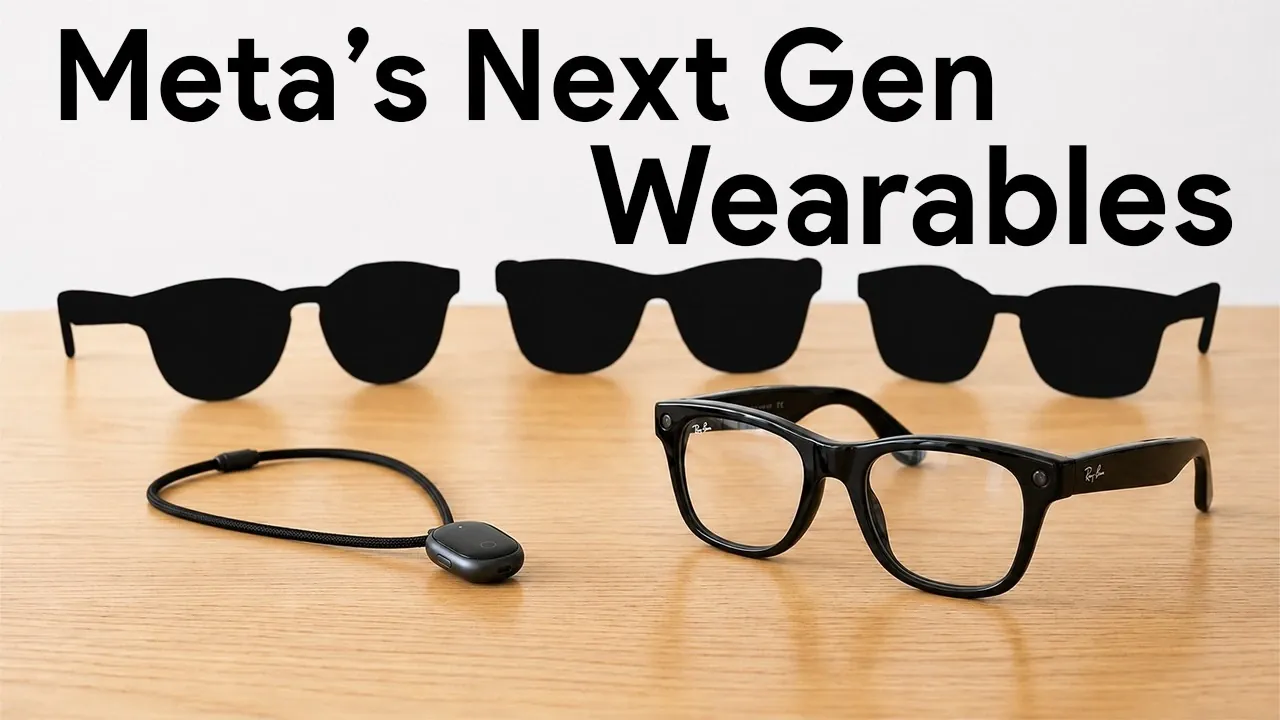
Meta’s latest plans for wearable technology have surfaced, revealing a bold vision for AI-integrated devices. According to a recent breakdown by TechAvid, the company is preparing to launch a lineup that includes four smart glasses models and an AI-powered pendant. The pendant, inspired by Meta’s acquisition of Limitless, is designed to capture, transcribe and organize conversations, offering both personal and professional applications. Meanwhile, the smart glasses, starting with the Modello model this month, aim to combine practical functionality with AI-driven insights, such as real-time translations and navigation assistance.
Dive into this breakdown to explore how Meta’s Muse Spark AI model and Hatch agent are set to power these devices, allowing context-aware, proactive interactions. You’ll also gain insight into the enterprise-focused “Wearables for Work” initiative, which aims to enhance workplace productivity through features like real-time transcription and task management. Whether you’re curious about the consumer or business potential of these wearables, this guide unpacks the key takeaways shaping Meta’s ambitious roadmap.
Smart Glasses: A New Era of Wearable Tech
TL;DR Key Takeaways :
- Meta is launching a range of AI-integrated wearable devices, including smart glasses and an AI-powered pendant, aiming to create proactive, context-aware AI companions while addressing privacy and data security concerns.
- The company plans to release four smart glasses models by 2026, starting with Modello this month, followed by Luna, an updated RMBB2 and the premium Mojito VIP, offering advanced AI features and sleek designs.
- Central to Meta’s strategy is the integration of AI technologies like Muse Spark and Hatch, allowing wearables to deliver personalized, intelligent interactions that enhance daily life and productivity.
- Meta’s AI-powered pendant introduces a new product category, designed to capture, transcribe and organize conversations, with potential applications in both personal and professional contexts.
- Meta aims to sell 10 million wearable devices by 2026, targeting both consumer and enterprise markets, while prioritizing privacy, data security and user trust to drive adoption and redefine human-AI interaction.
Meta’s roadmap reveals plans to launch four new smart glasses models by 2026, marking a significant evolution in wearable technology. The first model, Modello, is set to debut this month, followed by Luna and an updated RMBB2 model in the fall. The RMBB2 refresh will feature incremental upgrades, such as improved battery life, enhanced sensors and more sophisticated AI capabilities. To close the year, Meta plans to unveil Mojito VIP, a premium model designed for high-end users, offering innovative functionalities and a sleek design.
These smart glasses aim to transform wearable technology by combining practical functionality with AI-driven experiences. Equipped with advanced sensors and AI models, the devices are designed to provide real-time insights and hands-free convenience. For instance, users could receive contextual notifications, navigation assistance, or even real-time translations, all while maintaining a seamless connection to their digital environment. This integration of AI into everyday accessories represents a significant step forward in how technology can enhance daily life.
AI at the Core of Meta’s Wearables
Central to Meta’s wearable strategy is the integration of its Muse Spark AI model and a new AI agent called Hatch. These technologies are designed to deliver proactive, context-aware interactions, allowing the devices to anticipate user needs and respond intelligently. For example, Hatch could assist with scheduling meetings, managing tasks, or offering reminders based on your habits and routines. This level of personalization aims to make wearables not just tools but intelligent companions that adapt to your lifestyle.
The emphasis on AI integration reflects Meta’s broader goal of transforming wearables into active participants in your daily activities. By using advanced machine learning algorithms, these devices can analyze patterns, predict user needs and provide tailored solutions. This approach has the potential to simplify complex workflows, enhance productivity and create a more intuitive relationship between humans and technology.

Enhance your knowledge on Meta by exploring a selection of articles and guides on the subject.
- Meta’s Ray-Ban Gen 3 Smart Glasses to Feature Screenless Design
- Google’s New AI Smart Glasses Are Leaving Meta Behind
- Ray-Ban Meta Smart Glasses Just Got the Ultimate Lens Upgrade
- Ray-Ban Meta 124.0 Update Quietly Unlocks 5-Minute Video Recording
- 5 Smart Glasses Tested: Why an $89 Pair Beats Ray-Ban Meta
- Why These 5 Ray-Ban Meta Accessories Are Essential For 2026
- Ray-Ban Meta Blazer vs Gen 2: Is the $499 Upgrade Actually Worth It?
- How to Stream YouTube on Your Meta Ray-Ban Display Glasses
- Why Samsung’s Leaked 245mAh Battery Reveals a Direct Challenge to Meta
- Meta Considers Adding Facial Recognition To Its Smart Glasses
AI Pendant: A Bold New Category
In addition to smart glasses, Meta is venturing into a new product category with its AI-powered pendant. Inspired by the company’s acquisition of Limitless, this wearable device is designed to capture, transcribe and organize conversations. Imagine being able to effortlessly recall past interactions or search through a personal archive of discussions with just a few commands.
The AI pendant is not limited to personal use; it holds significant potential in professional settings. It could record and summarize meetings, generate actionable insights and streamline information management in real time. For instance, during a business meeting, the pendant could provide instant summaries or highlight key points, saving time and improving efficiency. This innovation could fundamentally change how individuals and organizations access and use information, making it a valuable tool for both personal and professional contexts.
Enterprise Applications: Wearables for Work
Meta is also targeting the workplace with its “Wearables for Work” subscription service. This initiative aims to deploy approximately 100 devices per organization through pilot programs, focusing on improving workplace productivity and collaboration. By integrating AI-driven wearables into enterprise environments, Meta seeks to streamline workflows, enhance communication and foster innovation.
Key features of these devices include:
- Real-time transcription of meetings and conversations
- Task management and scheduling assistance
- Collaborative AI tools to support teamwork
For businesses, these wearables represent an opportunity to use innovative technology to remain competitive in an increasingly digital world. By offering tools that simplify communication and optimize operations, Meta aims to position itself as a leader in enterprise-focused wearable solutions.
Meta’s Market Strategy and Business Goals
Meta has set an ambitious target of selling 10 million wearable devices by the second half of 2026. This strategy is part of a broader effort to offset the substantial investments made by Reality Labs in developing next-generation computing platforms. By targeting both consumer and enterprise markets, Meta aims to establish itself as a dominant player in the wearable technology space.
The company’s approach combines hardware innovation with AI advancements, creating a comprehensive ecosystem designed to meet the diverse needs of individual users and businesses alike. By focusing on both functionality and user experience, Meta is positioning its wearables as essential tools for navigating an increasingly interconnected world.
Addressing Privacy and Data Security
As Meta pushes forward with its wearable technology, privacy and data security remain critical challenges. The ability of these devices to capture and store sensitive information raises valid concerns about user privacy and the potential for misuse. Regulators and privacy advocates are likely to scrutinize Meta’s efforts, especially as the company expands its AI capabilities.
To build trust and encourage adoption, Meta will need to implement robust data protection measures and ensure compliance with regulatory standards. Transparency will be key, as will providing users with control over their data. For instance, features that allow users to customize data-sharing settings or delete stored information could help address these concerns. By prioritizing privacy and security, Meta can foster confidence in its technology and encourage broader adoption.
Shaping the Future of AI Wearables
Meta’s wearable technology represents a bold step toward a future where AI companions are seamlessly integrated into daily life. By combining advanced hardware with intelligent AI systems, these devices have the potential to redefine human-AI interaction. Whether through smart glasses, AI pendants, or enterprise-focused solutions, Meta is working to create a world where technology enhances both personal and professional experiences.
However, the company’s success will depend on its ability to balance innovation with responsibility. Making sure that these products respect privacy, prioritize security and deliver meaningful value to users will be critical. The next few years will be pivotal in determining how Meta’s vision for wearable technology unfolds and whether it can truly transform the way we interact with AI.
Media Credit: TechAvid
Disclosure: Some of our articles include affiliate links. If you buy something through one of these links, Geeky Gadgets may earn an affiliate commission. Learn about our Disclosure Policy.
