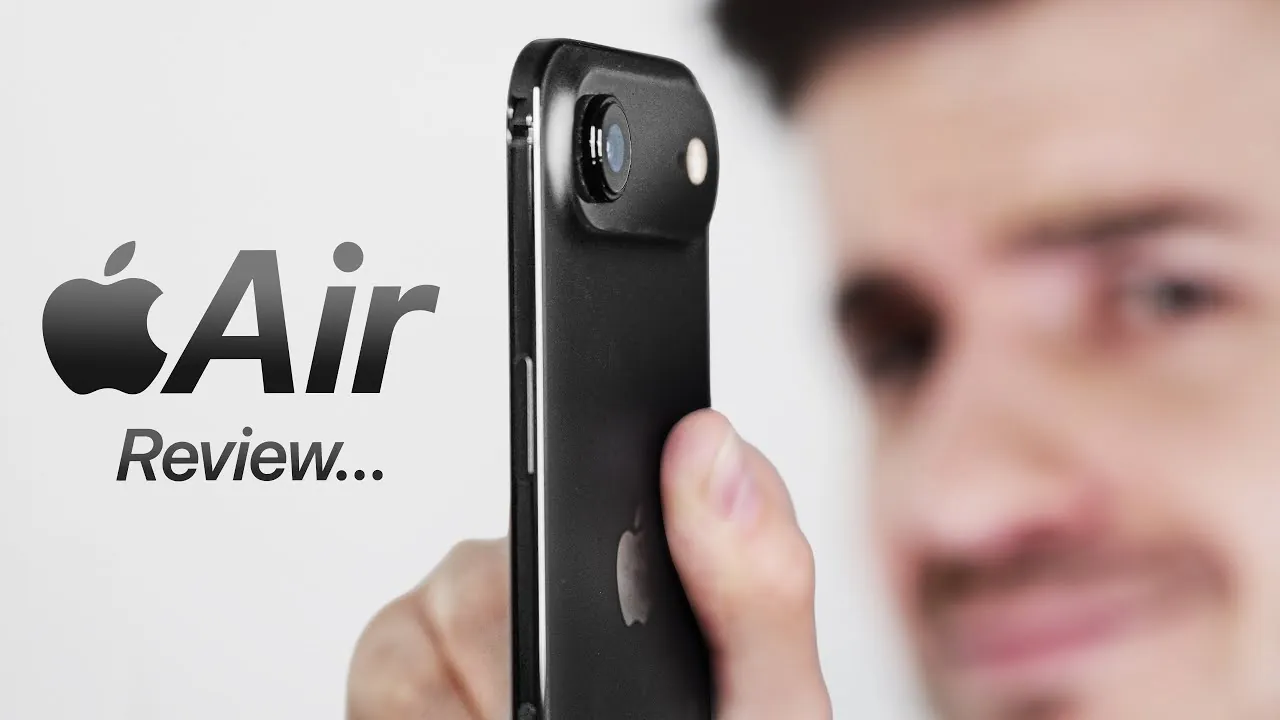
The iPhone Air, Apple’s thinnest and lightest smartphone to date, represents a daring step forward in design. With its ultra-slim profile and lightweight build, it caters to users who prioritize portability and aesthetics. However, this bold approach comes with significant compromises in areas such as performance, battery life, and functionality. The video below from ZONEofTECH provides more insights into the iPhone Air’s strengths and weaknesses to help you decide if it meets your needs.

Design: Sleek and Portable, But at a Cost
The iPhone Air’s standout feature is its ultra-thin and lightweight design. Borrowing elements from the iPhone 10 and iPod Touch 7th Gen, it offers a minimalist aesthetic that feels modern and practical. Its slim profile makes it ideal for one-handed use and easy to carry, appealing to users who value portability above all else. The device is available in a range of muted yet elegant colors, further emphasizing its sleek and understated design.
However, this focus on portability comes with notable trade-offs:
- Durability: The reduced thickness makes the device more susceptible to damage from drops or pressure, raising concerns about its long-term resilience.
- Thermal Management: The absence of an aluminum back and advanced cooling systems limits its ability to handle prolonged or intensive tasks, leading to overheating during heavy use.
While the iPhone Air’s design is undeniably attractive, its fragility and thermal limitations may pose challenges for users who demand more durability and reliability from their devices.
Performance: A19 Pro Chip Falls Short of Expectations
The iPhone Air is powered by Apple’s A19 Pro chip paired with 12GB of RAM, promising solid performance on paper. For everyday tasks such as browsing, messaging, and light app usage, the device performs adequately. However, when pushed to handle more demanding activities like gaming or multitasking, its limitations become evident. The lack of an aluminum back or vapor chamber for cooling leads to rapid heat buildup, causing performance throttling during sustained use.
Compared to its Pro counterparts, such as the iPhone 17 Pro Max, the iPhone Air struggles to maintain consistent performance under heavy workloads. This makes it less suitable for power users who rely on their smartphones for resource-intensive tasks. For casual users, the performance may suffice, but those expecting flagship-level capabilities may find the iPhone Air underwhelming.
Battery Life: A Significant Drawback
Battery life is one of the iPhone Air’s most glaring weaknesses. Despite its efficient A19 Pro chip, the device’s slim design leaves little room for a robust battery. Under medium usage, it struggles to last even half a day, forcing users to rely on external battery packs to stay connected. This reliance on accessories undermines the phone’s primary advantage—its portability.
Charging is another area where the iPhone Air falls short. The device lacks fast-charging support, resulting in prolonged charging times. For users accustomed to all-day battery life and quick recharges, this limitation is likely to be a major inconvenience. The combination of poor battery performance and slow charging makes the iPhone Air less practical for users who are frequently on the go.
Camera: A Step Backward in Versatility
The iPhone Air features a single-camera module, a noticeable downgrade from the multi-lens systems found on Apple’s Pro models. While the camera performs well in good lighting conditions, its lack of telephoto and ultrawide lenses limits its versatility. Users looking to capture a wide range of scenes or achieve high-quality zoom shots may find the camera lacking.
Additionally, the absence of advanced photography features such as ProRAW and ProRes further diminishes its appeal to photography enthusiasts. The inclusion of a USB 2.0 port, which feels outdated in today’s market, adds to the device’s shortcomings. Slow data transfer speeds make it less convenient for users who frequently handle large files, such as high-resolution images or videos.
Connectivity and Audio: Mixed Performance
The iPhone Air introduces Apple’s new C1X modem, which promises improved connectivity. In areas with strong signal strength, the modem performs well, delivering fast and reliable connections. However, in zones with weaker coverage, the device struggles to maintain consistent performance. On the other hand, the N1 Wi-Fi modem excels, offering excellent AirDrop speeds and seamless file sharing between Apple devices.
Audio performance is less impressive. The speaker system, while adequate for casual use, lacks the depth and volume found in Apple’s Pro models. This makes the iPhone Air less suitable for media consumption or hands-free calls in noisy environments. Users who prioritize high-quality audio may find this aspect disappointing.
Who Should Consider the iPhone Air?
The iPhone Air is best suited for users who prioritize portability and design over advanced features. Its lightweight build and minimalist aesthetic make it an attractive option for:
- Those seeking a secondary device for basic tasks.
- Users who primarily engage in messaging, browsing, and light app usage.
- Individuals who value a sleek and modern design above all else.
However, the device is not ideal for heavy users, photographers, or anyone requiring robust performance and long battery life. Its compromises in key areas make it less practical for those who demand more from their smartphones.
A Visionary Design with Practical Limitations
The iPhone Air showcases Apple’s ability to innovate, offering a glimpse into the future of ultra-thin smartphones. Its sleek design and portability set it apart in a crowded market, appealing to a niche audience that values aesthetics and convenience. However, its compromises in performance, battery life, and functionality make it feel more like a concept device than a practical daily driver.
For users willing to spend just $100 more, the iPhone 17 Pro offers significantly better value, with superior performance, battery life, and camera capabilities. While the iPhone Air has its appeal, its limitations are hard to overlook, especially in a competitive market where functionality often takes precedence over form.
Here are additional guides from our expansive article library that you may find useful on Ultra-thin smartphone design.
- Is the Galaxy S25 Edge the Future of Ultra-Slim Smartphones
- How Apple’s iPhone 17 Air Balances Thin Design with Performance
- iPhone 17 Air: Ultra-Thin Design and What It Means for You
- iPhone 17 Air Leaks: Apple’s Ultra-Thin Vision Revealed
- Galaxy S25 Edge vs. iPhone 17 Air: Design, Battery, and Camera
Source & Image Credit: ZONEofTECH
Disclosure: Some of our articles include affiliate links. If you buy something through one of these links, Geeky Gadgets may earn an affiliate commission. Learn about our Disclosure Policy.
