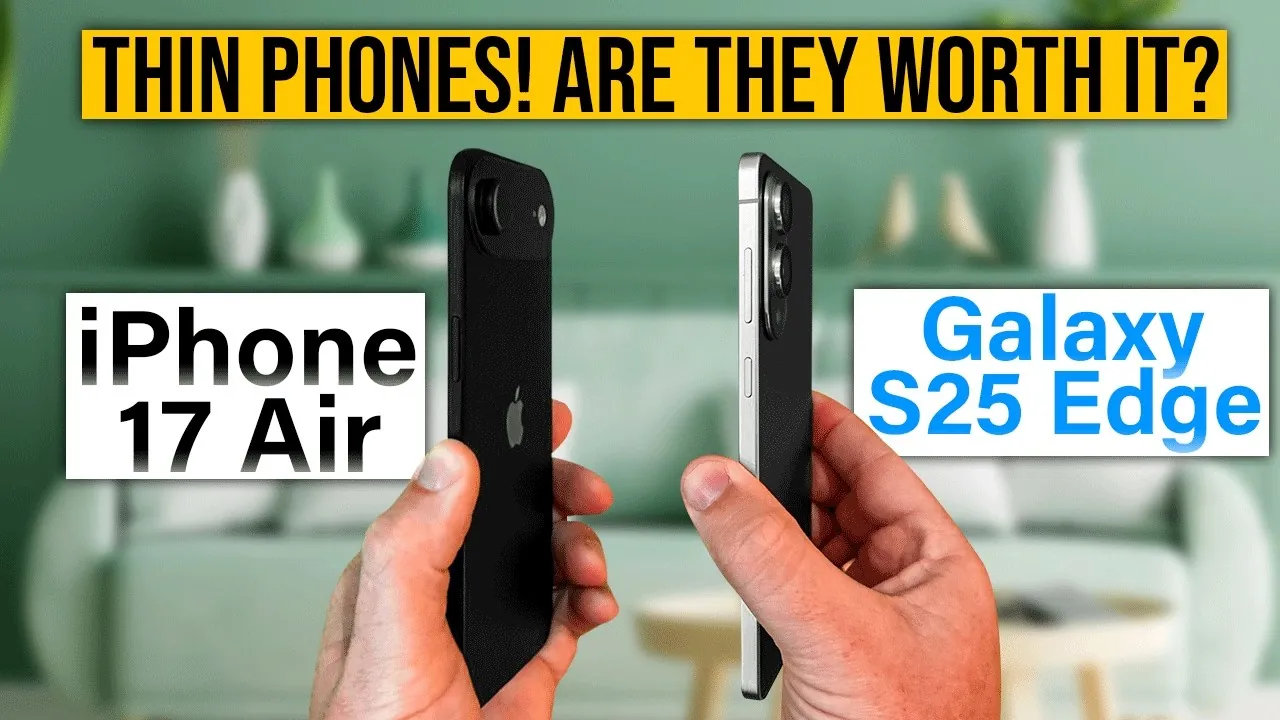
The Samsung Galaxy S25 Edge and the rumored iPhone 17 Air are redefining the boundaries of smartphone design with their ultra-thin profiles and lightweight builds. These devices aim to combine portability with innovative aesthetics, offering a sleek and modern appeal. However, their designs come with compromises that may impact functionality and usability. For potential buyers, the key question is whether these trade-offs align with their priorities. The video below from Matt Talks Tech gives us more details.

Design: Striking Looks, Practical Concerns
The Galaxy S25 Edge stands out with its 5.8 mm thickness and a weight of just 163 grams. Its titanium frame and Gorilla Glass ceramic construction ensure durability, while the matte finish and flat-edge design add a touch of modern sophistication. On the other hand, the iPhone 17 Air, rumored to be even thinner at 5.5 mm, draws inspiration from the iconic flat-edge design of the iPhone 5, blending nostalgia with contemporary aesthetics.
While both devices excel in portability and visual appeal, their ultra-thin profiles may introduce practical challenges. The reduced thickness can make them less comfortable to hold during extended use, and the diminished grip increases the likelihood of accidental drops. These factors raise questions about their suitability for users who prioritize ergonomic handling and durability in their daily lives.
Battery Life: The Cost of Thinness
The Galaxy S25 Edge is equipped with a 3,900 mAh battery, offering approximately 4 to 4.5 hours of screen-on time. It supports 25W wired and 15W wireless charging, allowing relatively quick recharges. In contrast, the iPhone 17 Air is rumored to house a smaller 2,800 mAh battery. While Apple’s renowned software optimization may help extend battery performance, it is unlikely to satisfy the demands of power users who rely on their devices for intensive tasks.
The challenge of balancing thin designs with adequate battery capacity is evident in both models. Users may find themselves needing to recharge more frequently, which could detract from the convenience these devices aim to provide. For individuals who prioritize long-lasting performance, this trade-off may be a significant drawback.
Camera Performance: Style Over Versatility
The Galaxy S25 Edge features a 200 MP main sensor paired with a 12 MP ultra-wide lens, capable of recording 8K video at 30 fps and 4K at 120 fps. However, it lacks a dedicated telephoto lens, limiting its zoom capabilities. Meanwhile, the iPhone 17 Air is rumored to include a single 48 MP camera, relying heavily on advanced AI-driven image processing to enhance photo quality.
While both devices deliver impressive results for casual photography, they fall short of the versatility offered by multi-lens setups in thicker flagship models. Photography enthusiasts may find these limitations restrictive, particularly when capturing diverse scenes that require optical zoom or specialized lenses. For users who prioritize comprehensive camera functionality, these devices may not fully meet expectations.
User Experience: Balancing Form and Function
The ultra-thin designs of the Galaxy S25 Edge and iPhone 17 Air prioritize portability and aesthetics, making them visually appealing and easy to carry. However, these benefits come with notable trade-offs. Reduced battery life, limited camera versatility, and potential fragility may impact the overall user experience. Additionally, the flat-edge designs, while stylish, can feel less ergonomic during prolonged use, potentially leading to discomfort.
These factors suggest that these smartphones are better suited for casual users who value sleek design and portability over high performance or durability. For individuals who rely on their devices for intensive tasks or extended use, the compromises in functionality may outweigh the benefits of their ultra-thin profiles.
Target Audience: Who Will Appreciate These Devices?
The Galaxy S25 Edge and iPhone 17 Air cater to a specific audience that prioritizes style and convenience. Their lightweight builds and minimalist aesthetics appeal to users who value portability and visual appeal over extended battery life or advanced features. These devices are ideal for individuals who primarily use their smartphones for basic tasks, such as browsing, messaging, and casual photography.
However, for power users or those who require versatile photography options and long-lasting performance, these smartphones may fall short. Professionals, gamers, and photography enthusiasts may find the compromises in battery capacity, camera functionality, and durability limiting for their needs.
Final Thoughts: A Niche Appeal for Style Enthusiasts
The Galaxy S25 Edge and iPhone 17 Air represent a bold move toward ultra-thin smartphone designs, offering a unique blend of portability and aesthetics. While their sleek profiles and lightweight builds are undeniably attractive, the trade-offs in battery life, camera versatility, and ergonomic comfort make them less suitable for mainstream users. These devices are best suited for a niche audience that values style and portability above all else, providing a specialized smartphone experience for those willing to prioritize form over function.
Stay informed about the latest in Ultra-thin smartphones by exploring our other resources and articles.
- Is the Galaxy S25 Edge the Future of Ultra-Slim Smartphones
- iPhone 17 Air Leaks: Apple’s Ultra-Thin Vision Revealed
- Samsung Galaxy S25 Edge: Ultra-Thin Design and Key Trade-offs
- How Apple’s iPhone 17 Air Balances Thin Design with Performance
- iPhone 17 Air: Ultra-Thin Design and What It Means for You
Source & Image Credit: Matt Talks Tech
Disclosure: Some of our articles include affiliate links. If you buy something through one of these links, Geeky Gadgets may earn an affiliate commission. Learn about our Disclosure Policy.
