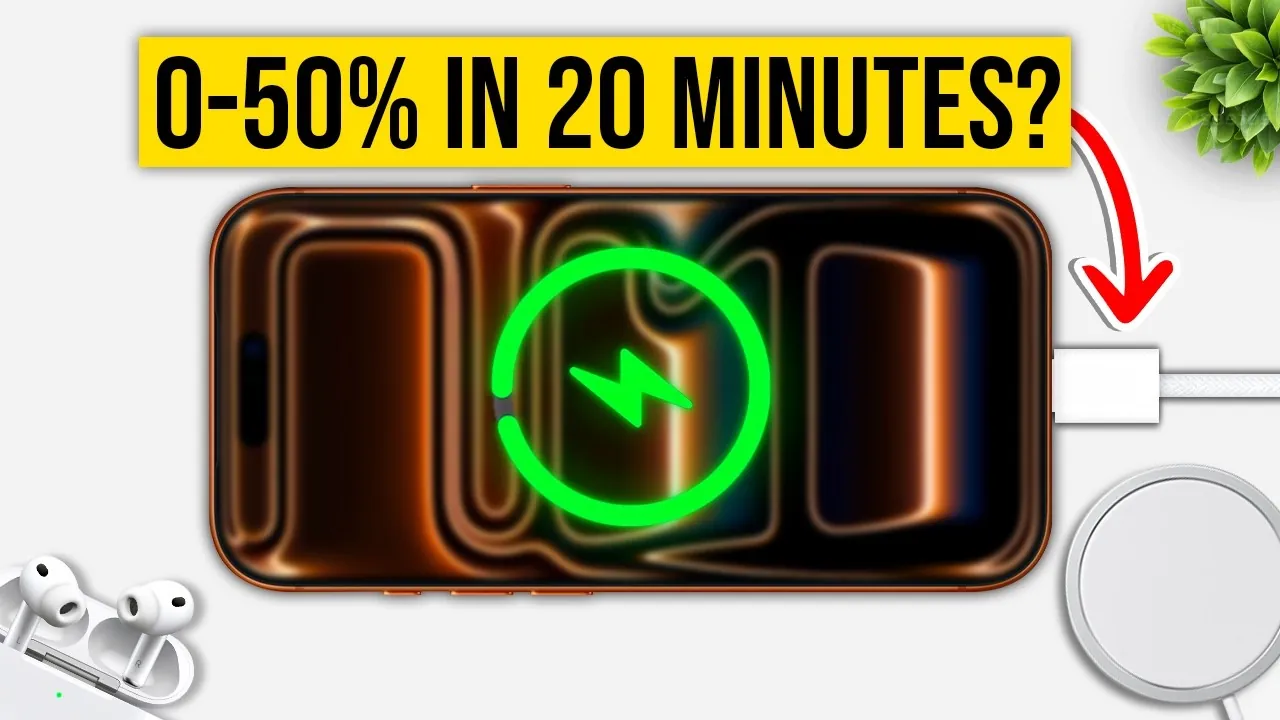
Apple’s latest flagship devices, the iPhone 17 Pro Max and iPhone Air, showcase significant advancements in charging technology. With the integration of USB-C and enhancements to MagSafe, Apple promises faster and more efficient charging experiences. These updates, coupled with features like vapor chamber cooling and always-on displays, aim to redefine user convenience. But how well do these claims translate into real-world performance? The video below from Matt Talks Tech provides more insights into the charging capabilities of these devices, evaluating speed, efficiency, and the impact of new technologies.

What Apple Promises
Apple asserts that the iPhone 17 Pro Max can achieve a 50% charge in just 30 minutes when paired with a 40W or higher USB-C charger. Similarly, the iPhone Air is said to reach the same milestone using a 20W USB-C charger. For MagSafe users, Apple claims that a 25W MagSafe charger can deliver a 50% charge in 30 minutes. These promises suggest a leap forward in charging performance, but how do they hold up under scrutiny?
The company also emphasizes the role of its vapor chamber cooling system in maintaining device safety during high-wattage charging. Additionally, the always-on display, while a convenient feature, raises questions about its impact on charging efficiency. These factors, combined with Apple’s focus on battery health, form the foundation of their charging claims.
How We Tested
To evaluate Apple’s claims, a series of controlled tests were conducted under consistent conditions. The testing process was designed to measure charging speeds, efficiency, and the impact of various factors on performance. The setup included:
- Both the iPhone 17 Pro Max and iPhone Air were fully drained before testing began.
- Chargers with different wattages (40W, 65W, and 140W USB-C adapters) were used alongside high-capacity power banks to assess performance across a range of power inputs.
- High-quality, identical USB-C cables were used to ensure consistent power delivery and eliminate variability caused by cable quality.
- For MagSafe testing, the 25W MagSafe charger was employed to evaluate wireless charging performance.
These tests aimed to determine whether the devices met or exceeded Apple’s benchmarks while also identifying any potential limitations or trade-offs.
What We Found
The results of the testing provided valuable insights into the charging performance of the iPhone 17 Pro Max and iPhone Air.
- iPhone 17 Pro Max (USB-C): When paired with a 40W USB-C charger, the device reached 48% in 20 minutes and 66% in 30 minutes. While it narrowly missed the 50% mark at 20 minutes, it achieved it shortly after, validating Apple’s 30-minute claim. Higher-wattage chargers, such as the 65W and 140W adapters, did not significantly improve charging speeds beyond this point, suggesting a cap on the device’s charging input.
- iPhone Air (USB-C): The iPhone Air exceeded expectations, reaching 54% in 30 minutes with a 20W USB-C charger. This highlights the efficiency of Apple’s charging optimization for this model, making it a standout feature for users seeking reliable performance with lower-wattage chargers.
- MagSafe (iPhone 17 Pro Max): The 25W MagSafe charger delivered as promised, achieving a 50% charge in 30 minutes. However, the process generated noticeable heat, which was effectively managed by the vapor chamber cooling system. This underscores the importance of thermal management in wireless charging scenarios.
Key Takeaways
Several important trends emerged during the testing process, shedding light on the strengths and limitations of Apple’s charging technology:
- Slower Speeds After 50%: Charging speeds consistently slowed after reaching 50%. This is a deliberate design choice by Apple to preserve long-term battery health, aligning with the company’s emphasis on sustainability and device longevity.
- Impact of Always-On Display: The always-on display, while a convenient feature, slightly reduced charging efficiency during MagSafe testing. Users may notice marginally longer charging times when this feature is active.
- Vapor Chamber Cooling: The vapor chamber cooling system proved effective in managing heat during high-wattage charging. This not only ensured device safety but also maintained consistent performance, particularly during intensive charging sessions.
Broader Implications
Apple’s charging advancements with the iPhone 17 Pro Max and iPhone Air represent a step forward in user convenience and device performance. The integration of USB-C and improved MagSafe technology aligns with industry trends, offering faster and more efficient charging options. However, some limitations remain.
While Apple’s devices largely meet their charging claims, they still lag behind certain Android competitors that offer higher-wattage charging solutions. For instance, some Android models can achieve a full charge in under 30 minutes, a feat that Apple’s devices have yet to match. This highlights an area where Apple could further innovate to remain competitive in the fast-evolving smartphone market.
Nonetheless, the iPhone 17 Pro Max and iPhone Air set a new benchmark for Apple’s charging technology. They deliver on the company’s promises, providing users with reliable and efficient charging experiences. For those invested in the Apple ecosystem, these advancements enhance the overall value and usability of the devices, making them a compelling choice for both new and existing users.
Find more information on iPhone 17 Pro Max charging by browsing our extensive range of articles, guides, and tutorials.
- How the iPhone 17 Pro Max Redefines Smartphone Performance
- iPhone 17 Pro Max Event: Hidden Features and Key Takeaways
- iPhone 17 Pro Max Features, Specs, and More
- iPhone 17 Leaks: Reverse Charging, 8K Video, and AI Upgrades
- iPhone 17 Pro Max Innovative Features You Can’t Miss
Source & Image Credit: Matt Talks Tech
Disclosure: Some of our articles include affiliate links. If you buy something through one of these links, Geeky Gadgets may earn an affiliate commission. Learn about our Disclosure Policy.
