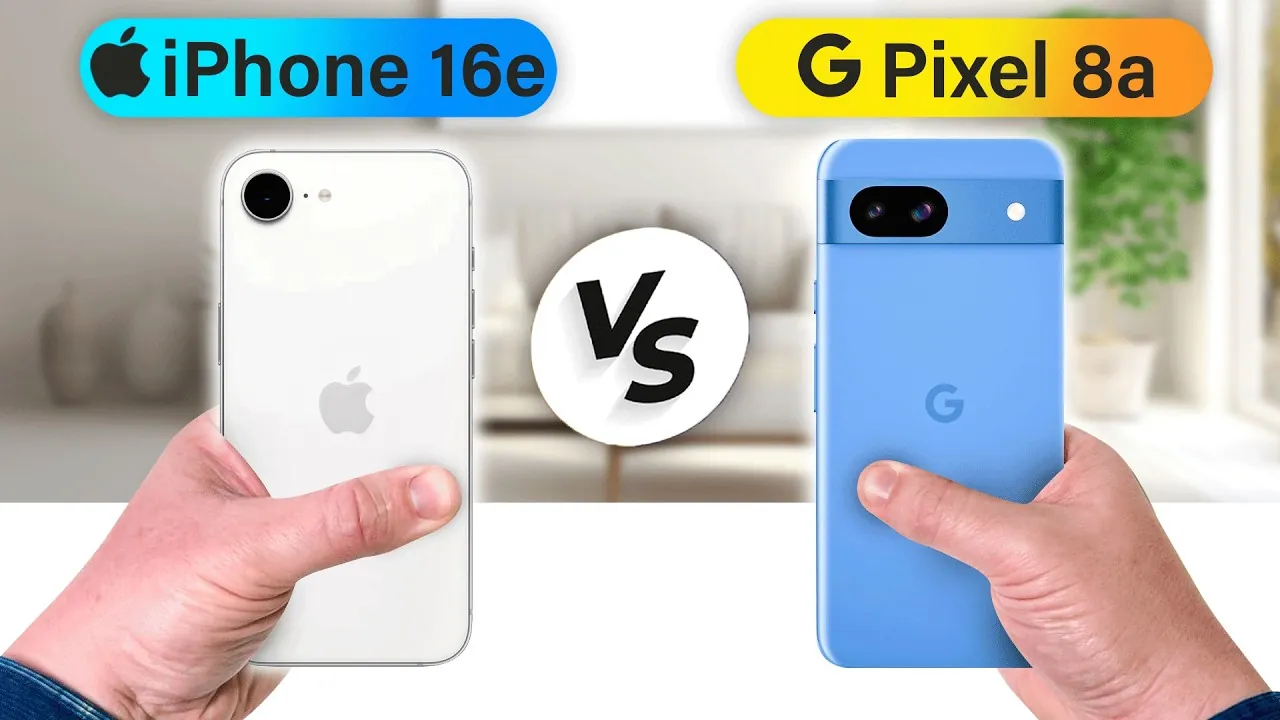
When considering budget flagship smartphones, the iPhone 16e and Pixel 8a stand out as two compelling options. Each device brings unique strengths to the table, catering to users with diverse preferences. This in-depth comparison explores their features across critical categories—display, performance, battery life, cameras, build quality, AI capabilities, and pricing—to help you decide which smartphone aligns best with your needs. The video below from Matt Talks Tech compares the two handsets.

Display: OLED Technology and Refresh Rates
Both the iPhone 16e and Pixel 8a feature 6.1-inch OLED displays, but their specifications reveal notable differences:
- Pixel 8a: Offers a 1080p resolution (430 pixels per inch) and a smooth 120Hz refresh rate, delivering fluid visuals ideal for gaming and seamless scrolling. Its peak brightness of 2000 nits ensures excellent visibility, even under direct sunlight.
- iPhone 16e: Features a sharper 1170p resolution (458 pixels per inch) but is limited to a 60Hz refresh rate, which may feel less responsive during fast-paced interactions. Its peak brightness of 1200 nits is sufficient for most conditions but falls short of the Pixel 8a’s outdoor readability.
If you prioritize smoother visuals and superior brightness, the Pixel 8a takes the lead. However, the iPhone 16e’s higher pixel density may appeal to users who value sharper image quality.
Performance: A18 Bionic vs Tensor 3
Performance is a critical factor for many users, and these devices are powered by distinct processors that define their capabilities:
- iPhone 16e: Runs on Apple’s A18 Bionic chip, featuring a 6-core CPU and 4-core GPU. This processor delivers industry-leading performance, excelling in multitasking, gaming, and demanding applications.
- Pixel 8a: Powered by Google’s Tensor 3 chip, which includes a 9-core CPU and 7-core GPU. While it shines in AI-driven tasks such as voice recognition and on-device machine learning, it lags behind the A18 Bionic in raw processing power.
Both devices come with 8GB of RAM, making sure smooth performance for everyday tasks. If speed and efficiency are your priorities, the iPhone 16e offers unmatched performance. On the other hand, the Pixel 8a is better suited for users who rely on AI-enhanced features.
Battery and Charging: Longevity and Speed
Battery life and charging capabilities are essential for modern smartphones, and these devices offer distinct advantages:
- Pixel 8a: Equipped with a larger 4,492mAh battery, it provides up to 24 hours of video playback. It supports 18W wired charging and 7.5W wireless charging, making sure reliable performance throughout the day.
- iPhone 16e: Features a smaller 3,279mAh battery but achieves slightly longer video playback at 26 hours. It supports faster 27W wired charging alongside 7.5W wireless charging, making it ideal for users seeking quicker top-ups.
While the Pixel 8a offers a larger battery, the iPhone 16e’s efficiency and faster charging capabilities may appeal to users who prioritize convenience and quick recharging.
Camera Performance: High-Resolution Imaging
For photography enthusiasts, the camera systems on these devices cater to different needs:
- Pixel 8a: Features a 64MP wide rear camera, a 13MP ultra-wide lens, and a 13MP front camera. It excels in sharpness, dynamic range, and low-light performance, making it a strong choice for users who prioritize photography.
- iPhone 16e: Includes a 48MP wide rear camera and a 12MP front camera. While its image processing ensures natural colors and consistent results, it falls slightly behind the Pixel 8a in terms of detail and low-light capabilities.
If capturing high-quality photos is a priority, the Pixel 8a offers a more versatile and advanced camera system. However, the iPhone 16e’s reliable image processing may appeal to users seeking consistent results.
Build and Connectivity: Durability and Ports
Build quality and connectivity options significantly impact the user experience, and these devices differ in their offerings:
- Pixel 8a: Heavier at 189 grams, it provides IP67 water resistance, offering protection against splashes and brief submersion. It includes a USB-C 3.2 port for faster data transfer and supports Wi-Fi 6E for improved wireless connectivity.
- iPhone 16e: Lighter at 167 grams, it features superior IP68 water resistance, allowing it to withstand deeper immersion. However, its USB-C 2.0 port and Wi-Fi 6 support are less advanced than the Pixel 8a’s features.
The Pixel 8a’s connectivity options are more future-proof, while the iPhone 16e offers better water resistance and a lighter design, appealing to users who prioritize portability and durability.
Artificial Intelligence: Google Gemini AI vs Apple Intelligence
AI capabilities are becoming increasingly integral to smartphones, and both devices integrate advanced systems:
- Pixel 8a: Uses Google Gemini AI to enhance features like voice recognition, photo editing, and predictive text. Its AI implementation is robust and feature-rich, offering practical benefits for everyday use.
- iPhone 16e: Uses Apple Intelligence, a suite of AI-driven capabilities that are still evolving. While promising, it currently lacks the depth and maturity of Google’s AI offerings.
For users who rely heavily on AI-driven features, the Pixel 8a provides a more comprehensive and advanced experience.
Storage Options and Pricing
Storage flexibility and pricing are crucial factors when choosing a smartphone:
- Pixel 8a: Available in 128GB and 256GB variants, with a starting price of $499. This makes it an attractive option for budget-conscious buyers.
- iPhone 16e: Offers 128GB, 256GB, and 512GB options, starting at $599. Its higher price reflects premium features and Apple’s renowned long-term software support.
The Pixel 8a delivers excellent value for those seeking affordability, while the iPhone 16e caters to users who need more storage or prioritize long-term usability.
Which Smartphone Is Right for You?
Your decision between the iPhone 16e and Pixel 8a ultimately depends on your specific needs and preferences:
- Choose the Pixel 8a if you value display quality, camera performance, and affordability. Its high refresh rate, exceptional brightness, and advanced camera system make it an excellent choice for multimedia enthusiasts.
- Opt for the iPhone 16e if you prioritize processing power, faster charging, and long-term software support. It’s a great fit for users invested in the Apple ecosystem or seeking a device with enduring usability.
Both smartphones excel in their respective areas, offering distinct advantages tailored to different user priorities. Carefully consider your preferences to select the device that best complements your lifestyle.
Gain further expertise in iPhone vs Android phones by checking out these articles.
- Galaxy S24 Ultra vs iPhone 15 Pro Max vs Pixel 8 Pro (Video
- iPhone 8 Coming In 2017 With A Major Re-design
- Airbox wireless battery designed for Apple iOS range
- Mobile Phone News
- Android News
Source & Image Credit: Matt Talks Tech
Disclosure: Some of our articles include affiliate links. If you buy something through one of these links, Geeky Gadgets may earn an affiliate commission. Learn about our Disclosure Policy.
