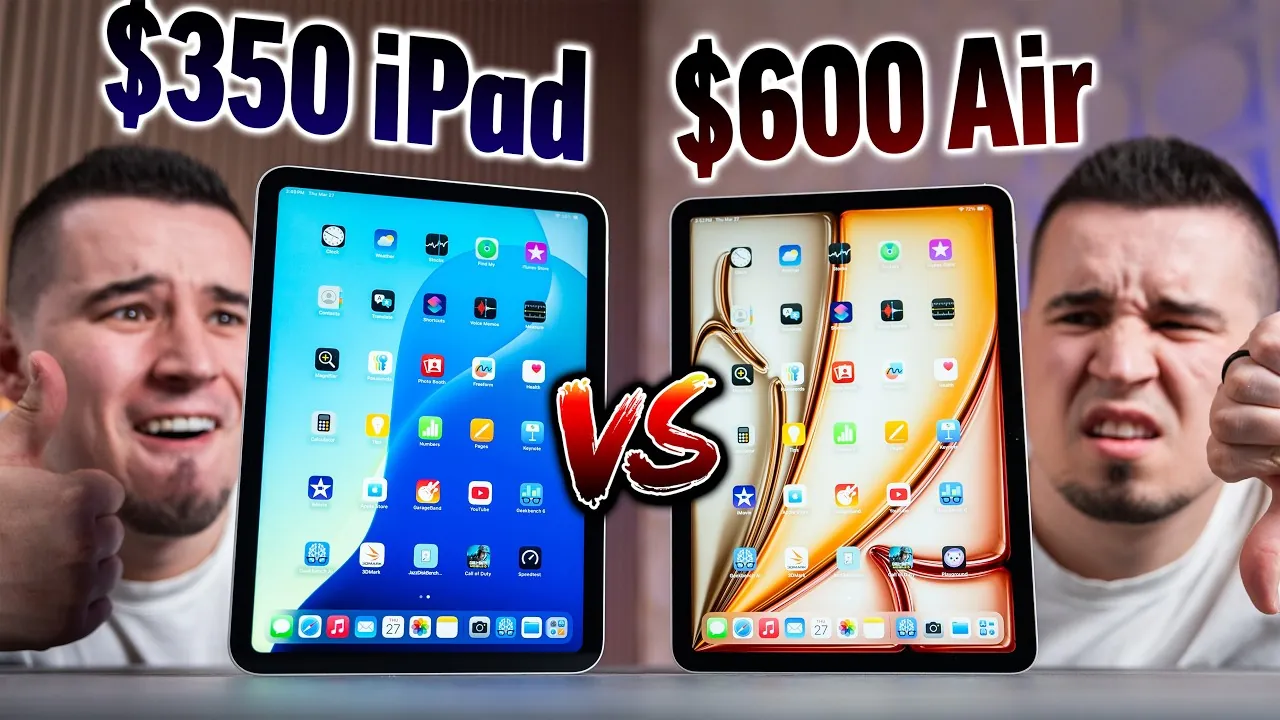
Deciding between the 11th-generation iPad and the iPad Air M3 can be challenging, especially when weighing factors like performance, features, and price. While the iPad Air M3 offers advanced capabilities, the 11th-gen iPad provides excellent value for everyday users. A closer look at their differences in a new video from Max Tech will help you determine which device aligns with your needs.

Price: Budget-Friendly vs. Premium Investment
The iPad Air M3 carries a higher price tag, costing approximately $250 more than the 11th-gen iPad. The base model of the 11th-gen iPad is priced at $328 on Amazon and now includes 128GB of storage, doubling the capacity of its predecessor. This makes it an attractive option for those prioritizing affordability.
For budget-conscious buyers, the 11th-gen iPad offers exceptional value. However, if you’re willing to pay more for advanced features and performance, the iPad Air M3 justifies its premium cost.
Design and Display: Enhanced Visuals vs. Practical Simplicity
The iPad Air M3 features a laminated display that eliminates the gap between the glass and the screen, enhancing visual clarity and reducing glare with its anti-reflective coating. Additionally, it supports DCI-P3 color accuracy, making it ideal for creative professionals or users who value vibrant and true-to-life visuals.
In contrast, the 11th-gen iPad uses a non-laminated display, which is sufficient for casual use but lacks the immersive quality of the Air M3. The visible gap between the screen and glass can impact Apple Pencil precision and overall viewing experience. For tasks requiring high color fidelity or immersive visuals, the iPad Air M3 is the superior choice.
Performance: Everyday Efficiency vs. Professional Power
The iPad Air M3 is powered by Apple’s M3 chip, delivering a 90% improvement in multi-core performance and 2.2x better graphics compared to the A16 chip in the 11th-gen iPad. This makes it a strong contender for demanding tasks such as video editing, 3D rendering, and gaming.
On the other hand, the 11th-gen iPad, equipped with the A16 chip, performs admirably for everyday activities like web browsing, streaming, and casual gaming. Unless your workflow involves resource-intensive applications, the performance gap between the two devices may not be noticeable for most users.
Ports and Connectivity: Advanced Speed vs. Standard Functionality
The iPad Air M3 includes a faster USB-C port, allowing file transfers in just seven seconds—significantly faster than the two minutes required by the 11th-gen iPad. It also supports Wi-Fi 6E, providing faster and more reliable internet speeds when paired with compatible routers.
While the 11th-gen iPad also features a USB-C port and Wi-Fi 6, it lags behind in speed and connectivity. For casual users, this difference may not be critical. However, professionals handling large files or relying on high-speed internet will benefit from the Air M3’s advanced capabilities.
Audio Quality: Superior Sound vs. Basic Output
The iPad Air M3 delivers a richer audio experience, with improved speaker clarity, particularly in the highs and mids. This makes it an excellent choice for media consumption, video calls, and music playback.
The 11th-gen iPad, while offering decent audio quality, lacks the depth and clarity of the Air M3. For basic use, this difference may not be significant, but users who frequently consume media or value high-quality sound will appreciate the Air M3’s enhanced audio.
Gaming and Graphics: Casual Enjoyment vs. Intensive Performance
The M3 chip in the iPad Air M3 excels in graphics-intensive tasks, making it the better option for serious gamers or users running demanding applications. However, both devices are limited by their 60Hz displays, meaning casual games like *Candy Crush* or *Call of Duty* won’t showcase a significant difference in performance.
For casual gaming, the 11th-gen iPad performs adequately. However, if you’re looking for smoother performance in graphically demanding games, the iPad Air M3 is the clear winner.
Camera Technology: Equal Capabilities
Both devices feature 12MP front and rear cameras with Center Stage functionality, making sure smooth video calls and high-quality photos. Camera performance is identical, so it is not a deciding factor when choosing between the two models.
Who Should Choose the iPad Air M3?
The iPad Air M3 is designed for users who require advanced features and capabilities, such as:
- Faster file transfers and connectivity with Wi-Fi 6E
- Enhanced performance for video editing, 3D rendering, or multitasking
- A superior display for creative work or immersive media consumption
- A laptop-like experience with the improved Magic Keyboard
If you’re a professional, creative, or power user, the iPad Air M3’s features make it a worthwhile investment.
Who Should Choose the 11th-Gen iPad?
The 11th-gen iPad is an excellent option for:
- Students, families, or casual users seeking affordability
- Everyday tasks like web browsing, streaming, and light gaming
- Users who don’t require advanced display or performance features
Its lower price and 128GB of storage make it a practical choice for most users.
Making the Right Choice
The decision between the iPad Air M3 and the 11th-gen iPad ultimately depends on your budget and how you plan to use the device. The 11th-gen iPad offers excellent value for everyday tasks, making it ideal for students, families, and casual users. On the other hand, the iPad Air M3 is a compelling choice for professionals, creatives, and those who need advanced performance and features. Carefully assess your priorities to select the device that best suits your needs.
Gain further expertise in iPad Air M3 by checking out these recommendations.
- Apple Launches iPad with M3 and Redesigned Magic Keyboard
- iPad M3 vs M2 Comparison: Features, Specs, and Pricing
- Everything You Need to Know About the M3 iPad Air
- Apple iPad 11 and M3 iPad: Features, Pricing, and More
- M3 iPad vs. iPad 11: Design, Display, and More
Source & Image Credit: Max Tech
Disclosure: Some of our articles include affiliate links. If you buy something through one of these links, Geeky Gadgets may earn an affiliate commission. Learn about our Disclosure Policy.
