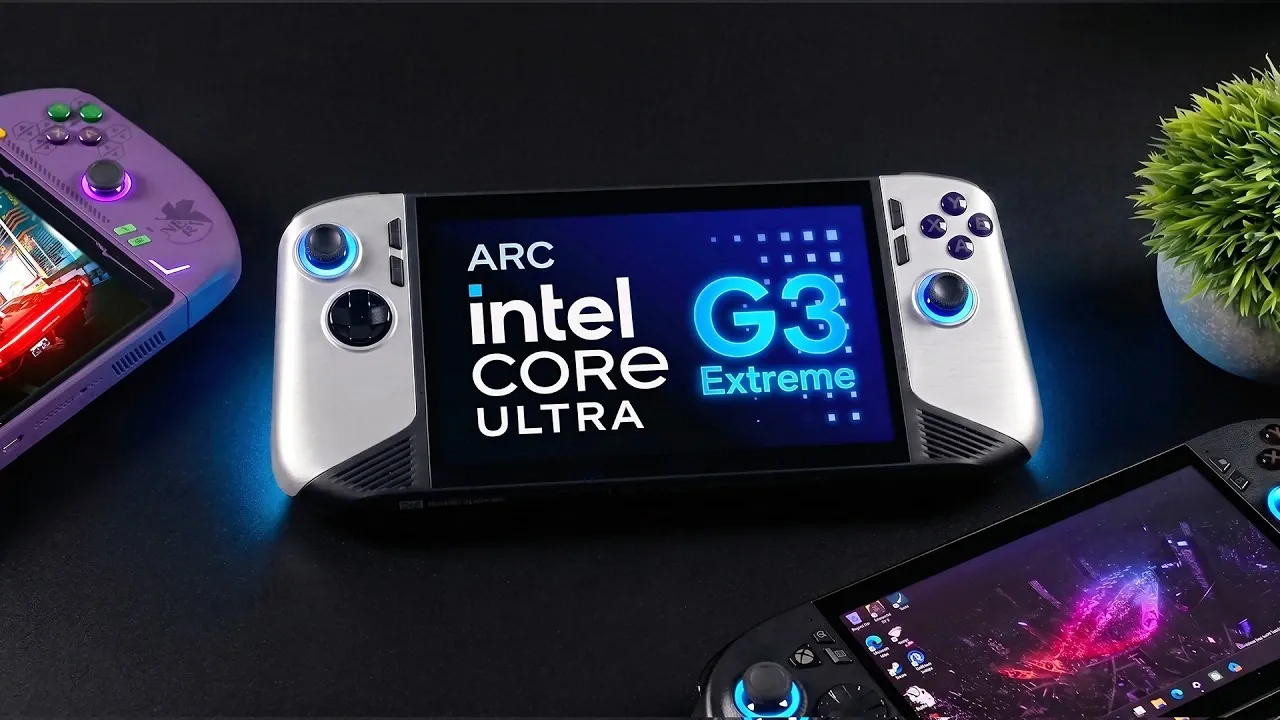
Intel’s upcoming Arc G3 processors, built on the Panther Lake architecture, are poised to make a notable impact in handheld gaming. According to ETA Prime, the Arc G3 Extreme variant features 12 XE3 integrated GPU cores clocked at 2.3 GHz, delivering improved graphical performance for demanding games. With a 14-core configuration designed to balance performance and efficiency, these processors address key challenges in portable devices, such as battery life and thermal management. Technologies like Xe Super Sampling (XESS) and Multi-Frame Generation further enhance gameplay by improving visual quality and maintaining smooth frame rates without requiring high-end hardware.
Dive into how the Arc G3 series handles popular games like Cyberpunk 2077 and Forza Horizon 5 at stable frame rates, even under lower power settings. Learn about the processors’ thermal design power (TDP) range, which allows manufacturers to prioritize either extended battery life or maximum performance. Additionally, explore the role of high-speed integrated memory and advanced power management in shaping the future of handheld gaming devices.
Balancing Power and Efficiency
TL;DR Key Takeaways :
- Intel’s Arc G3 processors, built on the Panther Lake architecture, are designed for handheld gaming, offering a balance of high performance and energy efficiency.
- The Arc G3 lineup includes two variants: Arc G3 with 10 XE3 GPU cores and Arc G3 Extreme with 12 XE3 GPU cores, optimized for modern gaming workloads.
- Key gaming technologies like Xe Super Sampling (XESS) and Multi-Frame Generation enhance visual fidelity and frame rates, making sure smooth gameplay at 1080p and 900p resolutions.
- Advanced features such as high-speed integrated memory (8,533 MT/s) and potential Neural Processing Unit (NPU) support improve gaming performance and multitasking capabilities.
- Set to debut at Computex 2026, the Arc G3 series positions Intel as a strong competitor to AMD’s Z1 processors, potentially reshaping the handheld gaming market.
The Arc G3 processors are engineered to deliver a balance of raw power and energy efficiency, tailored specifically for gaming workloads. Their architecture is designed to meet the demands of modern gaming while maintaining the low power consumption essential for portable devices. Below is a detailed breakdown of their specifications:
- Core Configuration: Both processors feature a 14-core, 14-thread design, divided into performance cores, efficiency cores and low-power efficiency cores to optimize workload distribution.
- Arc G3: Equipped with 2 performance cores, 8 efficiency cores and 4 low-power efficiency cores, alongside 10 XE3 integrated GPU cores clocked at 2.2 GHz.
- Arc G3 Extreme: Offers enhanced graphical capabilities with 12 XE3 iGPU cores running at 2.3 GHz, delivering improved performance for demanding gaming scenarios.
This architectural design ensures that both variants can handle modern gaming requirements efficiently, making them ideal for handheld devices where battery life and thermal management are critical.
Performance Highlights: Gaming Anywhere, Anytime
The Arc G3 processors are optimized for portable gaming, with a thermal design power (TDP) range of 3W to 65W. This wide range allows manufacturers to tailor devices for either extended battery life or maximum performance, depending on the use case. Key gaming technologies integrated into these processors include:
- Xe Super Sampling (XESS): A resolution-scaling technology that enhances visual fidelity without significantly increasing hardware demands.
- Multi-Frame Generation: Improves frame rates for smoother gameplay, even in graphically intensive titles.
These technologies enable the Arc G3 processors to deliver consistent performance in popular games at medium settings and resolutions, such as 1080p and 900p. This ensures a seamless gaming experience while conserving battery life, a crucial factor for handheld gaming enthusiasts.

Browse through more resources below from our in-depth content covering more areas on gaming handhelds.
- New Switch 2 Firmware Adds “Handheld Mode Boost” & More
- Panther Lake Handhelds : Intel’s Push into Portable PC Gaming
- Panther Lake vs Z2 Extreme : FPS Results Benchmarks
- ClockworkPi uConsole Linux handheld PC
- RG56 Pro Max Review & Performance Guide: Is It Worth $65?
- Steam Deck Restock Updates: 512GB and 1TB Models Return at MSRP
- Intel Panther Lake Processors Tranforming Gaming Handhelds
- Insta360 Luna Ultra vs DJI Pocket 4 : Complete Comparison
- Steam Deck OLED Stock Status & What to Expect
- MSI Claw A8 Review: Can It Handle Borderlands 4 on the Go?
Gaming Benchmarks: Real-World Testing
Preliminary benchmarks highlight the Arc G3 series’ ability to handle a variety of gaming scenarios effectively. Tested titles include Red Dead Redemption 2, Forza Horizon 5, Spider-Man 2, Street Fighter 6, Silkong, and Cyberpunk 2077. The results demonstrate:
- Stable frame rates and smooth gameplay, even at lower power settings, showcasing the processors’ efficiency.
- Enhanced performance through advanced frame generation and resolution scaling technologies, making sure a visually rich gaming experience.
These benchmarks indicate that the Arc G3 processors are well-suited for both casual and demanding gaming, making them a strong contender in the portable gaming market.
Advanced Features: Enhancing the Gaming Experience
The Arc G3 processors incorporate several advanced features that elevate their gaming and overall performance capabilities. These include:
- Potential Neural Processing Unit (NPU): While not yet confirmed, the inclusion of an NPU could enable automatic super-resolution and upscaling, delivering sharper visuals and enhanced gaming experiences.
- High-Speed Integrated Memory: With transfer rates of 8,533 MT/s, the processors ensure rapid data access, crucial for gaming and multitasking.
- Power Management: PL1 and PL2 settings allow precise control over energy consumption, allowing manufacturers to optimize performance for handheld devices.
These features underscore Intel’s commitment to delivering a seamless and efficient gaming experience, pushing the boundaries of what is possible in portable gaming technology.
Market Impact: A New Era for Handheld Gaming
Intel’s entry into the handheld gaming market with the Arc G3 series marks a significant shift in the competitive landscape. By emphasizing power efficiency and advanced graphics capabilities, the Arc G3 lineup directly challenges AMD’s Z1 and Z1 Extreme processors. The success of these processors will largely depend on Intel’s ability to balance cost and performance. If priced competitively, the Arc G3 processors could become a preferred choice for handheld gaming manufacturers, driving innovation in this rapidly growing segment.
Looking Ahead: Computex 2026 and Beyond
The Arc G3 and Arc G3 Extreme processors are set to make their official debut at Computex 2026, where Intel is expected to showcase a range of Panther Lake-powered handheld devices from various manufacturers. This event will provide a closer look at the potential of the Arc G3 lineup to redefine portable gaming standards. With its focus on performance, efficiency and advanced features, Intel’s Arc G3 series could play a pivotal role in shaping the future of handheld gaming, offering gamers a new level of portability and power.
Media Credit: ETA PRIME
Disclosure: Some of our articles include affiliate links. If you buy something through one of these links, Geeky Gadgets may earn an affiliate commission. Learn about our Disclosure Policy.
