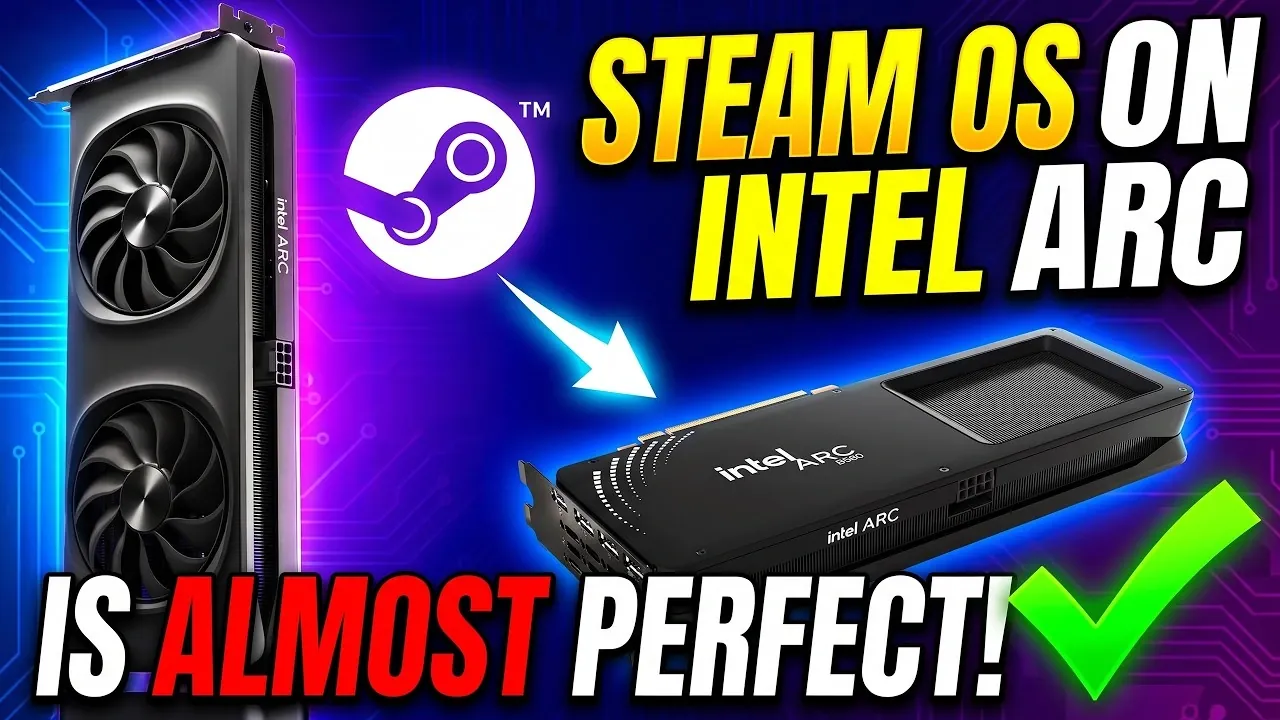
Intel’s Arc B580 GPU has reached a new milestone by achieving compatibility with SteamOS 3.9, eliminating the need for complex workarounds or manual configurations. As demonstrated by ETA Prime, the GPU delivers notable stability and competitive 1440p performance across a range of games, from modern titles like Cyberpunk 2077 to older classics such as Fallout 4. However, some advanced features, including XMX AI engines and XESS upscaling, remain partially functional due to ongoing limitations in Intel’s open source drivers. These constraints highlight both the progress and the remaining challenges for Intel in the Linux gaming space.
In this breakdown, you’ll explore how the Arc B580 performs under demanding gaming workloads, including its ability to handle high settings on popular titles. Gain insight into the role of Proton in optimizing Windows-based games for SteamOS and discover how alternative upscaling technologies like AMD’s FSR provide reliable solutions where XESS falls short. This overview also examines the GPU’s current limitations and the potential for future updates to unlock its full capabilities, offering a balanced look at what this development means for Linux gaming enthusiasts.
Breaking Barriers: SteamOS Compatibility
TL;DR Key Takeaways :
- The Intel Arc B580 GPU achieves seamless compatibility with SteamOS 3.9, marking a significant milestone for Linux gaming without requiring complex configurations.
- The GPU delivers impressive 1440p performance, offering a competitive option for gamers, though some advanced features like XMX AI engines and XESS upscaling remain partially functional due to driver limitations.
- Testing on modern and legacy games shows consistent performance, with frame rates comparable to Windows systems, despite minor visual glitches in some titles.
- AMD’s FSR technology provides a reliable alternative for upscaling, compensating for the incomplete functionality of Intel’s XESS on SteamOS.
- The Arc B580’s progress highlights Intel’s growing presence in the Linux gaming ecosystem, with potential for further advancements through driver updates and SteamOS development.
For the first time, the Intel Arc B580 GPU operates on SteamOS 3.9 without requiring intricate workarounds or extensive manual configuration. Testing conducted on the beta version of SteamOS demonstrated the GPU’s ability to handle demanding gaming workloads with notable stability. This achievement is a significant leap forward, as Linux gaming has long struggled with consistent GPU support, particularly from Intel, which has traditionally lagged behind competitors like AMD and Nvidia in this space.
The seamless integration of the Arc B580 with SteamOS is a testament to the progress made in Intel’s open source driver development. This compatibility ensures that Linux gamers can now access a broader range of hardware options, further diversifying the ecosystem and enhancing the appeal of SteamOS as a gaming platform.
Hardware Overview
The performance of the Intel Arc B580 GPU was evaluated using a robust test system designed to push the hardware to its limits. The specifications of the test system included:
- GPU: Intel Arc B580 with 12GB of VRAM and 160 XMX AI engines
- CPU: Intel Core Ultra 5 250K Plus, featuring 18 cores and 18 threads
This setup provided a solid foundation for assessing the GPU’s capabilities, allowing a direct comparison with mid-range offerings from AMD and Nvidia. The Arc B580 demonstrated its ability to deliver competitive performance, positioning itself as a strong option for gamers seeking a balance between cost and capability.

Here are additional guides from our expansive article library that you may find useful on SteamOS.
- SteamOS 3.8 Changes the Game for Steam Deck, Legion Go and Xbox Ally X Users
- Valve Finally Solves Long-Standing SteamOS Bugs in New Update
- Its Time to Ditch Windows for Valve’s Lightweight SteamOS Gaming Platform
- Valve Brings Official SteamOS Support to Nvidia Desktop GPUs
- Why Valve’s Latest SteamOS Update Changes Everything for Your Steam Machine
- Valve Expands SteamOS to Intel Handhelds with the New 3.8.7 Update
- SteamOS 3.8 Adds Ray Tracing and Improved 4K Display Support
- SteamOS Beta Update Fixes CPU Degradation and Wi-Fi Bugs
- How to Build a DIY Steam Machine Using Your Existing PC and SteamOS
- Why Valve’s Steam OS is Quietly Replacing Windows on Gaming PCs
Performance Across Modern and Legacy Games
The Intel Arc B580 showcased consistent performance across a diverse range of games, including both modern titles and older classics. Popular games such as Cyberpunk 2077, Horizon Zero Dawn Remastered, Fallout 4, Elden Ring, and Forza Horizon 6 were tested at 1440p resolution with high settings. Frame rates were often comparable to those achieved on Windows systems, thanks to the Proton compatibility layer, which optimizes Windows-based games for Linux environments.
While newer titles like Cyberpunk 2077 ran smoothly with minimal issues, older games such as Fallout 4 required minor adjustments to frame rate settings for optimal performance. Visual quality remained consistently high, with only occasional graphical glitches, such as particle effect issues observed in Horizon Zero Dawn. These minor imperfections did not detract significantly from the overall gaming experience, highlighting the GPU’s capability to handle a wide variety of gaming scenarios.
Challenges and Limitations
Despite its strong performance, the Intel Arc B580 faces several challenges that limit its full potential on SteamOS. The XMX AI engines, which power Intel’s XESS upscaling technology, are not yet fully functional due to incomplete driver support. This limitation restricts the GPU’s ability to use advanced features such as multi-frame generation, which could otherwise enhance both visual fidelity and performance.
Additionally, some games exhibited minor visual glitches, particularly in graphically intensive scenarios. These issues underscore the need for further refinement in Intel’s open source graphics drivers. Addressing these limitations will be crucial for unlocking the GPU’s full capabilities and making sure a seamless gaming experience across all titles.
Upscaling Options: XESS and Alternatives
Intel’s XESS upscaling technology is partially operational on SteamOS, offering some improvements in image quality. However, its full capabilities remain constrained without the support of the XMX AI engines. As a result, gamers may not experience the complete benefits of this advanced upscaling solution.
Fortunately, AMD’s FSR (FidelityFX Super Resolution) technology provides a reliable alternative. Fully functional on the Arc B580, FSR ensures that SteamOS users can still enjoy enhanced visuals and improved performance, even in the absence of fully optimized XESS support. This cross-platform solution highlights the flexibility of the Linux gaming ecosystem, allowing users to use a variety of tools to enhance their gaming experience.
Looking Ahead: The Arc B580’s Future Potential
The Intel Arc B580’s performance on SteamOS demonstrates its potential as a competitive option for Linux gamers. With further updates to Intel’s open source drivers and continued development of SteamOS, the GPU could unlock its full range of features, including the XMX AI engines and advanced XESS capabilities. These advancements would position the Arc B580 as a strong contender against AMD’s Radeon GPUs, which currently dominate the Linux gaming market.
The growing compatibility of Intel GPUs with Linux-based platforms like SteamOS signals a broader shift in the gaming industry. As more developers and hardware manufacturers invest in Linux gaming, users can expect greater hardware diversity and improved software support, ultimately enhancing the overall gaming experience.
A Promising Step for Linux Gaming
The Intel Arc B580 GPU represents a significant advancement for gaming on SteamOS. Its ability to deliver solid 1440p performance, combined with its compatibility with the Proton layer, makes it a promising choice for Linux gamers. While limitations in driver support currently hinder some advanced features, the GPU’s potential is undeniable. With continued development and refinement, the Arc B580 could become a cornerstone of Linux gaming, offering a compelling alternative to existing GPU options and contributing to the growth of the Linux gaming ecosystem.
Media Credit: ETA PRIME
Disclosure: Some of our articles include affiliate links. If you buy something through one of these links, Geeky Gadgets may earn an affiliate commission. Learn about our Disclosure Policy.
