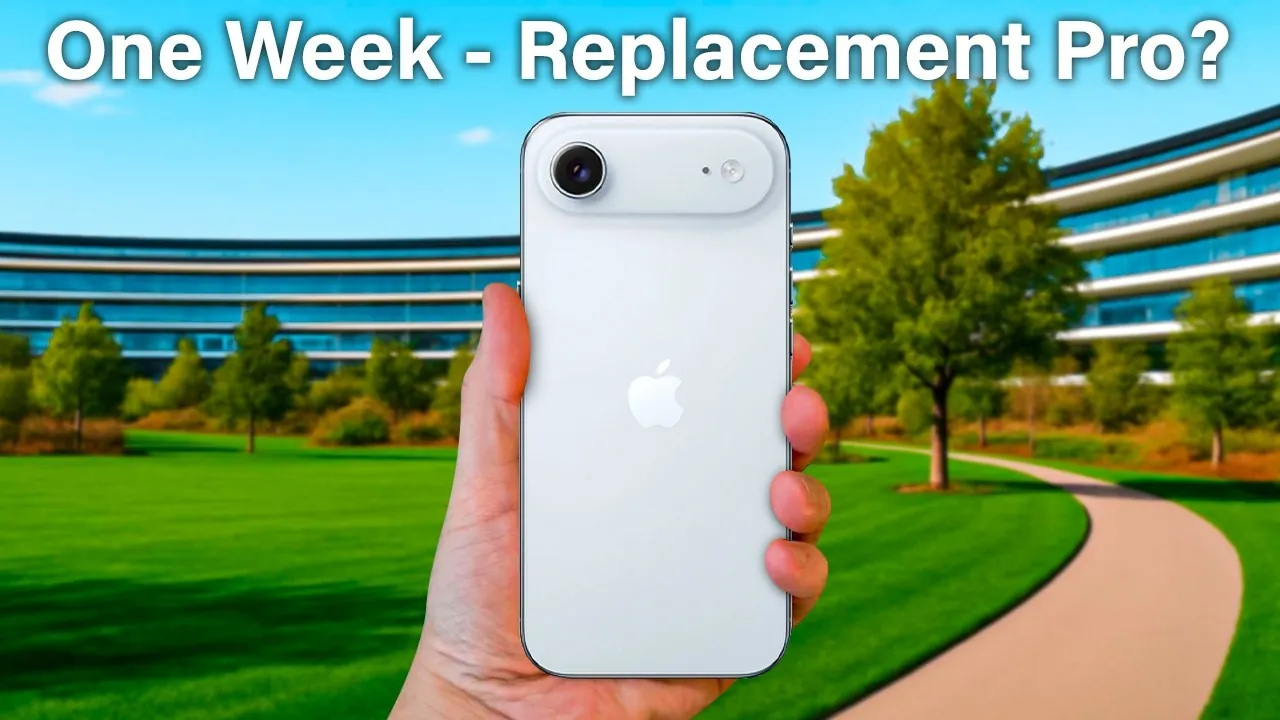
Apple’s iPhone Air represents the company’s latest attempt to craft a smartphone that emphasizes portability and simplicity. With its ultra-thin design and lightweight build, it targets users who prioritize convenience over innovative features. But does it have the capability to replace the feature-rich iPhone 17 Pro Max? By examining its design, performance, and usability, we can determine whether the iPhone Air is a worthy contender or a niche device. The video below from Matt Talks Tech gives us more details.

Design and Build: Sleek Aesthetics with Practical Trade-Offs
The iPhone Air’s defining characteristic is its ultra-thin 5.6 mm profile and feather-light weight of just 165 grams. The polished titanium frame provides a premium feel, while the Ceramic Shield 2 glass adds a layer of protection against everyday wear and tear. The device is available in several colors, but darker shades tend to attract fingerprints and scratches, making lighter options more practical for maintaining a clean look.
However, the sleek design comes at a cost. The iPhone Air feels noticeably less durable compared to the sturdier iPhone 17 Pro Max. For users who frequently handle their devices in demanding environments or prioritize longevity, this could be a concern. While the portability is impressive, the trade-off in robustness may not appeal to everyone.
Display: Bright and Smooth with Room for Improvement
The iPhone Air features a 6.5-inch display with a 120 Hz ProMotion refresh rate and a peak brightness of 3,000 nits. These specifications ensure excellent visibility, even under direct sunlight, making it a strong choice for outdoor use. The display delivers vibrant colors and smooth scrolling, enhancing the overall user experience.
Despite its strengths, the display has minor flaws. The anti-reflective coating offers only limited glare reduction, which can be noticeable in brightly lit environments. Additionally, the screen tends to warm up during extended use, such as streaming videos or gaming. While this issue is unlikely to bother casual users, it may be a drawback for those who spend long hours on their devices.
Performance: Reliable for Daily Tasks but Limited for Power Users
Powered by the A19 Pro chip, the iPhone Air provides fast and fluid performance for everyday activities. Tasks like web browsing, multitasking, and app usage are handled with ease, and the integration of iOS 26 ensures seamless optimization between hardware and software. The device feels responsive and efficient, making it a dependable choice for general use.
One area where the iPhone Air excels is heat management. The device effectively dissipates heat at the top, making sure comfort during prolonged use. However, its capabilities are limited when it comes to power-intensive tasks such as high-end gaming or video editing. For users with demanding performance needs, the iPhone 17 Pro Max remains the superior option.
Camera: Functional but Lacks Versatility
The iPhone Air is equipped with a single 48 MP rear camera that performs well in good lighting conditions. It delivers crisp and detailed photos, supporting 1x and 2x optical zoom. However, its digital zoom is capped at 10x for photos and 6x for videos, which pales in comparison to the advanced zoom capabilities of the iPhone 17 Pro Max.
The absence of an ultra-wide sensor further limits the camera’s versatility, making it less appealing to photography enthusiasts. On the front, the 18 MP camera includes Center Stage, a feature designed to keep users in focus during video calls. While this is a convenient addition for casual users, the overall camera setup may feel underwhelming for those who prioritize advanced photography features.
Battery Life: Sufficient for Light Use but Falls Short for Demanding Tasks
The iPhone Air offers battery performance comparable to the iPhone 15 Pro, making it adequate for general use. For activities like messaging, browsing, and casual photography, the battery life is sufficient. However, it struggles with intensive tasks such as gaming or prolonged camera usage, where the battery drains more quickly.
Charging speeds are another limitation. The iPhone Air’s charging capabilities are slower than those of the Pro models, which could be a drawback for users who rely on their devices for demanding tasks throughout the day. While the battery life is acceptable for light users, heavy users may find it insufficient.
Who Should Consider the iPhone Air?
The iPhone Air is best suited for users who value portability and simplicity. It excels in handling everyday tasks such as messaging, browsing, and casual photography. Its lightweight design and seamless integration with iOS 26 make it an attractive option for those seeking a no-frills smartphone.
However, it is not the ideal choice for power users, content creators, or individuals who require advanced camera features and extended battery life. For these users, the iPhone 17 Pro Max remains the better option, offering superior performance, versatility, and durability.
A Lightweight Contender with Clear Trade-Offs
The iPhone Air strikes a balance between design, performance, and usability, making it a compelling choice for users who prioritize portability. Its sleek build, vibrant display, and smooth performance cater to everyday needs, but it falls short in areas such as camera versatility, battery life, and charging speeds.
Ultimately, the iPhone Air is a strong option for those seeking a lightweight and straightforward smartphone. However, for users who demand top-tier performance, advanced features, or robust durability, the iPhone 17 Pro Max continues to set the benchmark in Apple’s lineup.
Find more information on iPhone Air by browsing our extensive range of articles, guides and tutorials.
- Is the iPhone 17 Air Worth It? Pros, Cons, and Full Breakdown
- iPhone Air Review: Features, Design, and Performance
- iPhone Air: Features, Pricing, and Why It’s Apple’s Best Yet
- iPhone 17 Air: Features, Specs, and Release Date
- iPhone Air vs iPhone 17 Pro: Key Differences Explained
Source & Image Credit: Matt Talks Tech
Disclosure: Some of our articles include affiliate links. If you buy something through one of these links, Geeky Gadgets may earn an affiliate commission. Learn about our Disclosure Policy.
