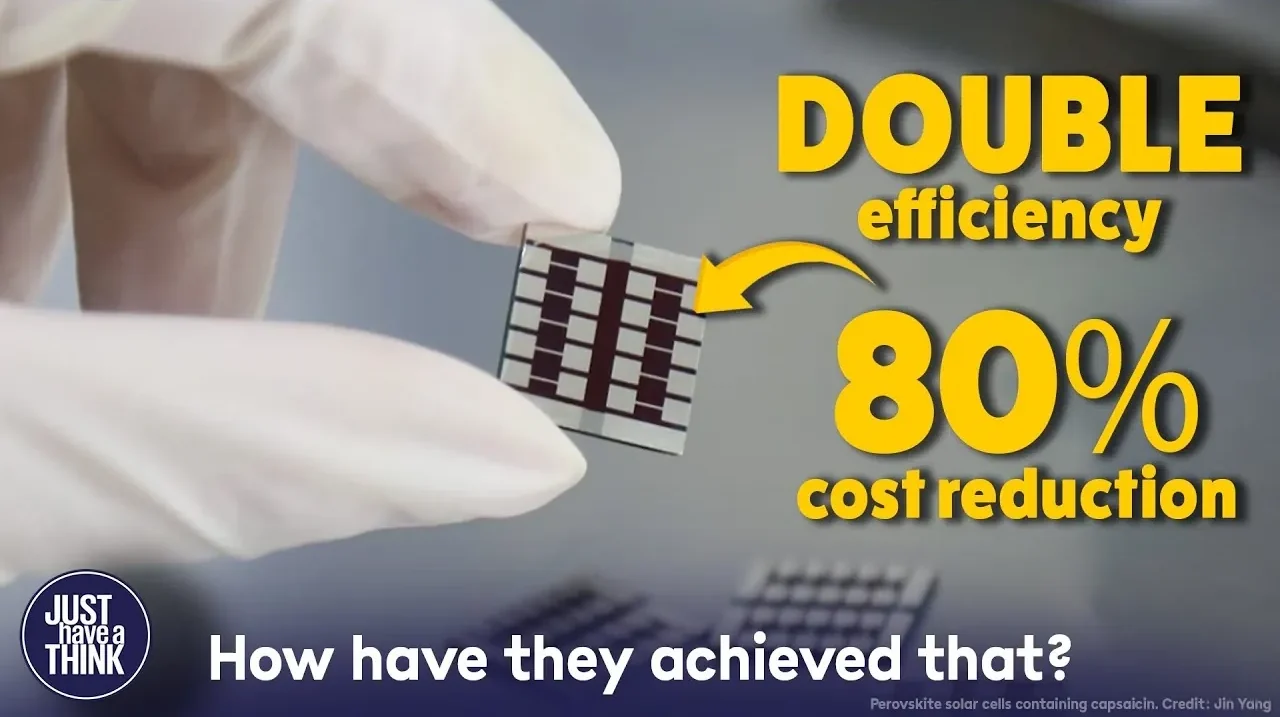
What if the future of solar energy wasn’t just brighter but fundamentally redefined? Imagine a world where solar panels are not only more efficient but also cheaper, more durable, and adaptable to nearly any environment. Thanks to the innovative integration of functionalized graphene into perovskite solar cells, that future is no longer a distant dream. With an unprecedented energy conversion efficiency of 30.6%, this breakthrough shatters the limits of traditional silicon-based technology, offering a glimpse into a new era of sustainable energy. It’s not just an upgrade, it’s a transformation poised to reshape the solar PV industry as we know it.
In this exploration, Just Have a Think uncover how this innovative innovation combines the remarkable properties of graphene with the versatility of perovskite materials to deliver solar panels that are more efficient, cost-effective, and environmentally sustainable. From the potential to drastically reduce production costs to the ability to perform under challenging conditions like low light or cloudy skies, this technology offers solutions that go far beyond conventional solar cells. Whether you’re an environmentally conscious homeowner, a tech enthusiast, or simply curious about the future of renewable energy, this breakthrough promises to change the way we think about harnessing the sun’s power. Could this be the tipping point that propels solar energy into the mainstream? Let’s find out.
Breakthrough in Solar Efficiency
TL;DR Key Takeaways :
- Researchers achieved a record-breaking 30.6% efficiency in perovskite solar cells by integrating functionalized graphene, surpassing the industry standard of 26%.
- The innovation reduces production costs by up to 80% by replacing expensive metals like gold and silver, while supporting scalable roll-to-roll manufacturing for mass production.
- Advanced material design, including functionalized graphene and nano-film encapsulation, enhances durability, conductivity, and resistance to environmental stressors like heat and moisture.
- The technology is versatile, excelling in both indoor low-light conditions and outdoor environments, making it suitable for applications like IoT devices, rooftop panels, and satellites.
- Perovskite solar cells are 98% recyclable, lightweight, and energy-efficient to produce, offering a sustainable and environmentally friendly alternative to traditional solar panels.
Efficiency Redefined
The integration of functionalized graphene has significantly improved the performance of perovskite solar cells. This advanced material enhances electron mobility and minimizes resistive losses, resulting in an unprecedented energy conversion efficiency of 30.6%. Compared to traditional silicon-based cells, this leap in efficiency positions perovskite technology as a frontrunner for residential, commercial, and industrial solar applications. For users, this means access to solar panels capable of delivering higher energy output, even under challenging conditions such as low light, partial shading, or cloudy weather.
Cost-Effective and Scalable Solutions
One of the most notable aspects of this innovation is its potential to drastically reduce production costs. Functionalized graphene serves as a replacement for expensive metals like gold and silver, cutting material costs by up to 80%. Furthermore, the technology supports roll-to-roll manufacturing, a scalable and efficient production method that enables mass production of high-performance solar panels. This affordability makes advanced solar technology more accessible, allowing you to adopt innovative solutions without facing prohibitive upfront expenses. The combination of reduced costs and improved efficiency ensures that solar energy becomes a viable option for a broader range of applications.
Graphene Perovskite Just Revolutionised the Solar PV Industry
Learn more about energy by reading our previous articles, guides and features :
- Onshore Wave Energy: A Sustainable Solution to Harness Ocean
- How MGA Thermal’s Alloy is Changing the Future of Energy
- How Regenerative Tech is Reducing Energy Waste and Costs
- Rain-Powered Energy : 100,000x More Electricity from Rain
- Wave Energy : The Future of Clean, Reliable Renewable Energy
- Orison Home Energy Storage System (video)
- Samsung showcases energy saving devices
- NASA’s Mechanical Battery: A Breakthrough in Sustainable Energy
- Why Sodium-Ion Batteries Are the Future of Energy Storage
Innovative Material Composition
The success of these solar cells is rooted in their advanced material design. Functionalized graphene, when combined with localized metal nanoparticles, enhances conductivity and overall performance. Meanwhile, perovskite materials have been chemically engineered to withstand environmental challenges such as heat, moisture, and UV degradation. To further ensure durability, a nano-film encapsulation layer protects the cells from external stressors. These innovations result in solar panels that are not only efficient but also reliable over extended periods, providing you with a long-lasting energy solution that maintains consistent performance.
Adaptability for Diverse Applications
This breakthrough extends the versatility of solar energy applications. Perovskite solar cells are now optimized for both indoor and outdoor environments. Indoors, they excel under low-light conditions, such as LED lighting, making them ideal for powering Internet of Things (IoT) devices. Outdoors, their superior efficiency under cloudy skies and during low-light periods surpasses that of traditional silicon-based cells. Whether you are considering rooftop solar panels, solar-powered drones, or satellite applications, this technology adapts to a wide range of energy needs, offering tailored solutions for diverse scenarios.
Environmental Sustainability
Sustainability is a core advantage of this innovation. Perovskite solar cells are 98% recyclable, significantly reducing waste compared to conventional solar panels. Their lightweight and flexible design also requires less energy during production, resulting in a smaller carbon footprint. For environmentally conscious users, this means contributing to a greener future while benefiting from state-of-the-art energy solutions. By adopting this technology, you can actively participate in reducing environmental impact while enjoying the advantages of high-performance solar energy.
Future Prospects and Expanding Potential
The potential of perovskite technology extends far beyond current achievements. Researchers are already exploring the development of multi-junction cells, which can capture a broader spectrum of light and achieve efficiencies exceeding 35%. Such advancements could transform utility-scale photovoltaics, allowing the generation of more energy from the same amount of sunlight. Additionally, these innovations hold promise for powering billions of IoT devices, creating a seamless integration of solar energy into everyday life. For users, this translates to more efficient, adaptable, and future-ready solar solutions capable of meeting the demands of an evolving energy landscape.
The integration of functionalized graphene into perovskite solar cells marks a pivotal moment in the evolution of solar PV technology. With record-breaking efficiency, reduced costs, and enhanced sustainability, this innovation is set to transform how solar energy is harnessed. Whether for residential, commercial, or industrial use, this technology offers a reliable and forward-thinking solution that aligns with the growing demand for clean and efficient energy sources.
Media Credit: Just Have a Think
Disclosure: Some of our articles include affiliate links. If you buy something through one of these links, Geeky Gadgets may earn an affiliate commission. Learn about our Disclosure Policy.
