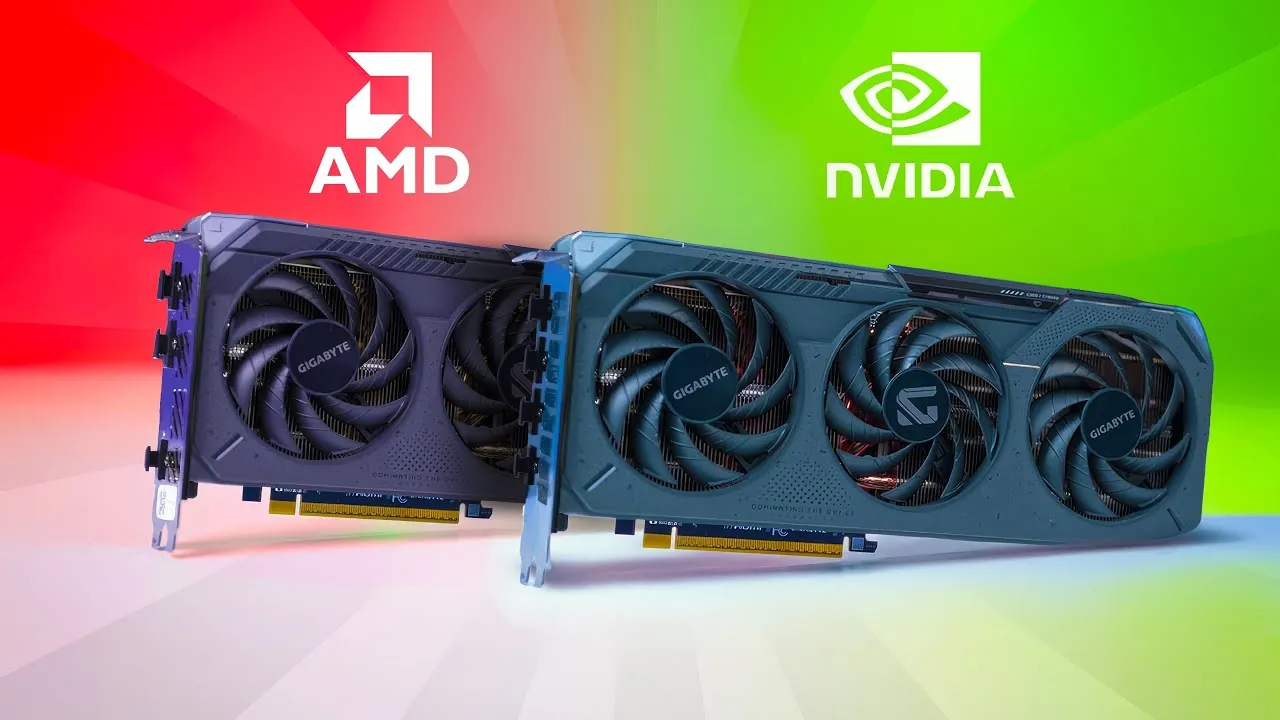
What if the key to unlocking faster, more efficient machine learning workflows lies not in your algorithms but in the hardware powering them? In the world of GPUs, where raw computational power meets intricate software ecosystems, choosing the right graphics card can feel like navigating a maze of specs, benchmarks, and trade-offs. Whether you’re training a neural network to generate lifelike images or fine-tuning a language model for text prediction, the GPU you select can dramatically impact your results. But with so many options on the market, how do you decide? Two contenders, NVIDIA’s RTX 5060 Ti and AMD’s RX 960 XT, stand out in the mid-range category, each with its own strengths and limitations. This breakdown aims to cut through the noise and help you make an informed choice.
Below, Alex Ziskind explores how these GPUs stack up in critical areas like memory bandwidth, software compatibility, and energy efficiency, factors that directly influence their suitability for machine learning. From handling quantized models to excelling in specific tasks like text or video generation, the comparison reveals surprising differences that could sway your decision. Whether you’re a seasoned data scientist or a curious beginner, this guide will illuminate the nuances of GPU performance and help you align your hardware choice with your unique workflow requirements. After all, the right tool can transform not just your productivity but the very scope of what you can achieve.
Best GPU for Machine Learning
TL;DR Key Takeaways :
- The NVIDIA RTX 5060 Ti outperforms the AMD RX 960 XT in memory bandwidth, software compatibility, and overall performance, making it better suited for demanding machine learning tasks.
- NVIDIA’s CUDA ecosystem provides extensive support for popular machine learning frameworks like TensorFlow and PyTorch, while AMD struggles with software compatibility and driver stability.
- The RTX 5060 Ti is more energy-efficient, offering better performance per watt and superior thermal management compared to the RX 960 XT.
- AMD RX 960 XT is a more affordable option but faces limitations in performance, software support, and handling large-scale or complex machine learning models.
- The RTX 5060 Ti is the preferred choice for text, image, and video generation tasks, while the RX 960 XT may only excel in specific AMD-optimized workflows.
Key Hardware Specifications
The hardware specifications of a GPU are fundamental to its performance in machine learning tasks. Comparing the NVIDIA RTX 5060 Ti and AMD RX 960 XT reveals notable differences that can impact their suitability for various workflows:
- Memory: Both GPUs are equipped with 16 GB of memory, but NVIDIA uses the newer GDDR7 standard, which delivers a memory bandwidth of 448 GB/s. In contrast, AMD relies on GDDR6, limiting its bandwidth to 320 GB/s. This gives NVIDIA a distinct advantage in handling large datasets and complex computations.
- Output Ports: The RTX 5060 Ti offers four output ports, providing greater flexibility for multi-display setups. The RX 960 XT, with three ports, may suffice for simpler configurations but lacks the versatility of its NVIDIA counterpart.
The superior memory technology and bandwidth of the RTX 5060 Ti make it better suited for high-demand machine learning tasks, particularly those involving extensive data processing.
Performance in Machine Learning Applications
Performance is a decisive factor when evaluating GPUs for machine learning. The NVIDIA RTX 5060 Ti and AMD RX 960 XT demonstrate varying levels of efficiency across different tasks:
- Text Generation: The RTX 5060 Ti consistently outperforms the RX 960 XT in natural language processing tasks, thanks to its higher memory bandwidth and optimized software support. This makes it the preferred choice for text-based machine learning applications.
- Image Generation: While NVIDIA leads in most scenarios, AMD shows potential when paired with software specifically optimized for its architecture, such as Amuse. This underscores the importance of aligning your hardware choice with the software tools you plan to use.
- Video Generation: NVIDIA excels in both speed and output quality, making it the superior option for video-related machine learning tasks.
Overall, the RTX 5060 Ti delivers more consistent and reliable performance across a broader range of machine learning applications, making it a versatile choice for diverse workflows.
RTX 5060 Ti vs RX 960 XT : Best GPU for Machine Learning in 2025

Here is a selection of other guides from our extensive library of content you may find of interest on local AI setups.
- How to build a high-performance AI server locally
- How to Set Up a Local AI Assistant Using Cursor AI (No Code)
- How to Set Up a Free Local AI RAG System with Supabase & n8n
- Why Local AI Processing is the Future of Robotics
- Running AI Locally: Best Hardware Configurations for Every Budget
- How to Build a Local AI Voice Assistant with a Raspberry Pi
- Using SDXL Turbo for fast local AI art and image generation
- OpenAI’s GPT-OSS : Semi Open Source Models for Local AI
- How SmolLM3 Delivers Local AI Power in a Small Package
- How to Set Up a Local AI System Offline Using n8n
Software and Ecosystem Support
The software ecosystem surrounding a GPU plays a pivotal role in its effectiveness for machine learning. NVIDIA’s RTX 5060 Ti benefits from extensive support for CUDA, a widely-used platform that powers popular machine learning frameworks like TensorFlow and PyTorch. This robust ecosystem ensures seamless integration and optimized performance for a wide range of applications.
In contrast, AMD’s RX 960 XT faces challenges in software compatibility. While AMD has made progress in improving its drivers and tools, its ecosystem remains less stable and user-friendly compared to NVIDIA’s. This disparity is particularly evident on Windows, where AMD’s software struggles with reliability and ease of use. For users relying on well-established machine learning libraries, NVIDIA’s superior software support is a significant advantage.
Power Efficiency and Thermal Management
Power efficiency and thermal management are critical considerations for users running intensive machine learning tasks. Both GPUs consume similar amounts of power under heavy workloads, but the RTX 5060 Ti achieves better performance per watt. This makes it the more energy-efficient option, which is particularly beneficial for users concerned about energy costs or managing heat in high-performance setups.
While the RX 960 XT is competitive in terms of power consumption, its lower performance output reduces its overall efficiency. For users prioritizing energy savings and thermal stability, NVIDIA’s offering is the more practical choice.
Operating System Compatibility
Operating system compatibility can significantly impact your experience with a GPU. NVIDIA’s drivers are well-optimized for Linux, providing a smoother and more stable experience for machine learning workflows. This is a crucial advantage for developers and researchers who rely on Linux-based environments for their projects.
AMD, on the other hand, faces challenges with driver stability and software optimization on both Linux and Windows platforms. These issues can disrupt workflows and hinder productivity, particularly for users who require seamless integration across multiple operating systems.
Price-to-Performance Analysis
The NVIDIA RTX 5060 Ti is priced higher than the AMD RX 960 XT, but it justifies the premium with superior performance, broader software support, and greater energy efficiency. For users with demanding machine learning requirements, the additional cost is a worthwhile investment.
For budget-conscious users, the RX 960 XT offers a more affordable alternative. However, its limitations in performance and software compatibility may outweigh the cost savings for those working on complex or large-scale machine learning projects. Ultimately, the choice between these GPUs should be guided by your specific needs and budget constraints.
Handling Quantized Models
Both GPUs are capable of processing quantized models, such as Q4 and Q8. However, NVIDIA’s advanced memory technology and optimized architecture allow it to handle larger models more efficiently. AMD’s reliance on GDDR6 memory limits its ability to compete in this area, making it less suitable for users working with large-scale or highly complex machine learning models.
Specific Use Cases
The suitability of a GPU often depends on the specific machine learning tasks you plan to perform. Here’s a breakdown of how the NVIDIA RTX 5060 Ti and AMD RX 960 XT fare in different scenarios:
- Text Generation: NVIDIA delivers faster and more accurate results, making it the preferred choice for natural language processing tasks.
- Image Generation: AMD performs well with software optimized for its architecture, offering a viable option for specific workflows.
- Video Generation: NVIDIA excels in speed and quality, providing a clear advantage for video-related applications.
Challenges with AMD GPUs
Despite its affordability, the AMD RX 960 XT faces several challenges that limit its appeal for machine learning. These include:
- Limited support for popular libraries and tools, particularly on Windows.
- Slower adoption of newer technologies compared to NVIDIA.
- Driver stability issues that can disrupt workflows and reduce productivity.
These drawbacks make the RX 960 XT less suitable for users seeking a seamless and efficient machine learning experience.
Final Thoughts
The NVIDIA RTX 5060 Ti emerges as the superior choice for most machine learning applications, offering better performance, broader software compatibility, and greater efficiency. While its higher price may be a concern, the investment is justified by its advanced hardware and robust ecosystem.
On the other hand, the AMD RX 960 XT provides a budget-friendly alternative, particularly for users focusing on specific AMD-optimized workflows. However, its limited software support and slower performance in most tasks make it less appealing for demanding machine learning applications. Your choice should ultimately align with your specific needs, budget, and the software tools you rely on to achieve your goals.
Media Credit: Alex Ziskind
Disclosure: Some of our articles include affiliate links. If you buy something through one of these links, Geeky Gadgets may earn an affiliate commission. Learn about our Disclosure Policy.
