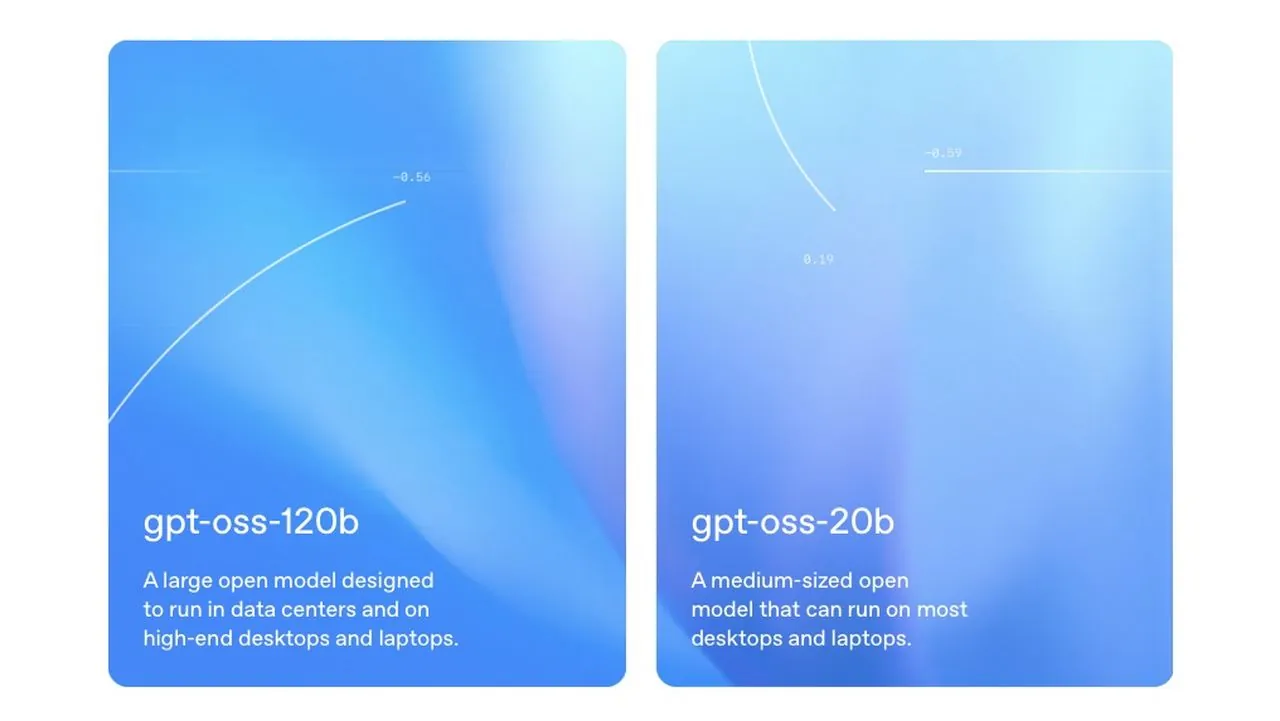
What happens when a tech giant decides to rewrite the rules of the game? OpenAI’s recent release of GPT-OSS, a pair of powerful open weight semi source language models, has sent shockwaves through the artificial intelligence industry. By making these models freely available under the permissive Apache 2.0 license, OpenAI has not only challenged the dominance of proprietary systems but also ignited a fierce debate about the future of AI. On one hand, this bold move promises to provide widespread access to access to innovative technology, empowering developers and researchers worldwide. On the other, it raises pressing concerns about safety and misuse, as the open-weight distribution of these models makes them impossible to retract. In a field where control and exclusivity have long been the norm, OpenAI’s decision is nothing short of innovative—and deeply polarizing.
Wes Roth explores how GPT-OSS is poised to reshape the AI landscape, from lowering barriers for resource-constrained innovators to sparking new waves of collaboration and commercial opportunity. You’ll discover the technical breakthroughs that make these models both powerful and practical, as well as the risks and responsibilities that come with open source AI. Whether you’re a developer eager to experiment with innovative tools or a skeptic questioning the ethical implications, this release demands attention. As we unpack the broader implications of OpenAI’s gamble, one question looms large: can the benefits of open source AI outweigh the risks, or has OpenAI opened a Pandora’s box?
OpenAI’s GPT-OSS Release
TL;DR Key Takeaways :
- OpenAI released two open weight, semi open source language models, GPT-OSS 120B and GPT-OSS 20B, under the Apache 2.0 license, aiming to provide widespread access to AI and foster innovation while optimizing for consumer hardware.
- GPT-OSS 120B excels in advanced reasoning and problem-solving, while GPT-OSS 20B is designed for efficient performance on resource-constrained consumer devices.
- Technical innovations include reinforcement learning, efficient deployment, and post-training refinements, making sure high performance and usability across diverse applications.
- The open source release lowers barriers to AI adoption, encourages collaboration, and unlocks commercial opportunities in sectors like healthcare, education, and logistics.
- Despite its benefits, the open-weight distribution raises safety concerns, including potential misuse for harmful purposes, emphasizing the need for monitoring and responsible usage by the community.
Defining Features of GPT-OSS
The GPT-OSS models stand out for their ability to deliver high performance across a range of tasks, making them competitive with leading proprietary systems locally on your home computer or business network.
- GPT-OSS 120B: This flagship model achieves near parity with advanced systems such as OpenAI’s GPT-4 Mini on reasoning benchmarks. It excels in tasks requiring complex problem-solving, advanced reasoning, and nuanced understanding.
- GPT-OSS 20B: Designed for edge devices, this smaller model is optimized for consumer hardware with limited computational resources. It provides robust performance, making it accessible to a wider audience, including developers and researchers with constrained resources.
Both models exhibit strengths in areas such as tool use, chain-of-thought reasoning, and instruction-following. These capabilities make them versatile tools for applications ranging from academic research to practical problem-solving in real-world scenarios.
Technical Innovations Driving GPT-OSS
The development of GPT-OSS models incorporates advanced training methodologies and optimization techniques, making sure both power and practicality.
- Reinforcement Learning: OpenAI used sophisticated reinforcement learning strategies, including the “universal verifier,” to enhance the models’ reasoning capabilities and adaptability across diverse tasks.
- Efficient Deployment: The models are fine-tuned to minimize computational resource requirements, allowing efficient performance without sacrificing output quality.
- Post-Training Refinements: Techniques similar to those used in proprietary systems were applied to improve reasoning, usability, and overall performance, making sure the models deliver high-quality outputs in various scenarios.
These innovations make GPT-OSS models not only powerful but also practical for deployment in environments with limited computational resources, broadening their potential applications.
OpenAI Just Broke The Industry – gpt-oss

Gain further expertise in open source AI models by checking out these recommendations.
- OpenAI Horizon Alpha: Open Source ChatGPT-5 AI Model Details
- OpenAI moves further away from open source AI
- New Qwen-2.5 Max Open Source AI Beats Deepseek and OpenAI
- How Open source AI Tools are Disrupting Big Tech’s Monopoly
- Open source AI : DeepSeek R1’s Unmatched Reasoning Power
- Open source AI: The Future of Innovation and Collaboration
- Gemini CLI : Google’s Open source AI Coding Assistant
- Open source AI in Medicine: The MedGemma Advantage
- Mistral AI founder Arthur Mensch discusses open source AI
- Deepseek-R1 Review : The Open Source AI Outperforming GPT-4
Broader Implications of Open source AI
By releasing GPT-OSS under the Apache 2.0 license, OpenAI has opened the door to widespread commercial use, modification, and local deployment. This decision carries significant implications for the AI industry and beyond:
- Lowering Barriers: Advanced AI tools are now accessible to resource-constrained sectors, allowing innovation in areas previously limited by high costs or technical expertise.
- Encouraging Collaboration: The open source nature of GPT-OSS fosters a thriving ecosystem of applications and research, aligning with OpenAI’s mission to provide widespread access to AI.
- Driving Commercial Opportunities: Businesses can adapt and deploy these models for tailored solutions, unlocking growth in industries such as healthcare, education, and logistics.
This widespread access of AI tools has the potential to reshape industries, accelerate technological progress, and empower a broader range of users to use AI for innovation.
Addressing Safety Challenges
While the open source release of GPT-OSS offers numerous benefits, it also introduces significant risks. The open-weight distribution of these models means they cannot be recalled, raising concerns about potential misuse.
- Adversarial Fine-Tuning: Malicious actors could adapt the models for harmful purposes, such as generating disinformation, allowing cyberattacks, or creating unethical applications.
- Sensitive Applications: The models could be misused in high-stakes areas like biochemical research, where unintended consequences could have severe implications.
OpenAI has acknowledged these risks and advocates for the development of monitoring systems to track and mitigate harmful behavior. However, the responsibility for making sure safe usage largely falls on the broader research community, developers, and individual users.
Shaping the Future of AI Development
OpenAI’s decision to release GPT-OSS aligns with broader efforts to maintain leadership in open source AI development. This move contrasts with recent trends of companies retreating from open source commitments, signaling a return to OpenAI’s foundational mission of providing widespread access to AI.
By making these models freely available, OpenAI is fostering a competitive shift in the AI industry. This decision challenges proprietary systems, promotes accessibility, and encourages innovation, potentially reshaping the competitive dynamics of AI development. It also reinforces the importance of collaboration and openness in driving technological progress.
As the AI ecosystem continues to evolve, OpenAI’s release of GPT-OSS models represents a pivotal moment. While the industry anticipates the arrival of GPT-5, which is expected to surpass GPT-OSS in capabilities, the release of these open source models has already redefined the competitive landscape. OpenAI’s focus on accessibility and decentralization is advancing technological innovation while promoting collaboration. However, the ongoing challenge will be to balance the benefits of open source AI with the need for safety and ethical considerations in its application.
Media Credit: Wes Roth
Disclosure: Some of our articles include affiliate links. If you buy something through one of these links, Geeky Gadgets may earn an affiliate commission. Learn about our Disclosure Policy.
