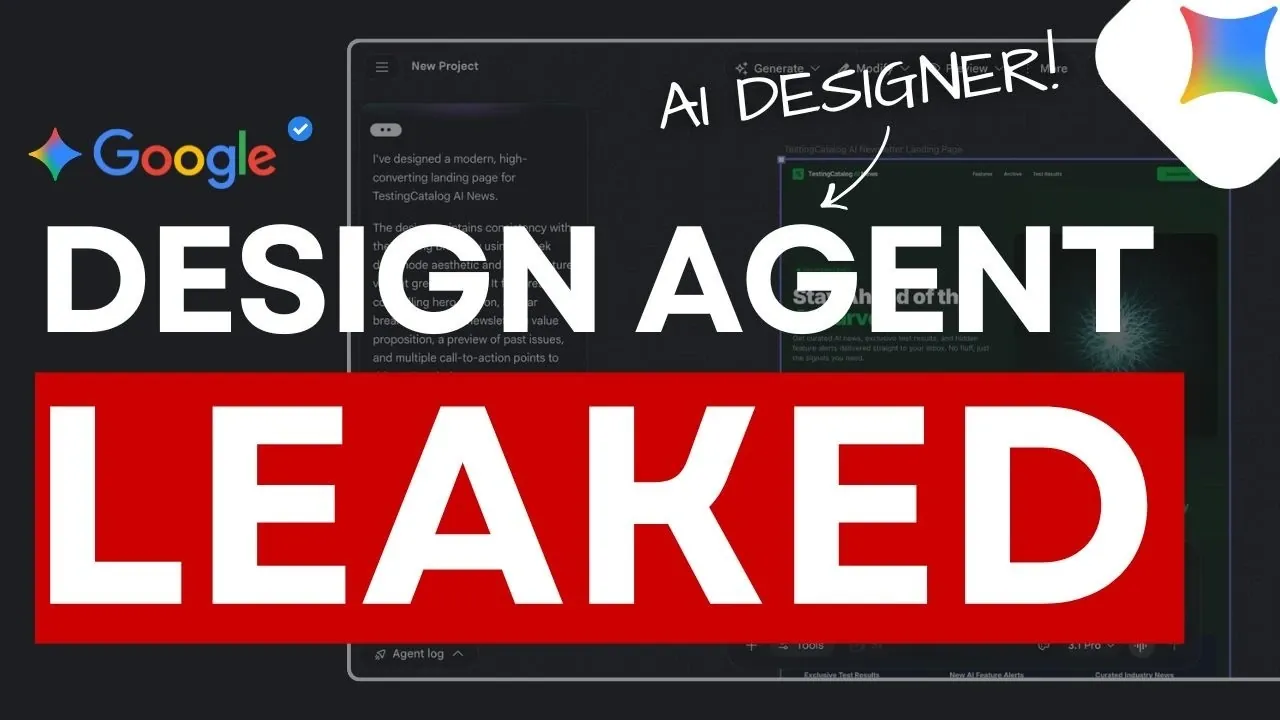
Recent leaks have shed light on Google’s revamped AI design platform, Stitch, revealing a suite of features aimed at bridging the gap between creativity and development. Among the highlights is a 3D workspace that allows designers to interact with their projects in a spatial environment, offering greater precision for complex UI/UX tasks. Universe of AI explores how this redesign integrates conversational AI for real-time collaboration and introduces direct React code generation, which could significantly reduce the time spent transitioning from design to development.
Dive into this breakdown to understand how Stitch’s prototyping enhancements streamline user testing through features like QR code generation and screen-to-screen navigation. You’ll also gain insight into its compatibility with broader ecosystems, including MCP export and agent skill integration, which position it as a versatile solution for diverse workflows. Whether you’re curious about its collaborative AI agent or its potential impact on app development, this guide unpacks what these updates mean for the future of AI-driven design.
Google Stitch Redesign: Key Features & Innovations
TL;DR Key Takeaways :
- Google’s redesigned AI-powered design tool, Stitch, introduces new features like a 3D workspace, conversational AI collaboration and direct React code generation, transforming UI/UX design and app development.
- Stitch’s enhancements include prototyping tools, AI agent integration and broader ecosystem compatibility, streamlining workflows and bridging the gap between design and development.
- Enthropic expands its AI capabilities with a 1 million token context window, allowing analysis of extensive datasets without chunking and introduces temporary usage limit increases to encourage adoption.
- Enthropic’s advancements unlock new use cases for developers and enterprises, positioning it as a strong competitor in the AI market alongside major players like Google and OpenAI.
- The competition between AI companies is driving rapid innovation, with upcoming events like Google I/O 2026 expected to showcase further advancements in AI-driven tools and solutions.
The leaked updates to Google Stitch reveal a tool designed to streamline your design process with innovative technology. These features aim to enhance productivity and creativity while bridging the gap between design and development. Below are the standout elements of the redesign:
- 3D Workspace: Moving beyond the limitations of a flat canvas, the 3D workspace provides an immersive environment where you can visualize and manipulate designs with greater precision. This feature is particularly beneficial for complex UI/UX projects that require spatial awareness and dynamic interactions.
- AI Agent Integration: The integrated AI agent acts as a collaborative partner, adapting to your design needs in real time. You can interact with the agent using voice commands, select from multiple voice options and track its actions through an agent log, making sure both transparency and efficiency in your workflow.
- Prototyping Enhancements: Tools such as screen-to-screen navigation and QR code generation simplify the user testing process. Additionally, the “Imagine More Screens” feature suggests complementary design elements, allowing you to create more comprehensive and robust prototypes.
- React Code Export: By allowing direct generation of fully functional React applications from your designs, Stitch eliminates the need for manual coding. This feature significantly accelerates the development process, allowing you to focus on refining your ideas rather than writing code.
- Broader Ecosystem Integration: Plans for MCP export and agent skills integration indicate that Stitch is part of a larger AI ecosystem. This ensures seamless compatibility with other tools and platforms, making it a versatile solution for diverse design and development needs.
Enthropic’s Competitive Edge: Expanding AI Capabilities
While Google focuses on transforming design tools, Enthropic is addressing critical challenges in AI scalability and usability. Its latest advancements highlight its commitment to enhancing functionality and meeting the needs of developers and enterprises. Key updates include:
- 1 Million Token Context Window: Enthropic’s expanded context window can process up to 750,000 words in a single conversation. This capability allows you to analyze extensive datasets, such as entire codebases or legal documents, without the need for chunking or summarization, saving significant time and effort.
- Temporary Usage Limit Increase: To encourage adoption, Enthropic has temporarily doubled usage limits during non-peak hours. This initiative provides users with greater flexibility and an opportunity to explore the platform’s full potential.
- Expanded Use Cases: The extended context window unlocks new applications, such as analyzing production incident traces or other complex datasets. This positions Enthropic as a strong contender in the enterprise and developer-focused AI market, offering solutions tailored to intricate challenges.

Here are additional guides from our expansive article library that you may find useful on Google Gemini 3.
- Gemini 3.5 Leak Details, Early Tests Show Mixed Performance
- Gemini 3.5 vs GPT-5 vs Claude : Early Scores & Speed Insights
- Google Gemini 3.5 Leak : Fierce Falcon vs Ghost Falcon
- Gemini 3.1 Pro Leak: Third-Party Benchmark Listing Suggests Updates
- Google’s Secret Gemini 3 Pro GA Models Leaked
- Gemini 3.5 vs GPT-5.1 High: Coding, Design, and Test Results
- Gemini 3.1 Flash Lite Adjustable Reasoning Depth : Fully Tested
- Gemini 3.1 Pro: Thinking Levels and Benchmark Gains Explained
- ChatGPT 5.2 vs Gemini 3 Pro, Benchmarks, Wins, and Real Use Cases
- What’s Next in AI : Gemini 3.5 Hints with Faster Flash & Tighter Workspaces
Implications for the AI Landscape
The advancements in Google Stitch and Enthropic’s offerings underscore the rapid evolution of AI tools and their growing impact across industries. Google’s focus on integrating advanced design and development capabilities into Stitch positions it as a leader in the AI-driven design space. With its extensive distribution network and reputation for innovation, Google is well-equipped to drive adoption among designers and developers.
On the other hand, Enthropic’s emphasis on addressing context window limitations and providing user-friendly incentives demonstrates its strategic approach to meeting the needs of enterprises and developers. By tackling scalability challenges and offering practical solutions, Enthropic is carving out a niche in the competitive AI market. These developments reflect the increasing competition among AI companies, each striving to deliver superior functionality and user experiences.
What Lies Ahead?
As the AI market continues to evolve, several key developments are worth monitoring in the coming months:
- Google I/O 2026: Scheduled for May 19-20, this event is anticipated to unveil the redesigned Stitch, potentially marking its official launch. If the tool lives up to expectations, it could solidify Google’s dominance in the realm of AI-powered design tools.
- Enthropic’s Strategic Positioning: By offering enhanced context window capabilities and user-friendly incentives, Enthropic is positioning itself as a viable alternative to major players like ChatGPT and Gemini. Its advancements could redefine how enterprises and developers approach AI-driven solutions.
- Broader Industry Trends: The competition between companies like Google, Enthropic and others is likely to accelerate innovation, leading to the development of more sophisticated tools that cater to diverse user needs. This environment of rapid progress will shape the future of AI applications across industries.
The leaked updates to Google Stitch and Enthropic’s recent innovations highlight the fantastic potential of AI in design, development and enterprise applications. Whether you are a designer, developer, or business leader, these advancements promise to enhance productivity, streamline workflows and unlock new possibilities. As competition intensifies, the coming months will reveal how these innovations influence the trajectory of AI-driven tools and solutions.
Media Credit: Universe of AI
Disclosure: Some of our articles include affiliate links. If you buy something through one of these links, Geeky Gadgets may earn an affiliate commission. Learn about our Disclosure Policy.
