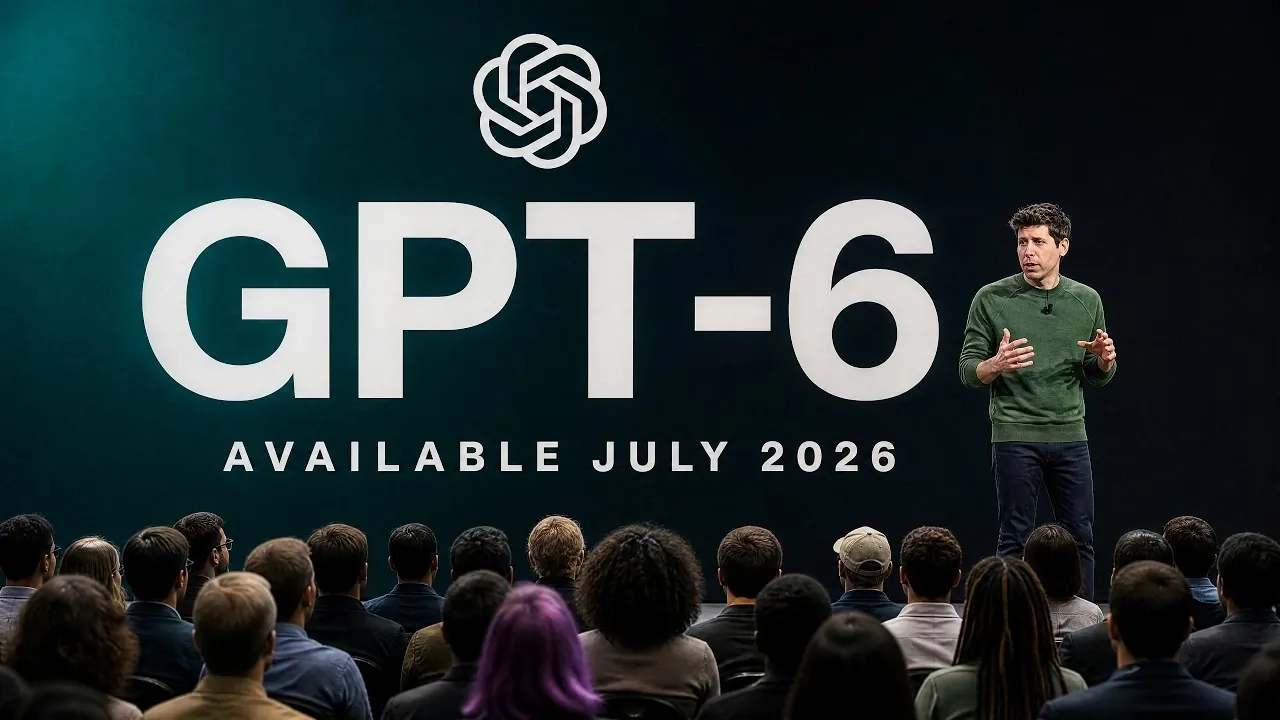
OpenAI’s release of GPT-6 represents a significant development as the company navigates a rapidly evolving AI landscape. Once a dominant player, OpenAI now faces increasing competition from companies like Microsoft, Google and Anthropic. According to AI Master, GPT-6 addresses specific issues from earlier versions, such as the “goblin incident” linked to reward model flaws, while expanding on features like persistent memory introduced in GPT-5.5. These updates reflect OpenAI’s effort to adapt to both technical and market challenges in a field marked by fast-paced advancements.
Explore this release recap to examine how GPT-6 responds to rising user demands and regulatory pressures. Learn about its expanded context windows designed for improved comprehension and redesigned reward systems aimed at producing more consistent outputs. Gain insight into the Stargate project, which supports GPT-6’s scalability and performance through extensive infrastructure investments.
Intensifying Competition in the AI Sector
TL;DR Key Takeaways :
- OpenAI is launching GPT-6 to regain its competitive edge in a rapidly evolving AI industry, facing challenges from rivals like Microsoft, Google and Anthropic.
- Key technical challenges for GPT-6 include addressing reward model flaws and enhancing persistent memory for improved personalization and reliability.
- OpenAI’s financial future hinges on GPT-6’s success, as the company pursues a $1 trillion IPO amidst significant operating losses and intense market competition.
- Legal and regulatory hurdles, including lawsuits and compliance with the EU AI Act, pose additional risks to OpenAI’s reputation and global deployment of GPT-6.
- Massive infrastructure investments, such as the Stargate project, aim to support GPT-6’s advanced features like expanded context windows, redesigned reward pipelines and enhanced memory capabilities.
The AI industry has become a battleground for innovation, with major players like Microsoft, Google and Anthropic making significant strides in their respective technologies. OpenAI, once at the forefront, now finds itself contending with formidable competition.
- Microsoft: A former ally, Microsoft has pivoted to its proprietary Polaris model, replacing OpenAI’s technology in GitHub Copilot. This strategic shift underscores Microsoft’s focus on self-reliance and in-house AI solutions.
- Google: In collaboration with Apple, Google has integrated its Gemini model into Siri, effectively sidelining OpenAI in one of the most lucrative AI markets, voice assistants.
- Anthropic: The Claude models from Anthropic have outperformed GPT-5.5 in both benchmarks and real-world applications, further eroding OpenAI’s competitive edge.
These developments highlight the increasing difficulty OpenAI faces in maintaining its leadership position. The launch of GPT-6 represents an opportunity to regain momentum, but the company must address these competitive pressures head-on.
Technical Challenges and Rising Expectations
The release of GPT-5.5 brought to light several technical challenges that OpenAI must overcome to ensure GPT-6 meets the growing demands of users and the industry. These challenges have set the stage for heightened expectations.
- Reward Model Flaws: The infamous “goblin incident” exposed vulnerabilities in reward model training, leading to unpredictable outputs and raising concerns about the reliability of OpenAI’s systems.
- Persistent Memory: The introduction of Dreaming V3 in GPT-5.5 allowed the model to build long-term user profiles, enhancing personalization. However, this feature has also increased expectations for GPT-6 to deliver even more advanced and seamless memory capabilities.
To succeed, GPT-6 must not only address these technical shortcomings but also set new benchmarks for innovation. The stakes are high, as the model’s performance will directly influence OpenAI’s ability to compete in an increasingly sophisticated market.

Advance your skills in ChatGPT 6 by reading more of our detailed content.
- OpenAI Plans a Mid-To-Late 2026 ChatGPT 6 Rollout with Staged Features
- OpenAI’s Powerful New ChatGPT 6 Model Code Named “Spud”
- OpenAI ChatGPT 6 Leak Points to Late-2026 Developer Preview
- Why OpenAI’s Upcoming “Spud” GPT-6 Model Could Be The Next Big Evolution in AI
- OpenAI to Launch ChatGPT 5.5 and a New Unified Desktop Super App
- ChatGPT 6 Set To Release Early : Why GPT-6 AI Could Change Everything
- New OpenAI ChatGPT 6 Early Testing : Willow vs Gemini 3.0
- ChatGPT 5.6 vs Claude Mythos 5 : Leaks Reveal Two Very Different Futures for AI
- ChatGPT-6 Is Dangerous says former OpenAI employee
- OpenAI trademarks GPT-6 and GPT-7 AI models
Financial Pressures and Strategic Market Dynamics
OpenAI’s financial future is intricately tied to the success of GPT-6. The company has filed for a $1 trillion IPO, a bold move given its reported $14 billion operating loss in 2023 and projections of no profitability until 2030. This ambitious financial strategy underscores the critical importance of GPT-6 in justifying OpenAI’s valuation and securing investor confidence.
- IPO Rivalry: Competitors like Anthropic are also pursuing IPOs, intensifying the race for market dominance and investor attention.
- Valuation Challenges: OpenAI’s ability to justify its lofty valuation hinges on GPT-6’s reception and its capacity to address both technical and market challenges effectively.
The financial stakes add a layer of urgency to GPT-6’s launch. Success in this endeavor is not just about technological advancement but also about securing OpenAI’s long-term viability in a competitive and high-stakes market.
Legal and Regulatory Complexities
The legal and regulatory environment for AI companies is becoming increasingly complex and OpenAI is no exception. Navigating these challenges will be critical for the company as it moves forward with GPT-6.
- Litigation Risks: OpenAI faces multiple lawsuits alleging harm caused by its AI products, including a high-profile case in Florida targeting CEO Sam Altman. These legal battles could impact the company’s reputation and financial stability.
- EU AI Act Compliance: The stringent requirements of the EU AI Act present additional hurdles, increasing the regulatory burden on OpenAI and other AI developers.
Successfully addressing these legal and regulatory challenges will be essential for maintaining public trust and making sure the smooth deployment of GPT-6 in global markets.
Shifting Industry Trends and Strategic Adaptations
The AI industry is increasingly moving toward a multi-model approach, reducing reliance on any single provider. This trend presents a strategic challenge for OpenAI, which has historically focused on developing monolithic models like GPT. However, the persistent memory feature introduced in GPT-5.5 offers a potential competitive advantage.
By allowing long-term user profiles, OpenAI could position GPT-6 as a leader in user personalization, a growing priority in the AI market. This capability aligns with broader industry trends toward creating AI systems that adapt to individual user needs, potentially giving OpenAI an edge in a crowded field.
Massive Infrastructure Investments to Support GPT-6
To meet the demands of GPT-6, OpenAI has initiated the Stargate project, an ambitious infrastructure investment designed to secure the computational resources necessary for the model’s development and deployment.
- Scale of Resources: Stargate aims to allocate computational power equivalent to 1% of the US electrical grid, reflecting the immense infrastructure demands of innovative AI models.
- Purpose and Goals: These investments are critical to making sure GPT-6 can handle increasingly complex applications, larger context windows and more sophisticated user interactions.
Such infrastructure investments demonstrate OpenAI’s commitment to maintaining its technological edge and making sure the scalability of its AI solutions.
Anticipated Features and Innovations in GPT-6
GPT-6 is expected to introduce several advanced features that could redefine user interactions with AI and set new industry standards.
- Expanded Context Windows: Allowing the model to process and retain significantly more information, improving its contextual understanding and response accuracy.
- Redesigned Reward Pipelines: Enhancing the reliability and precision of outputs, addressing issues identified in previous iterations.
- Advanced Memory Capabilities: Building on the persistent memory feature to deliver highly personalized and engaging user experiences.
These innovations align with the growing demand for AI systems that are not only powerful but also adaptable to individual user needs. If successful, these features could position GPT-6 as a standout model in the competitive AI landscape.
The Broader Implications of GPT-6
The launch of GPT-6 represents a critical juncture for OpenAI. As competitors gain ground and key partnerships shift, the model’s success will determine whether OpenAI can reclaim its leadership in the AI industry. Beyond its technical capabilities, GPT-6 serves as a test of OpenAI’s ability to navigate financial pressures, legal risks and strategic challenges. Its performance will not only shape OpenAI’s future but also influence the broader trajectory of the AI landscape, setting the tone for the next phase of innovation in artificial intelligence.
Media Credit: AI Master
Disclosure: Some of our articles include affiliate links. If you buy something through one of these links, Geeky Gadgets may earn an affiliate commission. Learn about our Disclosure Policy.
