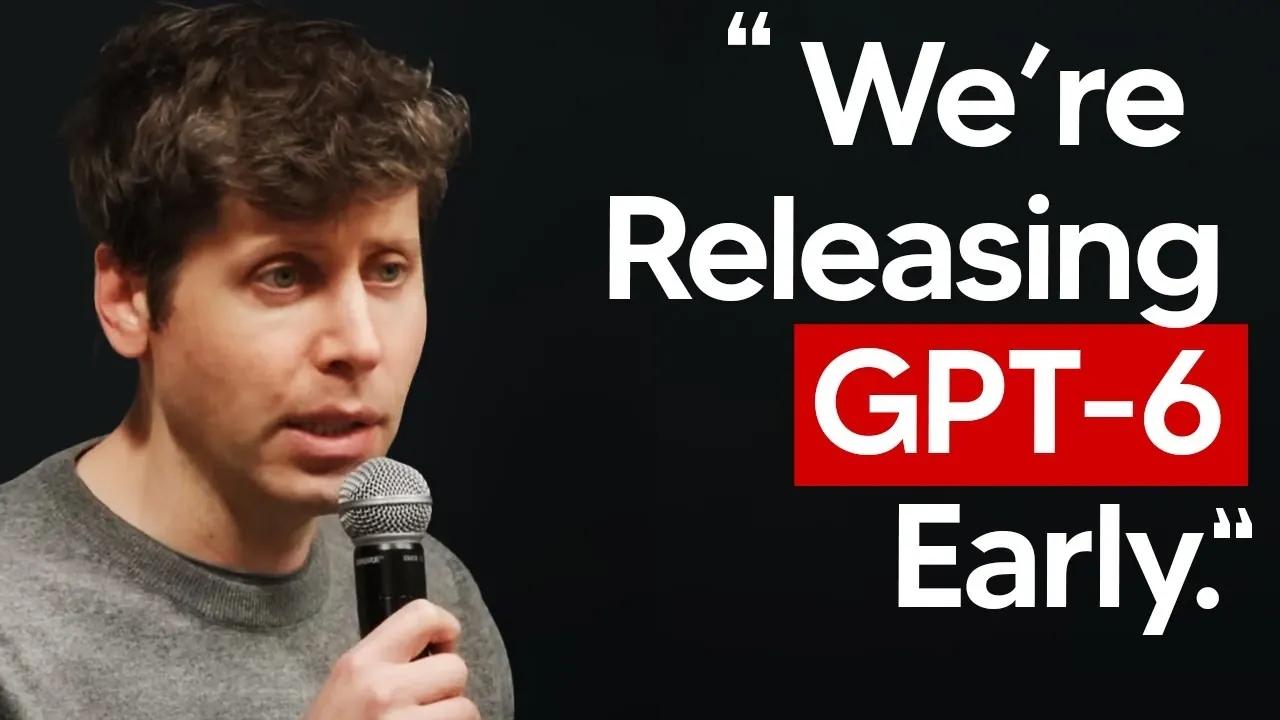
What if the next leap in artificial intelligence wasn’t years away, but just around the corner? The buzz surrounding ChatGPT 6, the highly anticipated successor to GPT-5, has reached a fever pitch, and for good reason. With whispers of an earlier-than-expected release, this new AI model could redefine the boundaries of what machines can achieve. Imagine an AI capable of not just understanding your needs but anticipating them, offering solutions with unparalleled precision and creativity. While OpenAI remains tight-lipped about the specifics, industry insiders suggest that GPT-6 could bring us closer than ever to the elusive goal of Artificial General Intelligence (AGI)—a development that could transform industries and daily life alike.
In this overview, AI Grid explores the potential features and advancements that could make GPT-6 a fantastic option. From enhanced reasoning capabilities to customizable interactions, this next-gen AI promises to address the limitations of its predecessors while introducing innovative tools for both casual users and professionals. Could GPT-6 truly accelerate scientific discovery, reshape creative industries, or even tackle ethical challenges head-on? As speculation builds, the possibilities seem endless, but the questions it raises are just as profound. Let’s unpack what this technological milestone could mean for the future of AI and beyond.
Anticipating GPT-6 Advancements
TL;DR Key Takeaways :
- GPT-6 is anticipated to launch by 2025, potentially earlier, with expectations of significant advancements in reasoning, memory, and user customization.
- The model aims to address GPT-5’s limitations, offering improved problem-solving, long-term interaction tracking, and a more intuitive user interface.
- GPT-6 could bring AI closer to achieving Artificial General Intelligence (AGI), allowing autonomous decision-making and deeper contextual understanding.
- It is expected to transform scientific discovery by generating new insights, accelerating research, and contributing to breakthroughs in fields like healthcare and engineering.
- Ethical challenges, including bias, misuse, and equitable access, will be critical to address as GPT-6 aims to balance technological progress with societal impact.
When Could GPT-6 Arrive?
Speculation within the AI industry suggests that GPT-6 might arrive sooner than expected, potentially before the close of 2025. Prominent figures such as Mark Mahaney and Brad Gerstner have hinted at an accelerated development timeline, reflecting the rapid pace of innovation in AI research. Although OpenAI has not confirmed these projections, the timeline aligns with the increasing demand for more sophisticated AI systems capable of solving complex problems and enhancing user experiences. The urgency to meet this demand could drive OpenAI to accelerate the release of GPT-6, making sure it remains at the forefront of AI advancements.
What Could GPT-6 Improve?
GPT-6 is anticipated to build upon the strengths of its predecessor, GPT-5, while addressing its shortcomings. Several key areas of improvement are expected to define this new model:
- Enhanced reasoning: GPT-6 could demonstrate improved problem-solving and decision-making capabilities, allowing it to tackle more complex tasks with greater accuracy.
- Advanced memory systems: By incorporating better contextual understanding and long-term interaction tracking, GPT-6 could offer more coherent and personalized responses over extended conversations.
- User customization: The ability to tailor tone, personality, and interaction styles could make GPT-6 more adaptable to individual user preferences.
For instance, GPT-5 introduced a model switcher feature that, while innovative, faced usability challenges. GPT-6 could refine this concept, offering a more seamless and intuitive interface. These advancements aim to create a more efficient, adaptable, and user-friendly AI system capable of meeting diverse needs across industries.
Why GPT-6 Might Be the Most Anticipated AI of Our Time

Learn more about OpenAI and its products with other articles and guides we have written below.
- 10 Biggest ChatGPT 5 Problems and How to Fix Them
- How ChatGPT’s New Image Tool Compares to Canva
- ChatGPT keyboard shortcuts
- ChatGPT Pro vs Plus: Key Differences and Which Plan to Choose
- ChatGPT vs Bard vs Claude LLMs compared and tested
- How to improve Siri with ChatGPT and Open AI
- How ChatGPT 5 Pro Solved a Decades-Old Math Problem
- ChatGPT-o1 vs ChatGPT-4o performance comparison
- Master AI Automation with ChatGPT-o1 Series and RAG
- How ChatGPT 5 is Transforming Creative Writing and Storytelling
Could GPT-6 Bring Us Closer to AGI?
One of the most debated aspects of GPT-6 is its potential to advance the development of AGI, a level of AI capable of performing any intellectual task that a human can. OpenAI has previously expressed its ambitions in this area, and GPT-6 could represent a significant step forward. Features such as autonomous decision-making, deeper contextual understanding, and the ability to independently generate insights could bring AI closer to achieving AGI-like functionality. If successful, this would mark a fantastic moment in AI history, allowing machines to operate with unprecedented independence and intelligence. Such a development could transform industries, from healthcare to education, while also raising profound ethical and societal questions.
Transforming Scientific Discovery
The scientific community has already witnessed the potential of AI models like GPT-5 Pro in contributing to new discoveries. GPT-6, with its anticipated enhancements in reasoning and memory, could take this even further. By independently generating new insights across various disciplines, GPT-6 could accelerate research and innovation. For example, it might assist in identifying novel drug compounds, optimizing engineering designs, or uncovering patterns in vast datasets that were previously overlooked. This capability would position GPT-6 not merely as a tool for retrieving information but as a fantastic option for knowledge creation, driving progress in ways that were once unimaginable.
What Features Might Define ChatGPT 6?
Several features are expected to set GPT-6 apart from its predecessors, making it a more versatile and powerful AI system:
- Improved memory systems: These could enable GPT-6 to maintain nuanced and long-term interactions, enhancing its ability to provide consistent and contextually relevant responses.
- Autonomous agents: GPT-6 might be capable of executing extended tasks without human intervention, such as managing complex workflows or conducting in-depth research.
- Customizable interactions: Users could have greater control over the AI’s tone, personality, and preferences, allowing for more personalized and engaging experiences.
- Age-gated access: Features like “adult mode” for verified users could ensure responsible usage and safeguard against misuse.
These enhancements aim to make GPT-6 a more practical and adaptable tool, catering to both casual users and professionals seeking advanced AI capabilities.
Speculation on Niche Applications
While the primary focus of GPT-6 is likely to be on fantastic functionalities, there is ongoing speculation about its potential for niche applications. For example, some experts have suggested that GPT-6 could excel in creative domains such as music generation or advanced storytelling. However, demand for such specialized features remains limited compared to broader applications like data analysis, customer service, and content creation. As a result, GPT-6 is expected to prioritize innovations that have widespread impact, making sure its relevance across a variety of industries and use cases.
Ethical Challenges and Societal Implications
As AI systems become more powerful, ethical considerations take on greater importance. ChatGPT 6’s development must address critical concerns such as bias, misuse, and accessibility. OpenAI’s commitment to ethical AI practices will be pivotal in making sure that GPT-6 is developed responsibly. For example, implementing robust safeguards to prevent the spread of misinformation and making sure equitable access to the technology will be essential. Balancing technological progress with societal impact will be a key challenge, particularly as discussions around AGI intensify. The success of GPT-6 will depend not only on its technical capabilities but also on how effectively it navigates these ethical and societal challenges.
Looking Ahead
The anticipated release of ChatGPT 6 represents a significant milestone in the evolution of artificial intelligence. With promises of enhanced reasoning, memory, and autonomy, it has the potential to reshape industries, accelerate scientific breakthroughs, and redefine human-AI interactions. However, its true impact will depend on how well it addresses ethical concerns, meets user needs, and integrates into society. As the timeline for GPT-6 unfolds, its development will likely influence the trajectory of AI for years to come, shaping the future of technology and its role in our lives.
Media Credit: TheAIGRID
Disclosure: Some of our articles include affiliate links. If you buy something through one of these links, Geeky Gadgets may earn an affiliate commission. Learn about our Disclosure Policy.
