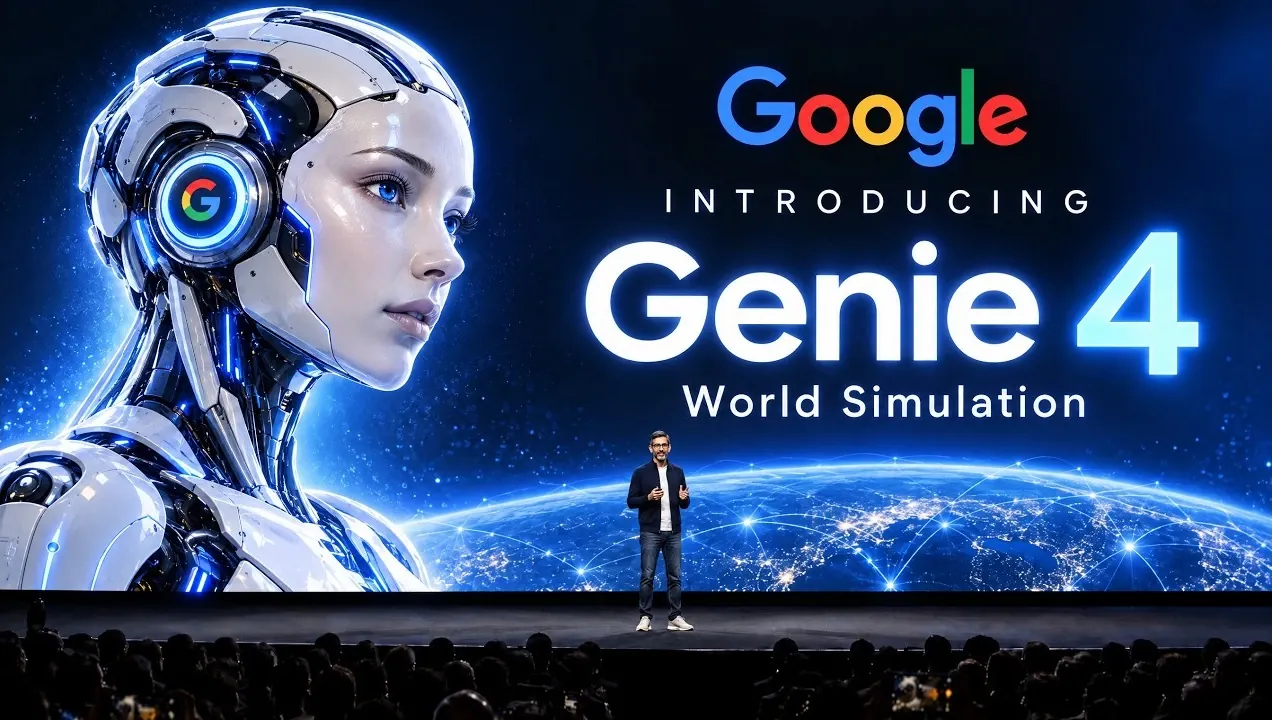
Google has unveiled Genie 4, an artificial intelligence system designed to create detailed, interactive 3D environments in real time. Unlike traditional systems that depend on pre-built models, Genie 4 generates entire worlds dynamically based on user input, incorporating realistic physics and soundscapes. According to AI Grid, the system is trained on extensive video data to model lifelike behaviors and environments. One example of its application is in robotics, where it can simulate real-world scenarios to improve predictive capabilities and enable safer interactions.
Explore how Genie 4 processes video data to achieve its realism, how it integrates physics and sound into its simulations and the computational challenges it faces. Gain insight into its potential applications across fields such as gaming, education and robotics. This overview also examines the system’s accessibility limitations and what they mean for broader adoption.
How Genie 4 Works
TL;DR Key Takeaways :
- Google DeepMind’s Genie 4 is an advanced AI system that generates real-time, photorealistic 3D environments dynamically based on user input, without relying on traditional game engines.
- Key features include video data analysis for learning object behaviors, intuitive physics for realistic interactions and integrated soundscapes for immersive experiences.
- Applications span industries such as entertainment, education, filmmaking and robotics, with potential to transform workflows and enhance user experiences.
- Challenges include high computational costs, limited accessibility for smaller users and difficulties maintaining scene consistency in extended simulations.
- Google’s ecosystem, including AI models, proprietary hardware and vast data resources, positions it as a leader in AI-driven reality simulation, with Genie 4 paving the way for future innovations in robotics and creative industries.
Genie 4 is designed to create real-time, interactive 3D worlds that adapt dynamically to user commands. Its functionality is rooted in several key processes:
- Video Data Analysis: By analyzing massive amounts of video data from platforms like YouTube, Genie 4 learns how objects move, interact and behave in various environments.
- Intuitive Physics: The system simulates realistic physics and environmental consistency without relying on traditional physics engines, allowing seamless interactions within the generated worlds.
- Sound Integration: Genie 4 generates audio that aligns perfectly with the visual environment, enhancing the immersive experience for users.
These features allow users to create lifelike simulations with minimal effort, setting a new benchmark for realism and interactivity in virtual environments. The system’s ability to respond to user input in real time makes it a versatile tool for a variety of industries.
Technological Breakthroughs
The development of Genie 4 represents a significant leap in artificial intelligence and simulation technology. Over the past 2.5 years, the system has evolved from basic 2D slideshows to fully interactive, photorealistic 3D worlds. Several key advancements have contributed to this progress:
- Enhanced Realism: Genie 4 achieves unprecedented levels of visual fidelity, with detailed textures, lighting and environmental effects that closely mimic reality.
- Extended Scene Durations: The system can sustain complex simulations over longer periods, maintaining consistency and accuracy throughout.
- Advanced Sound Generation: Audio capabilities have been refined to produce dynamic soundscapes that adapt to changes in the simulated environment.
However, these advancements come with significant computational demands. Generating high-quality frames in real time requires immense processing power, which is supported by Google’s proprietary AI chips and high-performance computing infrastructure.

Uncover more insights about Google DeepMind in previous articles we have written.
- Gemini 4 Could Autonomously Refine Code via Leaked RSI
- Google Reportedly Cancels Gemini 3.5 Pro for Gemini 4 Pivot
- How Gemini 3.7 Flash Defeats GPT-5.6 Terra at Long Context
- Google Reportedly Pivots to Gemini 4 Over Gemini 3.5 Pro Flaws
- Google Reportedly Preps Gemini 3.7 Flash Amid Pro Delays
- Google Launches Gemini 3.7 Flash to Rival Meta AI Models
- Google’s Deepmind Gemini 3.0 Capabilities Tested for Coding, Research & Design
- Google Confirms Gemini 4 Will Replace the Gemini 3.5 Pro
- Google Preps Gemini 4 Pro Content Creation for October 2026
- Google Pushes Gemini 4 Pro Release Date to October 2026
Applications Across Industries
The versatility of Genie 4 opens up fantastic possibilities across a wide range of industries. Its ability to create realistic, interactive simulations has the potential to redefine workflows and enhance user experiences in several key areas:
- Entertainment: Genie 4 is transforming gaming by offering unparalleled interactivity and realism. It also enables rapid prototyping and interactive storytelling, providing creators with powerful tools to bring their visions to life.
- Education: Immersive learning environments, such as historical reconstructions or biological simulations, make complex subjects more engaging and accessible for students of all ages.
- Filmmaking: Virtual set design and scene planning are streamlined, reducing reliance on physical sets and extensive post-production work, ultimately saving time and resources.
- Robotics: By simulating real-world scenarios, Genie 4 enhances robots’ ability to predict outcomes, plan actions and safely interact with their environments, paving the way for smarter and more capable machines.
These applications demonstrate the broad potential of Genie 4 to impact industries ranging from creative arts to advanced robotics, making it a versatile tool for innovation.
Challenges and Limitations
Despite its new capabilities, Genie 4 faces several challenges that must be addressed to unlock its full potential:
- High Computational Costs: The system’s real-time frame generation requires significant processing power, leading to high operational expenses that may limit its accessibility.
- Limited Accessibility: Currently, the technology is primarily available to enterprises and researchers through expensive subscription plans, restricting its use by smaller organizations and individual creators.
- Scene Consistency: While Genie 4 excels in creating short, realistic scenes, it struggles to maintain the same level of detail and accuracy in longer simulations, highlighting the need for further optimization.
These limitations underscore the importance of ongoing development to improve efficiency, reduce costs and expand accessibility, making sure that Genie 4 can reach its full potential across a broader audience.
Future Implications
The long-term implications of Genie 4 extend far beyond its current applications. In robotics, its ability to simulate and predict real-world scenarios could lead to smarter, more capable machines, transforming industries such as manufacturing, healthcare and logistics. By allowing robots to anticipate outcomes and adapt to their environments, Genie 4 could significantly enhance their utility and safety.
In creative industries, Genie 4 has the potential to redefine workflows in game design, 3D art and visual effects. Its ability to generate high-quality simulations in real time could streamline production processes, reduce costs and set new standards for efficiency and innovation. As the technology matures and becomes more accessible, it could provide widespread access to these capabilities, empowering creators and businesses of all sizes.
Beyond its practical applications, Genie 4 raises philosophical questions about the nature of reality and the simulation hypothesis. By creating environments that are indistinguishable from the real world, it challenges our understanding of what constitutes “real” experiences, opening up new avenues for exploration and debate.
Competitive Landscape
Google’s integrated ecosystem gives it a significant advantage in the race to perfect AI-driven reality simulation. Genie 4 benefits from several key resources and partnerships:
- AI Models: The system uses Google’s advanced AI systems, such as Gemini, to enhance its capabilities.
- Data Resources: Access to vast video datasets from YouTube provides Genie 4 with a rich source of training material for its simulations.
- Proprietary Hardware: High-performance AI chips, specifically designed for demanding computational tasks, enable Genie 4 to achieve its impressive performance.
- Robotics Expertise: Insights from Google’s robotics research initiatives, including Waymo, contribute to the system’s ability to simulate real-world scenarios effectively.
While competitors like Tesla, Nvidia and Amazon are exploring similar technologies, Google’s comprehensive resources and expertise position it as a leader in this field. Its ability to integrate hardware, software and data into a cohesive ecosystem gives it a unique edge in advancing AI-driven reality simulation.
Looking Ahead
Genie 4 represents a pivotal step toward a future where AI-powered systems seamlessly integrate into everyday life. By allowing machines to simulate and predict real-world scenarios, this technology has the potential to transform industries ranging from robotics to entertainment. As costs decrease and efficiency improves, Genie 4’s capabilities may become accessible to a wider audience, unlocking its fantastic potential across sectors.
The advancements made by Genie 4 not only highlight the progress of artificial intelligence but also hint at the possibilities that lie ahead. As the technology continues to evolve, it could reshape industries, redefine workflows and challenge our understanding of reality itself.
Media Credit: TheAIGRID
Disclosure: Some of our articles include affiliate links. If you buy something through one of these links, Geeky Gadgets may earn an affiliate commission. Learn about our Disclosure Policy.
