
What if the key to unlocking smoother, error-free software development lies not in writing more code, but in writing better plans? In a world where coding agents like GitHub Copilot and Claude are transforming workflows, the margin for error often comes down to how well-defined your project specifications are. Enter the GitHub Spec Kit, a framework that flips the script on assumption-driven development by prioritizing clarity and precision from the start. Whether you’re tackling a multi-feature application or navigating intricate dependencies, this tool promises to transform the way you approach software projects, one specification at a time.
At its core, the GitHub Spec Kit is more than just a tool; it’s a methodology for specification-driven development. In this guide by Prompt Engineering, you’ll discover how it replaces guesswork with structured workflows, integrates seamlessly with coding agents, and ensures every feature is implemented with accuracy. From breaking down technical plans into actionable tasks to automating project organization, the Spec Kit offers a roadmap for developers seeking control and efficiency in their work. But is it the right fit for every project? By the end, you’ll have a clearer picture of how this framework can elevate your development process, or when its rigor might be overkill. After all, the best tools don’t just solve problems; they redefine how we think about them.
GitHub Spec Kit Overview
TL;DR Key Takeaways :
- The GitHub Spec Kit introduces a specification-driven framework to enhance software development by prioritizing detailed documentation, accuracy, and streamlined workflows.
- It addresses challenges of assumption-based coding by making sure clear and actionable specifications, reducing errors and inefficiencies when using coding agents like GitHub Copilot or Claude.
- The framework employs a four-step project implementation process: defining goals, developing technical architecture, breaking tasks into actionable units, and using test-driven development for accuracy.
- Key features include seamless integration with coding agents, command-based setup for simplified project management, and dynamic updates to project files for better organization and tracking.
- While ideal for complex, multi-feature projects, the GitHub Spec Kit may feel excessive for smaller tasks and is still evolving as a relatively new tool in the development ecosystem.
The Challenge: Assumptions in Software Development
In software development, unclear or incomplete specifications often lead to errors, especially when using coding agents like GitHub Copilot or Claude. These tools rely heavily on the clarity of input to produce accurate results. Without well-defined product requirement documents (PRDs) or technical plans, coding agents may make incorrect assumptions, resulting in inefficiencies, bugs, and rework. This highlights the need for a framework that prioritizes clear, detailed specifications to guide development efforts and minimize errors. The GitHub Spec Kit directly addresses this issue by providing a methodology that ensures every aspect of a project is well-documented and actionable.
What is Specification-Driven Development?
The GitHub Spec Kit adopts a specification-driven development methodology to tackle the challenges of assumption-based coding. This approach begins with creating detailed PRDs that outline project goals, features, and technical requirements. These specifications are then broken down into actionable tasks, making sure clarity and direction at every stage of development. By incorporating test-driven development, the framework ensures that each feature is implemented and validated thoroughly, reducing the risk of errors and improving overall efficiency.
This methodology is particularly beneficial for projects with intricate dependencies or multi-feature applications, where even minor missteps can lead to significant delays or complications. By emphasizing planning and validation, the GitHub Spec Kit helps developers maintain control over their projects while using the capabilities of automated coding agents.
What is GitHub Spec Kit? A Guide to Specification-Driven Development
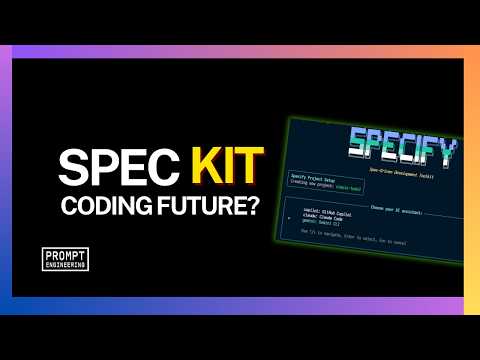
Gain further expertise in specification-driven development by checking out these recommendations.
- GitHub Spec-Kit : Claude Code Specification-Driven Development
- SpecKit Review: GitHub’s New Tool for Reliable AI Coding
- New Amazon Kiro AI IDE Overview for Smarter Coding in 2025
- Kiro : New Amazon AI IDE Released with Free Claude 4 Access
- How Agent OS Solves AI Development Challenges in 2025
- The Secret to Turning Creative Sparks into Coding Success
- What is Vibe Coding? A Guide to AI-Driven Software Development
- ChatGPT 5 Prompt Secrets for Maximum Efficiency & Productivity
- Kiro AI IDE Review : Features, Benefits, and Challenges Explained
Core Features of the GitHub Spec Kit
The GitHub Spec Kit is equipped with several features designed to optimize the development process and enhance productivity:
- Integration with coding agents: The tool works seamlessly with GitHub Copilot, Claude, and CodeGemini, allowing developers to harness the power of automation while maintaining control over their projects.
- Four-step project implementation process: The framework simplifies complex workflows into manageable steps:
- Define project goals and features to establish a clear vision.
- Develop a technical architecture and select the appropriate tech stack.
- Break tasks into smaller, actionable units for better organization.
- Implement features using test-driven development to ensure accuracy and functionality.
- Command-based setup: The GitHub Spec Kit simplifies project initialization and management through command-based operations, eliminating the need for additional installations or complex configurations.
These features collectively empower developers to maintain a structured and efficient workflow, making sure that every aspect of the project is accounted for and executed with precision.
How the GitHub Spec Kit Works
The GitHub Spec Kit streamlines project implementation by automating key processes and introducing structured workflows. It automatically generates folders and files for specifications, technical plans, tasks, and scripts, making sure that all project components are well-organized and easily accessible. As the project progresses, these files are dynamically updated to reflect changes and milestones, providing a clear and up-to-date overview of the development process.
Additionally, the tool supports both parallel and sequential task execution, allowing developers to adapt workflows based on the complexity of their projects. This flexibility ensures that the GitHub Spec Kit can accommodate a wide range of development scenarios, from straightforward applications to multi-feature systems with intricate dependencies.
Strengths and Limitations
The GitHub Spec Kit offers several advantages that make it a valuable tool for developers:
- Thorough project design: The framework encourages detailed planning and documentation, reducing errors and miscommunication during development.
- Structured workflows: By promoting clarity and consistency, the GitHub Spec Kit ensures that every stage of the development process is well-organized and efficient.
- Ideal for complex projects: The tool is particularly effective for managing multi-feature applications with intricate dependencies, where precision and thoroughness are critical.
However, the framework does have some limitations:
- Time-intensive for simple tasks: For smaller projects or straightforward tasks, the setup and documentation process may feel excessive and unnecessary.
- Early-stage product: As a relatively new tool, the GitHub Spec Kit may lack seamless integration with existing codebases or workflows, potentially requiring additional adjustments from developers.
While these limitations may affect its suitability for certain projects, the GitHub Spec Kit remains a powerful tool for developers seeking a structured and reliable approach to software development.
When to Use the GitHub Spec Kit
The GitHub Spec Kit is best suited for projects that require detailed specifications and rigorous testing. For example, if you are developing a multi-feature application with complex dependencies, this tool can help you maintain clarity and control throughout the process. Its emphasis on documentation and structured workflows ensures that every aspect of the project is accounted for, reducing the risk of errors and delays.
However, for smaller, straightforward tasks, the time investment required for setup and documentation may outweigh its benefits. In such cases, developers may prefer simpler tools or workflows that prioritize speed over thoroughness.
The Value of a Specification-Driven Framework
The GitHub Spec Kit introduces a disciplined, specification-driven approach to software development, emphasizing clarity, precision, and efficiency. By reducing errors through detailed planning and test-driven implementation, it provides a robust framework for managing complex projects. While it may require additional time for setup and is better suited for larger-scale efforts, its focus on documentation and integration with coding agents makes it a valuable tool for developers seeking a structured and reliable development process.
Media Credit: Prompt Engineering
Disclosure: Some of our articles include affiliate links. If you buy something through one of these links, Geeky Gadgets may earn an affiliate commission. Learn about our Disclosure Policy.
