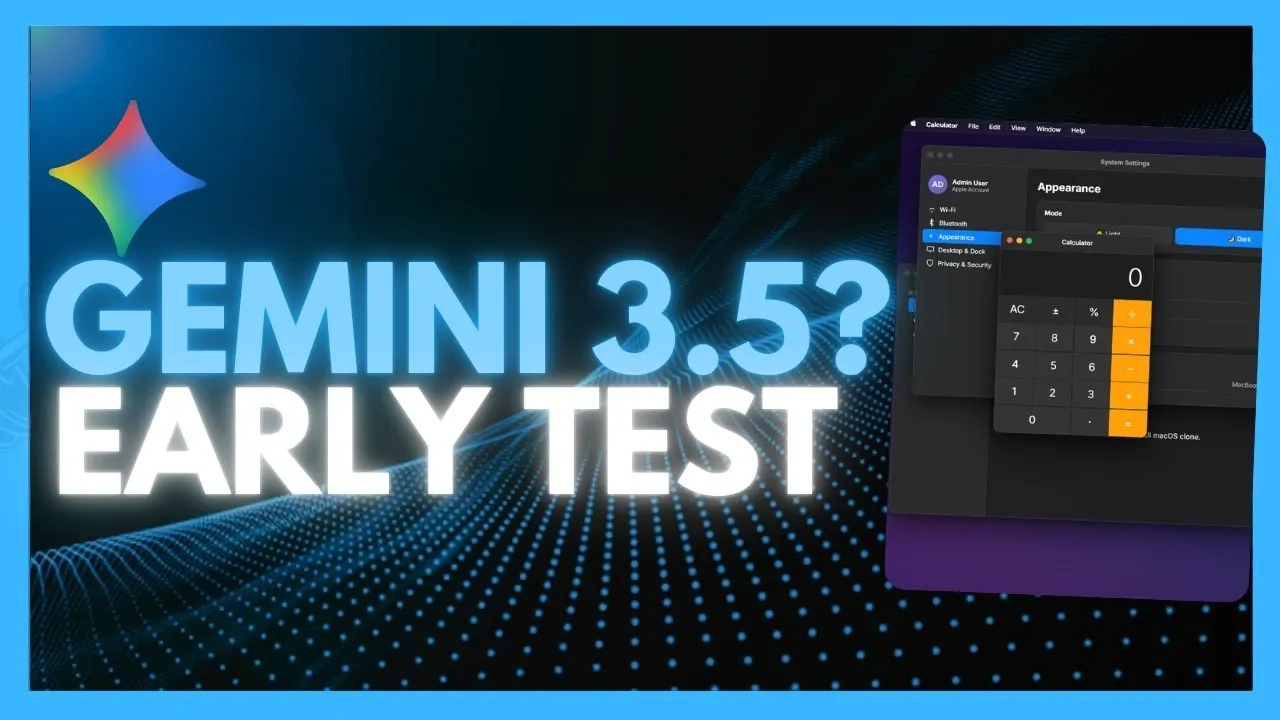
World of AI examines the Gemini 3.5 Stealth model, the latest addition to Google’s Gemini AI series, designed with a focus on speed and adaptability in dynamic settings. Building on the Gemini 3.1 Flash, this version has shown promise in generating functional outputs like SaaS landing pages and Mac OS-inspired systems during testing. While it demonstrates cost-conscious performance, challenges such as occasional hallucinations and inconsistencies in following instructions highlight areas that require further refinement, particularly in high-stakes use cases.
Explore how the Gemini 3.5 Stealth performs in scalability and creative problem-solving compared to earlier models. Gain insight into its strengths in front-end design, including crafting visually appealing interfaces and examine its potential for use in immersive environments like Minecraft-style simulations. This guide provides a detailed look at the model’s practical applications and its implications for developers working with advanced AI systems.
What Distinguishes Gemini 3.1 Flash?
TL;DR Key Takeaways :
- The Gemini 3.1 Flash, codenamed “White Water,” focuses on speed, cost efficiency and practicality, excelling in creative generation, technical precision and front-end design.
- Key features include enhanced scalability, real-time audio and voice interaction capabilities and performance optimization for high-demand scenarios.
- It demonstrates strengths in speed, reduced hallucination rates, creative output and complex prototyping, making it versatile for diverse applications.
- Limitations include occasional struggles with instruction-following and hallucination reduction, requiring further refinement for improved reliability.
- Potential applications span interactive SaaS landing pages, functional prototypes and immersive environments, showcasing its balance of technical precision and creative innovation.
The Gemini 3.1 Flash is engineered to deliver superior performance in both speed and scalability, setting it apart from earlier iterations. Its design prioritizes real-world applications, offering developers a cost-effective solution without compromising on quality. A standout feature of this model is its live variant, which enables real-time audio and voice interactions. This capability makes it particularly well-suited for dynamic environments, such as customer service platforms and interactive applications.
Key features of the Gemini 3.1 Flash include:
- Enhanced scalability: Designed to support deployment across a wide range of use cases.
- Real-time interaction capabilities: Optimized for audio and voice-based applications, enhancing user engagement.
- Performance optimization: Tailored for high-demand scenarios, making sure reliability and efficiency.
These attributes position the Gemini 3.1 Flash as a versatile and practical tool in the AI landscape, capable of addressing both creative and technical challenges with ease.
Performance Highlights
Testing has revealed that the Gemini 3.1 Flash excels in several critical areas, showcasing its potential to meet diverse demands:
- Speed and Precision: The model demonstrates faster generation speeds and reduced hallucination rates, making it a reliable choice for tasks requiring accuracy and quick turnaround times.
- Creative Output: Its capabilities in front-end design are particularly noteworthy, producing UI effects and animations that rival those created by human designers.
- Complex Prototyping: The model has successfully generated functional prototypes, including Minecraft-style games, Mac OS-inspired systems and SaaS landing pages, highlighting its versatility.
These strengths underscore the Gemini 3.1 Flash’s ability to handle both technical and creative tasks, offering developers a powerful tool for a variety of projects.

Discover other guides from our vast content that could be of interest on Gemini AI.
- How to Use Google Gemini AI for Free
- Gemini in Google Drive: AI Search, Docs, Sheets, Slides
- Chrome AI Automation by Gemini: Behind Logins, Forms and Emails
- AI News : DeepSeek V4 Aims at Long Code & February Launch
- Google Nano Banana 2: Faster Gemini 3.1 Image Generation with 4K Output
- Google’s Secret Gemini 3 Pro GA Models Leaked
- Apple’s Bold Move: Siri Gets Smarter with Google’s Gemini AI
- Apple Integrates Google Gemini AI to Transform Siri
- Apple’s Strategic Use of Google’s Gemini AI Explained
- NotebookLM Update: Bigger Context, Longer Memory & New Audio Modes
Limitations and Areas for Improvement
Despite its impressive advancements, the Gemini 3.1 Flash is not without its limitations. Two key areas require further refinement:
- Instruction-Following: The model occasionally struggles to adhere to user directives, resulting in inconsistencies in output. This can impact its reliability for tasks requiring strict compliance with guidelines.
- Hallucination Reduction: While improvements have been made, the model is not entirely immune to generating inaccurate or irrelevant information, which can affect the quality of its outputs.
These issues, while not severe, highlight the need for ongoing optimization to enhance the model’s reliability and overall performance.
Testing and Competitive Evaluation
The Gemini 3.1 Flash underwent rigorous testing on platforms like Arena (formerly Alamarina), where it was evaluated in “battle mode” against other AI models. The testing focused on its ability to generate functional components and creative designs, yielding promising results:
- Superior Speed and Quality: Consistently outperformed competitors in both generation speed and output quality.
- Front-End Excellence: Demonstrated exceptional skill in creating visually appealing and functional front-end components.
- Creative Problem-Solving: Showcased innovative approaches to complex design challenges.
However, occasional lapses in instruction-following were observed, reinforcing the importance of addressing this limitation. These findings provide valuable insights into the model’s strengths and areas that require further development.
Potential Applications
The Gemini 3.1 Flash’s versatility makes it a strong candidate for a wide range of applications, particularly in fields that demand a balance of technical precision and creative innovation. Its strengths in front-end development and creative UI design make it an excellent choice for developers and businesses aiming to enhance user experiences. Potential use cases include:
- Interactive SaaS Landing Pages: Developing advanced landing pages with animations and dynamic features to improve user engagement.
- Functional Prototypes: Creating prototypes of complex systems, such as Mac OS-style interfaces, to streamline development processes.
- Immersive Environments: Designing engaging environments, including Minecraft-style games, to captivate users and drive innovation.
These examples illustrate the Gemini 3.1 Flash’s ability to bridge the gap between technical accuracy and creative output, delivering high-quality results efficiently.
Future Outlook
The anticipation surrounding the Gemini 3.1 Flash’s official release remains high, as developers and businesses look forward to using its capabilities for real-world applications. However, concerns about potential performance downgrades during the transition from testing to production persist, a common challenge for AI models.
If Google successfully addresses the current limitations, such as inconsistencies in instruction-following and hallucination rates, the Gemini 3.1 Flash could establish itself as a benchmark for AI-driven solutions. Its combination of speed, cost efficiency, and creative potential positions it as a valuable asset for innovation in the AI space, offering a glimpse into the future of scalable and efficient AI technologies.
Media Credit: WorldofAI
Disclosure: Some of our articles include affiliate links. If you buy something through one of these links, Geeky Gadgets may earn an affiliate commission. Learn about our Disclosure Policy.
