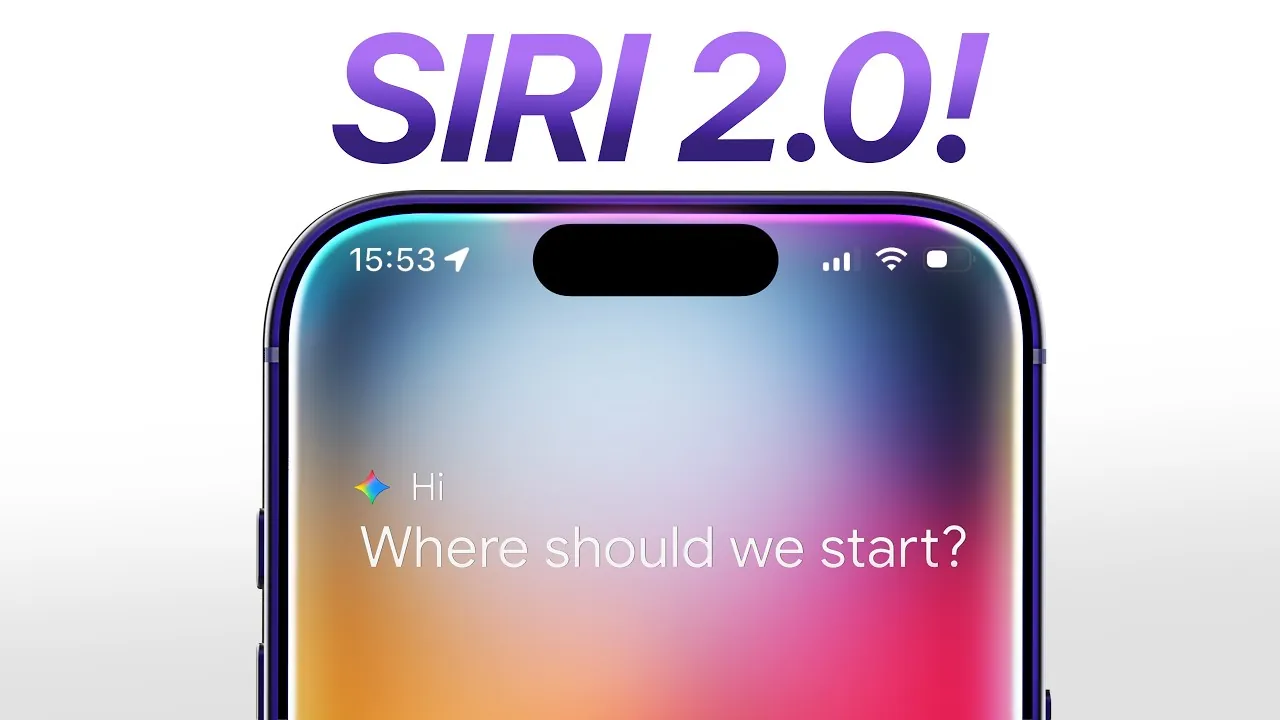
Apple is making a pivotal move to enhance Siri, its renowned voice assistant, by integrating Google’s Gemini AI model. This decision represents a significant departure from Apple’s tradition of relying solely on proprietary solutions. By adopting Gemini’s advanced artificial intelligence capabilities, Apple aims to address Siri’s long-standing limitations and elevate it to compete with leading AI-powered assistants like Google Assistant and ChatGPT. This development has far-reaching implications for the future of digital assistants and how they integrate into your daily life. The video below from ZONEofTECH gives us more details on what to expect from Siri 2.0.

The Rise and Stumble of Siri
When Siri was introduced in 2011, it transformed the way people interacted with technology, offering a glimpse into the potential of voice-activated assistants. However, over the years, Siri has struggled to keep pace with advancements in artificial intelligence, leaving users increasingly dissatisfied.
Some of Siri’s most notable challenges include:
- Limited contextual understanding: Siri often fails to grasp the nuances of user queries, leading to incomplete or irrelevant responses.
- Weak natural language processing: Its ability to interpret and respond to conversational language has lagged behind competitors.
- Inability to handle complex queries: Siri struggles with multi-layered or intricate requests, limiting its utility in more demanding scenarios.
These shortcomings have allowed competitors like Google Assistant and Amazon Alexa to dominate the market, offering more robust and versatile solutions. As user expectations for digital assistants continue to rise, Apple has recognized the need for a fantastic approach to keep Siri relevant.
Partnering with Google: A Strategic Shift
To address these challenges, Apple has entered into a multi-year partnership with Google to integrate the Gemini AI model into Siri. This collaboration marks a strategic shift for Apple, allowing the company to use Google’s expertise in artificial intelligence while maintaining control over Siri’s design and user experience.
A key aspect of this partnership is Apple’s unwavering commitment to privacy. All Siri requests will be processed on Apple’s private cloud infrastructure, making sure that your data remains secure and inaccessible to external entities. This approach aligns with Apple’s broader emphasis on user privacy as a core value.
However, this collaboration comes with a significant financial commitment. Apple is reportedly paying Google $1 billion annually for access to Gemini’s innovative technology. Despite the cost, this investment underscores Apple’s determination to close the gap between Siri and its competitors.
Why Google’s Gemini and Not OpenAI?
Apple’s decision to partner with Google rather than OpenAI reflects both strategic and practical considerations. Gemini is widely regarded as one of the most advanced AI platforms available today, excelling in areas such as natural language processing, contextual understanding, and conversational AI.
OpenAI, on the other hand, has shifted its focus toward developing its own hardware and software ecosystems, reportedly declining further collaboration with Apple. This left Google as the most logical partner to help Apple enhance Siri’s capabilities. By choosing Gemini, Apple gains access to a proven AI model that can address Siri’s weaknesses and deliver a more competitive user experience.
What’s Next for Siri?
The integration of Google’s Gemini AI into Siri will be implemented in a phased rollout, making sure a smooth transition and allowing users to gradually experience the improvements. Key milestones include:
- April 2026: The release of iOS 26.4 will introduce foundational Gemini-powered features, such as enhanced natural language understanding and improved contextual awareness.
- September 2026: With the launch of iOS 27, Siri will gain more advanced capabilities, including conversational AI, document summarization tools, and enhanced task management features.
In the longer term, Apple may rely on Google’s servers for advanced computing power, further expanding Siri’s functionality and responsiveness. This phased approach ensures that users can adapt to the changes while benefiting from incremental improvements.
Apple’s Dual AI Strategy
While the partnership with Google represents a significant step forward, Apple is not abandoning its in-house AI development efforts. The company continues to invest heavily in proprietary AI technologies, aiming to achieve long-term independence and innovation.
For now, Gemini serves as a bridge, allowing Apple to deliver a more competitive Siri experience while its internal AI models mature. This dual strategy allows Apple to balance immediate improvements with its broader vision for the future of artificial intelligence.
What This Means for You
For users, the integration of Gemini into Siri promises a smarter, more intuitive digital assistant capable of handling a wide range of tasks. Imagine being able to:
- Summarize lengthy documents: Siri could condense complex information into concise, actionable insights.
- Assist with technical projects: From coding to troubleshooting, Siri could provide valuable support for professional tasks.
- Plan intricate schedules: Siri could seamlessly coordinate multiple events, deadlines, and priorities.
These enhancements will transform Siri from a basic assistant into a sophisticated digital companion, making it an indispensable tool for productivity and convenience.
Strategic Implications for the Tech Industry
Apple’s collaboration with Google highlights a pragmatic approach to innovation, demonstrating the value of using external expertise while staying true to core principles like user privacy. This partnership also underscores the complex relationship between Apple and Google—two fierce competitors that occasionally collaborate to achieve mutual benefits.
By integrating Gemini, Apple not only addresses Siri’s weaknesses but also strengthens its position in the rapidly evolving field of conversational AI. This move signals a broader trend in the tech industry, where companies are increasingly prioritizing user experience and practical functionality over rigid independence.
The Future of Digital Assistants
The integration of Google’s Gemini AI into Siri represents a turning point in Apple’s approach to artificial intelligence. By embracing innovative technology and prioritizing user needs, Apple is transforming Siri into a more capable and responsive assistant.
For users, this evolution means a Siri that is better equipped to meet the demands of modern life, from managing complex tasks to providing insightful answers. As this partnership unfolds, it will be fascinating to see how Apple’s AI journey shapes the future of digital assistants and redefines the way you interact with technology.
Advance your skills in AI model integration by reading more of our detailed content.
- What is the Model Context Protocol? A Guide to Seamless AI
- What is MCP? The New AI Integration Standard Explained
- Carabiner Keychain Tracker (2-Pack) – Works with Apple Find My
- Ion UI Guide: Set up Multiple AI Agents on Mac, Windows, Linux
- SmartLock: TSA-Approved Travel Lock with Apple Find My App
Source & Image Credit: ZONEofTECH
Disclosure: Some of our articles include affiliate links. If you buy something through one of these links, Geeky Gadgets may earn an affiliate commission. Learn about our Disclosure Policy.
