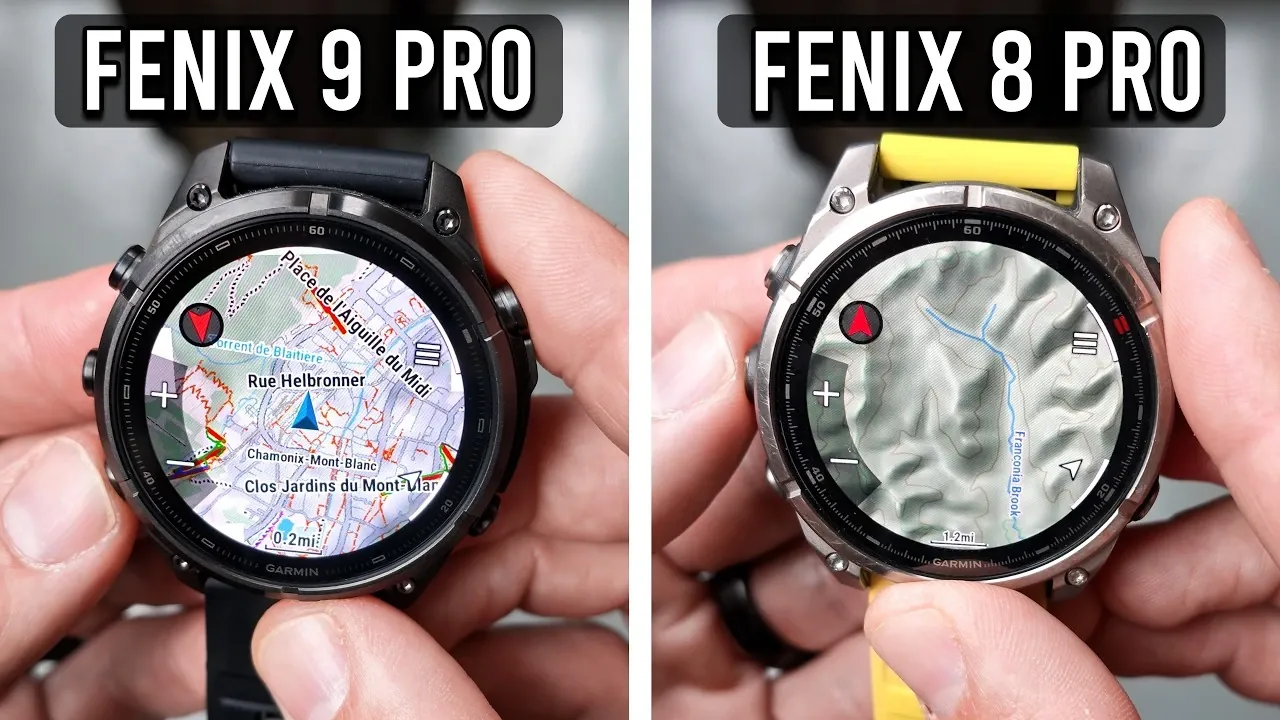
When it comes to mapping performance on multisport smartwatches, the Garmin Fenix 9 Pro and Fenix 8 Pro offer distinct experiences that cater to different user needs. In a hands-on comparison by Chase the Summit, the Fenix 9 Pro stands out for its smoother zoom animations and faster map rendering, significantly enhancing usability for activities like hiking and cycling. By contrast, the Fenix 8 Pro, while reliable for basic navigation, shows slower responsiveness and occasional glitches, particularly when handling complex geographical data or dense map layers. These differences highlight how advancements in mapping technology can directly impact navigation efficiency.
Explore this guide to gain a clearer understanding of how each device performs in real-world scenarios. You’ll learn about the Fenix 9 Pro’s ability to handle intricate map details with precision, the Fenix 8 Pro’s limitations in rendering speed and how these factors influence usability during outdoor activities. Whether you’re navigating rugged trails or urban environments, this breakdown will help you identify which model aligns best with your mapping needs.
Mapping Performance: Speed and Responsiveness
TL;DR Key Takeaways :
- The Garmin Fenix 9 Pro offers significantly improved mapping performance, with faster rendering speeds, smoother zoom animations and seamless panning compared to the Fenix 8 Pro.
- The Fenix 9 Pro excels in handling complex map layers and displaying details more clearly, making it ideal for navigating intricate trail networks or urban environments.
- The Fenix 8 Pro, while functional, suffers from slower performance, occasional glitches and rendering delays, particularly in areas with dense or complex geographical data.
- The Fenix 9 Pro provides a more intuitive and responsive navigation experience, enhancing usability for outdoor enthusiasts and athletes who rely on precise mapping.
- The Fenix 9 Pro demonstrates superior adaptability across diverse geographical contexts, making it a versatile and dependable choice for global navigation needs.
The Garmin Fenix 9 Pro introduces notable advancements in mapping performance, offering a smoother and more efficient experience. Zoom animations are fluid, allowing seamless transitions between map scales with minimal delay. The device also excels in map rendering, significantly reducing the time it takes for details to load. Preloaded map tiles further enhance this efficiency, making sure that panning across maps is quick and uninterrupted. Whether you’re navigating a dense forest trail or exploring a bustling city, the Fenix 9 Pro delivers a consistently responsive experience.
In contrast, the Fenix 8 Pro, while reliable for basic mapping tasks, falls short in terms of speed and fluidity. Rendering delays and occasional glitches, particularly in contour shading, can disrupt navigation. These issues are especially noticeable in areas with complex geographical data, where the slower performance may hinder your ability to make quick decisions. While the Fenix 8 Pro remains functional, the Fenix 9 Pro clearly outperforms it in terms of speed and responsiveness, making it the better choice for users who prioritize efficiency.
Map Details and Layer Handling
Both the Fenix 9 Pro and Fenix 8 Pro are equipped with Garmin’s TopoActive maps, which provide essential geographical details such as trails, road names, contour lines and points of interest. These features are invaluable for activities like hiking, cycling and running, where accurate data is crucial for navigation.
The Fenix 9 Pro, however, handles complex map layers with greater precision. Details are displayed more clearly, making it easier to interpret critical information, whether you’re navigating intricate trail networks or urban environments. This clarity is particularly beneficial when working with layered geographical data, such as contour shading combined with points of interest.
On the other hand, the Fenix 8 Pro struggles with real-time rendering of intricate map details. This limitation becomes evident when navigating areas with dense or overlapping data, where the device may lag or fail to display information as effectively. For users who demand high levels of detail and clarity, the Fenix 9 Pro offers a more reliable and user-friendly experience.

Here are more guides from our previous articles and guides related to Garmin devices that you may find helpful.
- Garmin Fenix 9: MicroLED Display and 2026 Release Date
- FCC Filings Reveal Garmin Fenix 9 Series with LTE Specs
- Garmin Fenix 9 Pro vs Garmin Fenix 8 Pro: Does LTE Gives Fenix 9 Pro the Edge?
- Garmin Fenix 9: Solar-Over-AMOLED Displays Could Change Garmin Watches Forever
- Garmin Fenix 9 Pro Features a 3,000-Nit AMOLED Display
- Garmin Fenix 9 Series Rumored to Launch with Three New Models
- Leaked Garmin Fenix 9 Price Ranges from $1,180 To $1,550
- FCC Filings Suggest Garmin CIRQA May Launch Around July 19th 2026
- Hands-on with New Garmin CIRQA Fitness Tracker: 10-Day Battery and No Screen
User Experience: Navigation Usability
The Fenix 9 Pro sets a new standard for usability in smartwatch mapping. Panning across maps feels intuitive and fluid, with the device responding quickly to user input. This responsiveness enhances the overall navigation experience, making it easier to explore your surroundings and plan routes. While it may not match the speed of smartphone-based maps, the Fenix 9 Pro delivers one of the most polished mapping experiences available in a smartwatch.
In comparison, the Fenix 8 Pro provides a less refined experience. Panning and zooming can feel sluggish, particularly when navigating areas with dense map data. These limitations can be frustrating during time-sensitive activities, such as route planning or navigating unfamiliar terrain. For users who frequently rely on mapping features, the Fenix 9 Pro’s smoother and faster interface offers a significant advantage.
Geographical Context and Regional Performance
For this comparison, Europe maps were tested on the Fenix 9 Pro, while USA maps were used on the Fenix 8 Pro. Both devices support global maps, but storage constraints and download limitations may influence your choice of regions. Regardless of the geographical context, the Fenix 9 Pro consistently demonstrated superior performance in rendering and usability. Its ability to handle diverse terrains and regions with ease makes it a versatile option for global navigation.
The Fenix 8 Pro, while functional, showed slower performance in both regions tested. This difference highlights the Fenix 9 Pro’s ability to adapt to various geographical contexts without compromising speed or accuracy, making it the more dependable choice for users who require seamless navigation across different environments.
Which Model Stands Out?
The Garmin Fenix 9 Pro represents a significant step forward in mapping technology for multisport smartwatches. With faster rendering speeds, smoother zoom animations and improved panning capabilities, it offers a practical and user-friendly navigation experience. These enhancements make it particularly well-suited for outdoor enthusiasts and athletes who rely heavily on accurate and responsive maps.
While the Fenix 8 Pro remains a functional option, its slower performance and occasional glitches make it less ideal for users who demand precision and efficiency. For those who prioritize seamless mapping and reliable navigation, the Fenix 9 Pro is the clear winner. Its advanced features and refined user experience set a new benchmark for smartwatch navigation, making it a worthwhile investment for anyone seeking top-tier mapping capabilities.
Media Credit: Chase the Summit
Disclosure: Some of our articles include affiliate links. If you buy something through one of these links, Geeky Gadgets may earn an affiliate commission. Learn about our Disclosure Policy.
