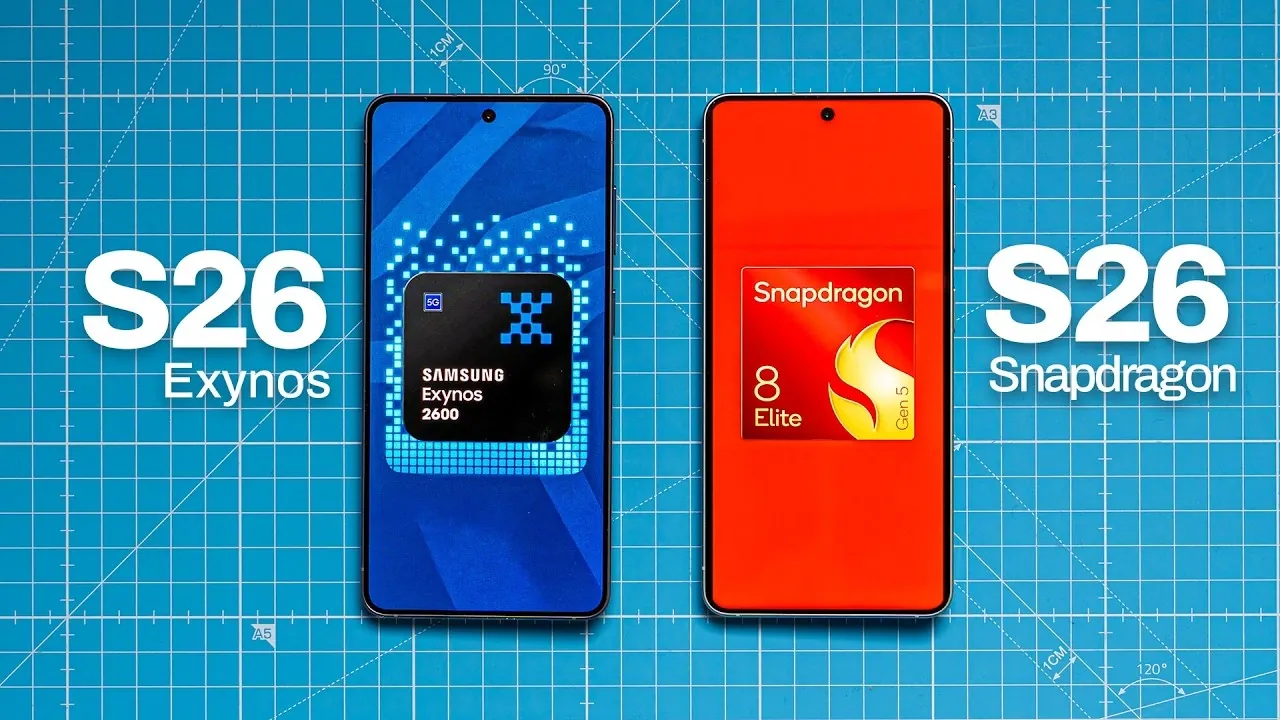
Samsung’s Galaxy S26 flagship smartphone is available in two distinct versions, each catering to different regions. The global variant is powered by the Exynos 2600 chipset, while the Snapdragon 8 Gen 5 Galaxy Edition is reserved for markets like North America and China. Both versions promise innovative performance, but how do they compare in real-world scenarios? Through detailed testing, notable differences emerge in areas such as processing power, battery efficiency, thermal management, and image processing. Here’s an in-depth look at how these two chipsets stack up in a great new video from Techmo.

Performance: Snapdragon Takes the Lead
In terms of raw computational power, the Snapdragon 8 Gen 5 Galaxy Edition consistently outperforms the Exynos 2600. Benchmark tests, including Geekbench, 3D Mark and Antutu, reveal an 8-17% performance advantage for Snapdragon, making it the preferred choice for users seeking top-tier speed and responsiveness.
Key performance highlights:
- Single-core performance: Snapdragon’s higher clock speeds enable faster app launches, smoother web browsing and quicker response times for everyday tasks.
- Multi-core performance: While the gap narrows to around 2%, Snapdragon still holds an edge, excelling in multitasking and resource-intensive activities like gaming or video editing.
This performance disparity underscores Snapdragon’s ability to handle demanding workloads with greater efficiency, making it an ideal choice for power users who prioritize speed and seamless multitasking.
Battery Efficiency: Snapdragon Delivers More Screen Time
Battery life is a critical factor for smartphone users and here, the Snapdragon variant demonstrates clear superiority. Consuming less power on average—2.21W compared to Exynos’s 2.34W—the Snapdragon-powered Galaxy S26 offers longer usage times across various scenarios.
Battery performance insights:
- Screen-on time: In a full battery drain test, the Snapdragon version achieved 5 hours and 48 minutes of screen-on time, outperforming the Exynos variant’s 5 hours and 31 minutes.
- Task-specific efficiency: Whether streaming videos, gaming, or engaging in video calls, Snapdragon consistently demonstrated better power management, extending battery life during intensive activities.
While the difference may seem modest, it becomes more pronounced during heavy usage, making Snapdragon the better option for users who prioritize extended battery life and efficiency.
Thermal Management: Staying Cool Under Pressure
Thermal performance is another area where the Snapdragon chipset shines. During prolonged use, the Snapdragon-powered Galaxy S26 maintained cooler operating temperatures, running 1-2°C lower than its Exynos counterpart.
Thermal performance considerations:
- Snapdragon’s superior thermal management ensures greater user comfort during extended gaming sessions or video recording.
- While the Exynos 2600 shows improvements over previous generations, it still generates slightly more heat under heavy workloads, which could impact long-term performance.
For users engaging in resource-intensive tasks, Snapdragon’s ability to remain cooler under pressure provides a tangible advantage, making sure consistent performance without overheating concerns.
Image and Video Processing: Different Strengths
Both chipsets deliver impressive image and video quality, but their approaches cater to different user preferences. The Exynos 2600 emphasizes vibrant, eye-catching visuals, while the Snapdragon 8 Gen 5 Galaxy Edition focuses on detail and natural tones.
Image and video processing highlights:
- Exynos 2600: Produces brighter, more saturated photos, appealing to users who prefer bold and vivid colors.
- Snapdragon 8 Gen 5 Galaxy Edition: Excels in detail retention and noise reduction, delivering sharper images, particularly in low-light conditions.
For video recording, the differences are subtler. The Exynos version offers slightly higher contrast, creating a more dramatic aesthetic, while Snapdragon prioritizes balanced, natural tones. Ultimately, the choice between the two depends on individual preferences for color profiles and image characteristics.
Standby Performance: A Level Playing Field
In standby mode, both chipsets perform equally well, showcasing efficient power management when the device is idle. Overnight battery drain is negligible for both variants, making sure that users won’t notice a significant difference in day-to-day standby performance. This parity highlights the advancements in power optimization for both chipsets, offering reliable performance regardless of the variant.
Snapdragon vs. Exynos: Which One Should You Choose?
The Snapdragon 8 Gen 5 Galaxy Edition emerges as the superior choice for the Galaxy S26, delivering better overall performance, enhanced battery efficiency and improved thermal management. These advantages make it the ideal option for users who prioritize speed, longevity and consistent performance under demanding conditions.
However, the Exynos 2600 has made significant strides, narrowing the performance gap and offering competitive image and video quality. For global users, the Exynos-powered Galaxy S26 remains a solid option, reflecting Samsung’s ongoing advancements in chipset technology.
Ultimately, if you have access to the Snapdragon variant, it offers a more well-rounded experience, particularly for those who demand top-tier performance and efficiency. For others, the Exynos version still delivers a premium experience, making sure that the Galaxy S26 remains a flagship device regardless of the chipset.
Uncover more insights about Galaxy S26 in the previous articles we have written.
- Samsung Galaxy S26 Ultra: Pros, Cons and Key Features
- Samsung Galaxy S26 Ultra Launch Date, Features and Innovation
- Why the Samsung Galaxy S26 Ultra Redefines Smartphones
- Samsung Galaxy S26 Ultra Features and Upgrades Explained
- Samsung Galaxy S26 Ultra: Top 3 Upgrades Revealed
Source & Image Credit: Techmo
Disclosure: Some of our articles include affiliate links. If you buy something through one of these links, Geeky Gadgets may earn an affiliate commission. Learn about our Disclosure Policy.
