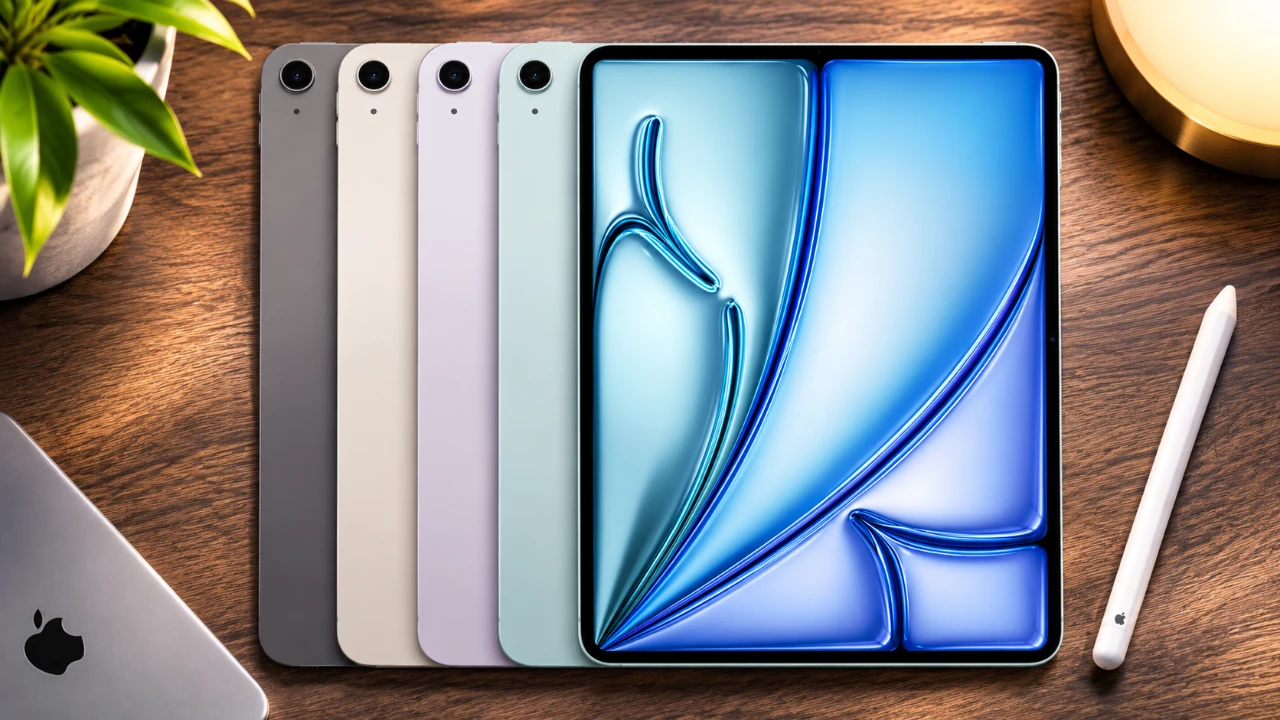
Apple is preparing to launch a refreshed iPad Air in early 2027, introducing OLED displays for both 11-inch and 13-inch models. This marks a significant advancement in display technology for the iPad Air lineup. However, the decision to retain a 60 Hz refresh rate has sparked debate, especially given the device’s anticipated starting price of $799. In the video below, SaranByte explores the key updates, design enhancements, and performance improvements, while addressing the concerns that may influence its reception.
TL;DR Key Takeaways :
- OLED Panel Transition: Adopts single-stack OLED technology across both 11-inch and 13-inch sizes for richer contrast and absolute blacks.
- 60Hz Refresh Rate Cap: Omits high-refresh-rate ProMotion capabilities to maintain a distinct feature barrier against the iPad Pro tier.
- M5 Performance Leap: Powered by Apple’s M5 processor, delivering up to 20% faster compute and graphics performance over prior generations.
- Refined Portability: Engineered to be roughly 15% thinner and lighter while introducing optional anti-reflective nano-texture glass.
OLED Display: A Leap Forward with Limitations
The transition from LCD to OLED technology represents a major improvement for the iPad Air. OLED displays are known for their deeper blacks, richer contrast, and vivid color reproduction, offering a more immersive viewing experience. This upgrade is particularly beneficial for users who frequently watch videos, edit photos, or engage in other visually demanding tasks.
However, Apple’s decision to implement a single-stack OLED with an LTPS backplane imposes a significant limitation: the refresh rate remains capped at 60 Hz. This means the iPad Air will lack ProMotion, a feature available on the iPad Pro that enables smoother scrolling and more responsive touch interactions. Additionally, the absence of tandem OLED technology, which enhances both durability and energy efficiency, places the iPad Air behind its Pro counterpart in terms of display innovation. While the OLED upgrade is a welcome change, these compromises may leave some users questioning whether the device offers sufficient value for its price.
Design: Thinner, Lighter and More Functional
The 2027 iPad Air is expected to feature a modernized design with thinner bezels, creating a more uniform and premium aesthetic. Reports suggest the device will be approximately 15% thinner and lighter than its predecessor, making it even more portable and convenient for daily use.
Apple is also introducing nano-texture glass, a feature designed to reduce glare and reflections. This enhancement will improve usability in bright environments, such as outdoor settings or well-lit offices. These design refinements not only elevate the device’s appearance but also enhance its practicality, catering to users who prioritize portability and ease of use.
Performance: The Power of the M5 Chip
At the heart of the new iPad Air lies Apple’s M5 chip, which promises up to 20% better performance compared to the previous generation. This improvement will benefit a wide range of activities, from multitasking and gaming to creative workflows like video editing and graphic design. The M5 chip ensures that the iPad Air remains a versatile tool for both personal and semi-professional use.
Another noteworthy addition is acoustic display technology, which uses the screen itself as a speaker to deliver richer, more immersive sound. This innovation enhances the overall multimedia experience, making the iPad Air a compelling choice for entertainment and productivity. Furthermore, the device will feature IP67 water and dust resistance, adding an extra layer of durability for users who need a reliable device in various environments.

Enhanced Features: Charging, Connectivity and Usability
Apple is introducing faster charging capabilities with the new iPad Air, allowing the device to reach 50% battery in just 30 minutes when paired with a 35W adapter. This feature is particularly useful for users who are frequently on the go and need quick power-ups.
Cellular models will include the C2 modem, which promises faster upload speeds and more reliable connectivity. This improvement ensures smoother performance for tasks like video calls, streaming and file uploads. Additionally, the iPad Air may feature an adaptive True Tone flash, enhancing document scanning and low-light photography. These updates aim to make the device more functional and user-friendly, catering to a wide range of use cases.
Challenges: Refresh Rate, Storage and Pricing
Despite its advancements, the iPad Air’s 60 Hz refresh rate remains a significant drawback. For users who prioritize smoother performance, such as gamers, digital artists, or those who frequently scroll through content, this limitation could be a dealbreaker. The absence of ProMotion may make the device feel less responsive compared to alternatives in the same price range.
The base storage is expected to remain at 128 GB, which may not be sufficient for creative professionals or users who work with large files. Additionally, the limited color options, likely mirroring the iPad Mini, may disappoint those seeking more personalization. At a starting price of $799, these compromises could deter potential buyers, especially when refurbished or discounted iPad Pro models offer superior features at a similar cost.
Market Position: Competition and Consumer Appeal
The iPad Air’s pricing places it in close competition with the iPad Pro, particularly refurbished or discounted models that offer advanced features like ProMotion and higher refresh rates. This raises questions about the iPad Air’s value proposition, as many users may opt for a Pro model to gain access to these premium features.
Industry analysts predict that Apple could ship 4-5 million units of the new iPad Air in 2027. However, the device’s compromises in refresh rate, storage and pricing may limit its appeal to a broader audience. For many potential buyers, the decision will hinge on whether the OLED display and design improvements justify the cost, especially when alternatives with better specifications are readily available.
Launch Timeline and Consumer Expectations
Apple is expected to unveil the new iPad Air in March or April 2027, aligning with its typical spring product launch schedule. As the release date approaches, attention will focus on how Apple positions this device within its product lineup and against competitors. While the OLED display and design changes are promising, the compromises in refresh rate, storage and pricing could limit its appeal to a broader audience.
The 2027 iPad Air introduces meaningful advancements in display technology, design and performance. However, the lack of ProMotion, limited storage options and high starting price may overshadow these improvements for some users. Ultimately, the decision to invest in the new iPad Air will depend on individual priorities. For those who value OLED technology and a lightweight design, this device could be a compelling choice. However, users seeking smoother performance or better value may find the iPad Pro or other alternatives more suitable for their needs.
Discover other guides from our vast content that could be of interest on iPad Air.
- iPad Mini 8 vs iPad Air M4: OLED Displays Meet LCD Panels
- Got a New iPad in 2026? Start With These Essential Steps
- Apple M4 iPad Pro vs M2 iPad Air: Specs Compared
- iPad Air M3: Leaked Specs Reveal HUGE Upgrades!
- M4 iPad Air (2026): Bad News for the Display?
- The New M4 iPad Air (2026): Pro Power at a Mid-Range Price?
Source: SaranByte
Disclosure: Some of our articles include affiliate links. If you buy something through one of these links, Geeky Gadgets may earn an affiliate commission. Learn about our Disclosure Policy.
