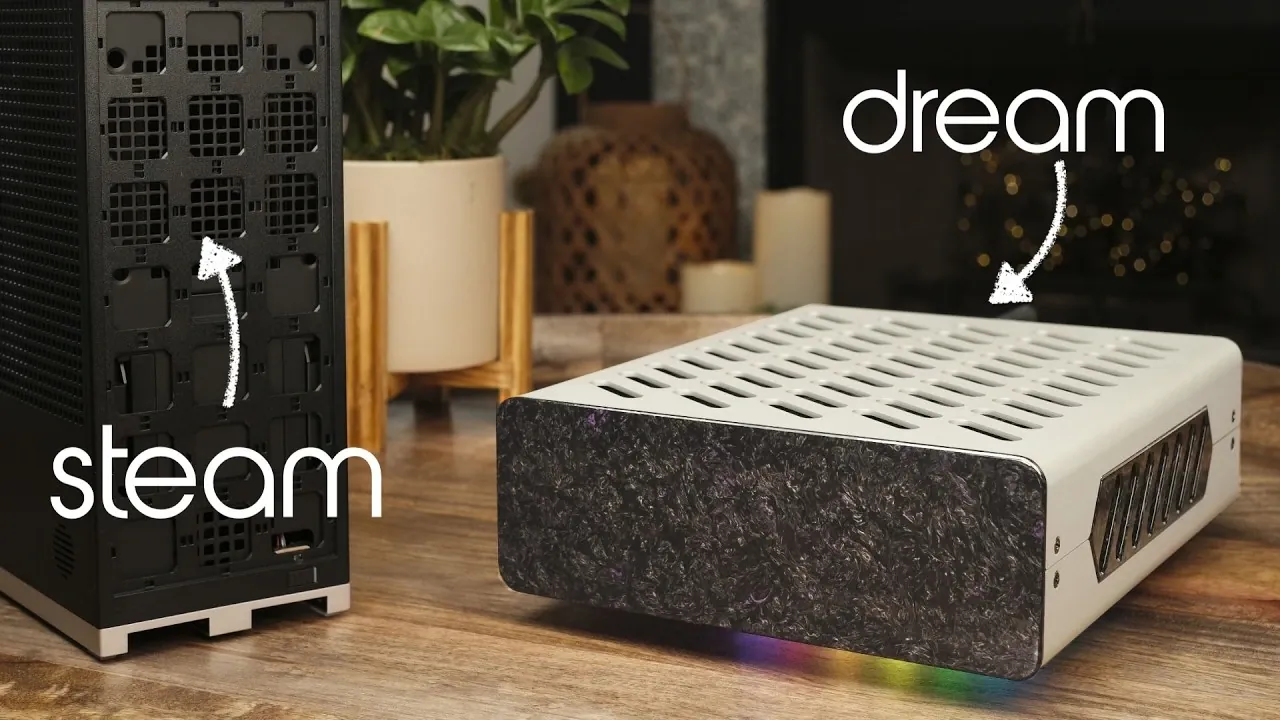
A DIY Steam Machine is a compact gaming PC that combines high performance with a small footprint, as detailed by Not From Concentrate. This guide focuses on building a system with just 3 liters of volume, using the Framework Desktop PC motherboard and the SkyRidge 4 Tiny (S4T) case. The build features an AMD Ryzen AIAX Plus 395 APU with 16 cores, 32 threads, and integrated graphics comparable to an RTX 4060, alongside 64 GB of DDR5 RAM running at 8,000 MT/s. These components deliver a balance of power and efficiency, making the setup suitable for gaming in tight spaces.
You’ll learn how to overcome cooling challenges posed by the Framework motherboard, including the use of custom heat sinks and airflow modifications. The guide also covers how the S4T case supports portability while maintaining performance, and highlights aesthetic upgrades like Fat Carbon bezel inserts. By addressing thermal management, design constraints, and visual enhancements, this guide provides clear steps for creating a compact gaming PC that doesn’t compromise on capability.
Compact DIY Steam Machine Build
TL;DR Key Takeaways :
- The build combines the Framework Desktop PC motherboard with the SkyRidge 4 Tiny (S4T) case, achieving a compact 3-liter system with high-end gaming performance comparable to larger setups.
- Powered by the AMD Ryzen AIAX Plus 395 APU (16 cores, 32 threads, RTX 4060-level graphics) and 64 GB of DDR5 RAM, it supports smooth 4K gaming and multitasking.
- Custom cooling solutions, including an aluminum heat sink plate and Alpenföhn Black Ridge CPU cooler, ensure efficient thermal management in the compact design.
- Design enhancements, such as Fat Carbon material inserts, LED lighting, and improved rear connectivity, elevate both aesthetics and usability.
- While offering exceptional performance and portability, the build is costly and requires extensive modifications, making it ideal for enthusiasts prioritizing customization over affordability.
Essential Hardware Components
The foundation of this build is the Framework Desktop PC motherboard, equipped with the AMD Ryzen AIAX Plus 395 APU. This processor features 16 cores and 32 threads, along with integrated graphics comparable to an RTX 4060, allowing smooth gameplay at 4K resolution. To complement this, the system includes 64 GB of DDR5 RAM running at 8,000 MT/s, making sure seamless multitasking and exceptional gaming performance.
The compact design is made possible by the SkyRidge 4 Tiny (S4T) case, which reduces the system’s volume from 4.5 liters to just 3 liters. This smaller footprint enhances portability without compromising performance, making it an ideal choice for gamers who prioritize both power and space efficiency.
Performance and Portability
This custom build delivers high-end gaming performance, even at 4K resolution, while maintaining a portable and energy-efficient design. The AMD Ryzen APU’s advanced AI capabilities enhance the gaming experience with features like real-time upscaling and dynamic performance optimization, making sure smooth and immersive gameplay.
Compared to traditional gaming consoles such as the PlayStation 5, this DIY Steam Machine offers greater customization and upgrade potential. However, this flexibility comes at a higher cost, making it more suitable for enthusiasts who value tailored performance and are willing to invest in premium components.
- Can’t Wait for Valve’s Steam Machine : Build One Yourself
- SteamOS Gaming PC Guide : DIY Steam Machine Build
- DIY Steam Machine : SteamOS Mini PC Build Targets $350 Budget
- Worlds Smallest Steam Machine Packs 32GB RAM & VRR
- Build a Budget Steam Machine That Easily Hits 1440p
- DIY Budget Steam Machine Gaming PC : 1440p Ryzen 5700G & RX
- Custom Small Form Factor PC as a Steam Machine Alternative
- Steam Machine Isn’t Late, Pricing is the Real Risk
- Is Building a Steam Machine in 2026 Worth It? Costs & Specs Guide
- Early 2026 Slips for Valve’s Steam Hardware Lineup
Overcoming Framework Motherboard Challenges
The Framework motherboard introduces unique challenges due to its proprietary design. These challenges require creative solutions to ensure optimal performance and usability. Key issues include:
- Incompatibility with standard aftermarket cooling solutions, necessitating custom modifications.
- Soldered system-on-chip (SoC) and RAM, which limit upgradability and may deter some users.
- Recessed rear IO ports that create fitment issues in standard ITX cases, requiring adjustments to the case design.
Addressing these challenges is essential to unlock the full potential of the hardware.
Custom Cooling and Thermal Management
Effective thermal management is critical for maintaining performance in a compact build. To address the cooling challenges, a custom aluminum heat sink plate was designed to cool the RAM, VRM, and MOSFET components. The Alpenföhn Black Ridge CPU cooler, capable of handling up to 120W TDP, was integrated to manage the APU’s heat output efficiently.
Additional modifications included 3D-printed shrouds and covers to optimize airflow and thermal management. These components ensure efficient heat dissipation, even within the compact S4T case. The HDPLEX 250W GaN power supply also received enhanced cooling to maintain high efficiency and minimize heat generation, further improving the system’s reliability.
Design Enhancements and Aesthetic Appeal
Beyond performance, aesthetics play a significant role in this build. Custom bezel and side brace inserts made from Fat Carbon material add a premium look and feel. A low-profile horizontal stand with optional LED lighting enhances the system’s visual appeal, making it a striking addition to any gaming setup.
Functionality was also improved by modifying the Sky I/O panel for better rear connectivity. These design enhancements not only elevate the system’s appearance but also improve usability, making sure a seamless user experience.
Cost and Practicality
While this custom build showcases the potential of compact gaming PCs, it comes with a high price tag due to the use of custom components and modifications. For those seeking a more cost-effective solution, waiting for alternative motherboards with better compatibility may be a practical option. Such alternatives could reduce the need for extensive modifications while maintaining similar performance levels, making compact gaming systems more accessible to a broader audience.
Comparing the S4T Build with the Framework Desktop
The custom S4T build offers a 30% smaller footprint compared to the Framework Desktop PC, making it a more portable option. Its tailored modifications provide improved cooling and enhanced aesthetics. However, the Framework Desktop benefits from quieter operation and better airflow due to its larger fans and more spacious design.
Choosing between the two depends on your priorities. If you value compactness and customization, the S4T build is an excellent choice. On the other hand, if you prefer quieter performance and simplicity, the Framework Desktop may be more suitable.
Exploring the Future of Compact Gaming PCs
The DIY Steam Machine demonstrates the potential of creating a compact, high-performance gaming PC. By addressing the challenges of proprietary hardware and incorporating innovative design solutions, this project highlights the trade-offs between customization, cost, and practicality. Whether you’re a gaming enthusiast or a hardware tinkerer, this build offers valuable insights into the evolving landscape of ultra-small form factor PCs, paving the way for future innovations in compact gaming technology.
Media Credit: Not From Concentrate
Disclosure: Some of our articles include affiliate links. If you buy something through one of these links, Geeky Gadgets may earn an affiliate commission. Learn about our Disclosure Policy.
