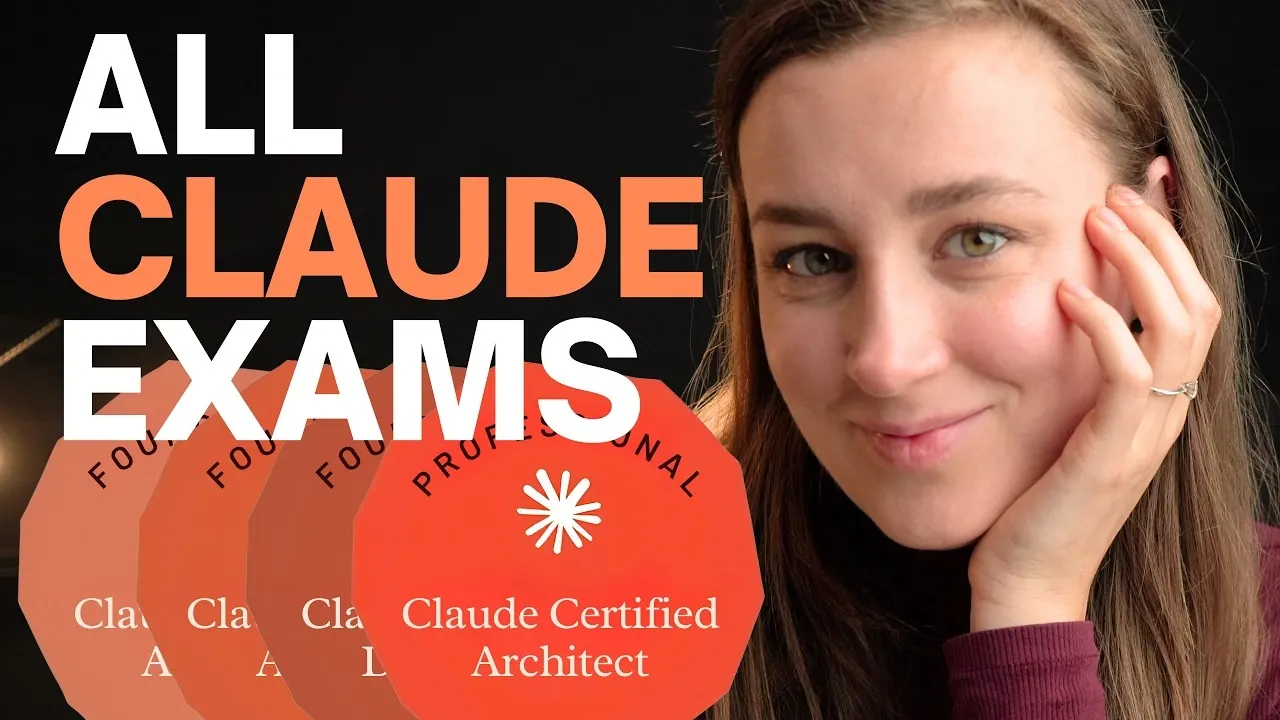
Anthropic’s recently launched Claude certification program offers a structured pathway for professionals to validate their expertise in AI across three distinct tracks: Associate, Developer and Architect. As highlighted by Goda Go, these certifications are designed to meet the needs of diverse roles, from non-technical users to seasoned solution architects. For instance, the Associate track focuses on using Claude for productivity in industries like healthcare and retail, while the Architect track emphasizes enterprise-grade AI implementation and governance. Each certification is tailored to real-world applications, making sure relevance to industry demands.
Explore how these certifications address key areas such as workflow integration, governance and prompt engineering. You’ll gain insight into the eligibility criteria, exam structure and preparation resources that support candidates at every stage. Whether you’re looking to optimize workflows, develop AI-driven applications, or design scalable solutions, this breakdown will help you navigate the program’s offerings and identify the track that aligns with your career goals.
Overview of Claude Certification Tracks
TL;DR Key Takeaways :
- Anthropic has introduced three Claude certification tracks, Associate, Developer and Architect, tailored to validate AI expertise for productivity, integration and solution design across various professional roles.
- The certification exams assess theoretical knowledge and practical skills, featuring multiple-choice questions, a 120-minute duration, a passing score of 720/1000 and a 12-month validity period.
- Eligibility extends to employees of Anthropic partner companies, business owners and independent professionals, making sure inclusivity for diverse backgrounds.
- Key exam domains include output evaluation, workflow integration, governance, prompt engineering, configuration and troubleshooting, aligning with real-world AI applications.
- Preparation resources such as exam guides, upcoming official courses and community forums are provided to support candidates in achieving certification success.
The Claude certification program is divided into three distinct tracks, each designed to align with specific professional roles and expertise levels:
- Claude Certified Associate: This track is ideal for professionals using Claude as a productivity tool in industries such as finance, healthcare and retail. It focuses on practical applications to optimize workflows and enhance efficiency.
- Claude Certified Developer: Targeted at software engineers with experience in AI and large language models (LLMs), this certification emphasizes application development, integration and the technical capabilities of Claude.
- Claude Certified Architect (Foundations and Professional): Designed for solution architects and senior professionals, this track focuses on designing and implementing enterprise-grade AI solutions, including governance and large-scale deployment strategies.
Each track is carefully structured to address unique skill sets, making sure relevance to real-world applications and industry demands.
Eligibility Criteria
The Claude certification program is accessible to a wide range of professionals, provided they meet specific eligibility requirements. The program is inclusive and designed to accommodate diverse professional backgrounds:
- Employees of Anthropic partner companies: Professionals working within Anthropic’s partner ecosystem are eligible to pursue these certifications.
- Business owners: AI consultancy or agency owners can participate, provided their teams are certified, making sure organizational alignment with Anthropic’s standards.
- Independent professionals: Freelancers or consultants who join Anthropic’s partner program can also benefit from these certifications.
This inclusive approach ensures that both internal staff and external consultants can use the program to enhance their expertise and career prospects.

Find more information on Claude AI by browsing our extensive range of articles, guides and tutorials.
- Claude AI Cheat Sheet : The Shortcuts Everyone Should Know
- How Claude is Quietly Automating Complex Video Editing Workflows
- New Claude Feature Automates Your Tasks While You Sleep
- Stop Using Claude Like a Beginner: Every Skill Level Explained
- Why Anthropic’s New Claude Design is Catching the Attention of Figma Users
- Claude Design for Beginners : Quick Start Guide 2026
- Claude Code Plugins Guide : Easily Automate Blander Asset Creation & More
- ChatGPT 5.6 vs Claude Mythos 5 : Leaks Reveal Two Very Different Futures for AI
- What the Claude Orbit and Gemini 3.2 Flash Leaks Reveal About AI’s Next Move
- Which Claude 3 AI model is best? All three compared and tested
Exam Structure and Details
The certification exams are designed to rigorously assess both theoretical knowledge and practical skills. The structure ensures consistency and fairness across all certification levels. Key details include:
- Format: The exams consist of multiple-choice and multiple-response questions, testing a range of competencies.
- Duration: Candidates are given 120 minutes to complete the exam, allowing sufficient time to demonstrate their expertise.
- Passing Score: A minimum score of 720 out of 1000 is required to achieve certification.
- Availability: Exams can be taken online or at authorized test centers, offering flexibility to candidates.
- Validity: Certifications are valid for 12 months, after which renewal is required to maintain active status.
This standardized format ensures that candidates are evaluated comprehensively, with a focus on practical application and problem-solving.
Key Exam Domains
The certification exams cover a range of critical domains, making sure that candidates are equipped to use Claude effectively in professional settings. These domains include:
- Output Evaluation and Validation: Assessing AI outputs for accuracy, relevance and quality to ensure reliable results.
- Workflow Integration and Solution Design: Developing workflows and integrating tools to create robust AI-driven solutions.
- Governance, Risk and Responsible Use: Making sure ethical, secure and compliant AI usage within organizational frameworks.
- Prompt Engineering and Structured Outputs: Crafting effective prompts and managing structured outputs such as JSON for enhanced functionality.
- Configuration and Knowledge Management: Setting up and managing Claude tools and integrations to optimize performance.
- Troubleshooting and Optimization: Identifying and resolving issues while improving system efficiency and reliability.
These domains are carefully selected to align with practical challenges, making sure that certified professionals are prepared to deliver impactful solutions.
Focus Areas by Certification Track
Each certification track emphasizes specific focus areas to align with the professional roles and responsibilities of candidates:
- Associate Certification: Focuses on using Claude as a productivity tool across industries, emphasizing practical applications and efficiency improvements.
- Developer Certification: Centers on application development, integration and using Claude’s capabilities in software engineering contexts.
- Architect Certifications: Covers advanced topics such as enterprise AI implementation, solution design, governance and scalability for large-scale deployments.
This targeted approach ensures that the certifications remain relevant to individual career goals and industry-specific requirements.
Preparation Resources
To support candidates in their certification journey, Anthropic provides a variety of preparation resources tailored to diverse learning needs. These resources include:
- Comprehensive exam guides: These guides feature case studies and real-world scenarios to help candidates understand practical applications.
- Official preparation courses: Scheduled to be available soon, these courses will provide structured learning paths and expert insights.
- Community support forums: These forums offer collaborative learning opportunities and networking with other professionals pursuing the certifications.
These resources are designed to build confidence and equip candidates with the knowledge and skills needed to excel in the exams.
Who Should Pursue These Certifications?
The Claude certification program is designed to cater to a diverse audience, making sure broad applicability across industries and roles. Potential candidates include:
- Internal staff and external consultants: Professionals applying AI for productivity, decision-making and operational efficiency.
- Developers and architects: Individuals with hands-on experience in AI tools and systems, seeking to deepen their expertise.
- Mid-to-senior level professionals: Experts in industries such as finance, healthcare, retail and government, aiming to use AI for strategic initiatives.
By addressing the needs of professionals across various roles and industries, the program ensures its relevance and value in today’s AI-driven landscape.
Why Pursue Claude Certifications?
The Claude certifications from Anthropic provide a comprehensive framework for validating expertise in AI integration, workflow design and solution implementation. With distinct tracks for associates, developers and architects, these certifications cater to a wide range of professionals. By focusing on practical skills and offering robust preparation resources, the program equips candidates to excel in their roles and contribute effectively to their organizations’ AI initiatives.
Media Credit: Goda Go
Disclosure: Some of our articles include affiliate links. If you buy something through one of these links, Geeky Gadgets may earn an affiliate commission. Learn about our Disclosure Policy.
