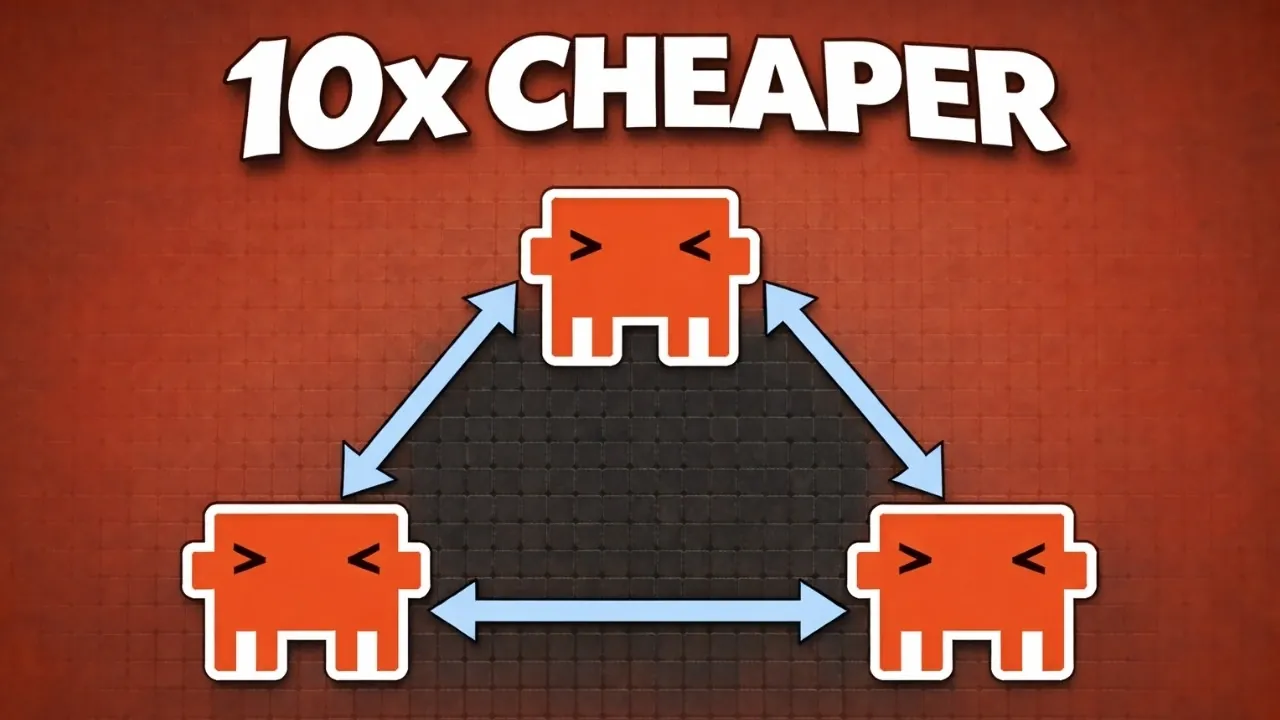
Anthropic’s latest updates introduce features aimed at improving efficiency and accessibility in agent development. One key enhancement is the Advisor Strategy, which combines smaller, cost-efficient models like Sonnet with larger models such as Opus. This pairing allows routine tasks to be handled by the smaller model, while reserving complex decision-making for the larger one. As outlined by Prompt Engineering, this approach can reduce operational costs by up to 11%, making it a practical solution for organizations managing resource-heavy workflows.
Dive into this deep dive to explore how the Monitor Tool optimizes token usage by replacing continuous polling with interrupt-based notifications. Discover the role of Managed Agents in simplifying deployment through secure sandboxing and multi-agent coordination. Gain insight into how these updates can enhance scalability and resource management in agent-based systems.
Advisor Strategy: Balancing Cost and Performance
TL;DR Key Takeaways :
- Anthropic introduced three key updates, Advisor Strategy, Monitor Tool and Managed Agents, to improve efficiency, accessibility and cost-effectiveness in agent development.
- The Advisor Strategy combines smaller, cost-efficient models with larger, strategic models, reducing operational costs by up to 11% while enhancing performance.
- The Monitor Tool optimizes background process tracking by reducing token consumption and eliminating the need for continuous polling, improving resource efficiency.
- Managed Agents simplify deployment and coordination with features like secure sandboxing, multi-agent collaboration and long-running autonomous sessions, catering to both technical and non-technical users.
- These updates provide scalable, user-friendly solutions for enterprises, addressing challenges in modern agent workflows and allowing secure, large-scale deployments.
The Advisor Strategy introduces a novel approach to optimizing model usage by combining the strengths of smaller, cost-efficient models with the strategic capabilities of larger, resource-intensive ones. This dual-model system ensures that you can achieve high performance without incurring unnecessary expenses.
Here’s how the Advisor Strategy works:
- A smaller model, such as Sonnet or Haiku, handles execution tasks, making sure cost efficiency and faster processing.
- A larger model, like Opus, acts as an advisor, providing strategic guidance to improve task accuracy and decision-making.
This pairing reduces operational costs by up to 11% while significantly improving execution speed compared to relying solely on larger models. Accessible through Anthropic’s API, the Advisor Strategy allows you to configure parameters to suit your specific needs. This flexibility makes it an ideal solution for balancing efficiency and performance in agent workflows, particularly for enterprises managing large-scale operations.
Monitor Tool: Smarter Background Process Tracking
The Monitor Tool redefines how background processes are tracked, addressing inefficiencies such as continuous polling, which often leads to excessive token consumption and wasted computational resources. Instead, this tool uses interrupt signals to notify you when a process is complete, making sure optimal resource utilization.
Key benefits of the Monitor Tool include:
- Reduced token consumption, which directly lowers operational costs.
- Enhanced visibility into process completion without the need for constant monitoring.
To activate the Monitor Tool, you simply use explicit prompting, giving you full control over its implementation. This feature is particularly valuable for developers seeking to streamline workflows while maintaining precision and resource efficiency. By eliminating unnecessary overhead, the Monitor Tool helps you focus on core tasks without compromising on performance.

Here is a selection of other guides from our extensive library of content you may find of interest on Anthropic.
- A Quick Guide to Claude Mythos & the Latest AI Releases
- Claude Mythos Delayed: Inside Anthropic’s Decision
- New Anthropic Ultra Plan Changes Planning in Claude Code
- Anthropic Dispatch Links Mobile & Desktop AI for Remote Control
- AutoDream : Claude Code’s New Trick for Memory Management
- Why Claude Mythos is Setting a New Benchmark for AI
- The Claude Code Leak Explained: Kyros, Ultra Plan & New Models
- Anthropic Claude Mythos Revealed in CMS Leak, Risks Rise
- How Anthropic’s AI Software Factory Actually Works
- Anthropic Bans OpenClaw : Blocks Agent SDK Apps OAuth Tokens
Managed Agents: Simplifying Deployment and Coordination
Managed Agents provide a comprehensive infrastructure for deploying and managing agents in production environments. This feature includes a range of essential tools, such as secure sandboxing, authentication protocols, logging capabilities, and tool execution support. Additionally, it enables long-running autonomous sessions, allowing agents to maintain progress and outputs over extended periods.
One of the standout capabilities of Managed Agents is its support for multi-agent coordination, which allows you to:
- Parallelize complex tasks, allowing faster execution and improved productivity.
- Enhance operational efficiency by facilitating collaborative workflows among agents.
Designed to cater to both technical and non-technical users, Managed Agents simplify the deployment process, making it accessible to a broader audience. While standard token costs apply, an additional runtime fee reflects the advanced capabilities and robust infrastructure provided by this feature. This makes it a valuable tool for enterprises aiming to scale their operations securely and efficiently.
Empowering Enterprises with Scalable Solutions
Anthropic’s latest updates are tailored to meet the evolving demands of developers and enterprises. By introducing tools like Advisor Strategy, Monitor Tool and Managed Agents, the company offers a scalable and user-friendly framework for agent development. These updates not only enhance individual agent capabilities but also provide the infrastructure necessary for secure, reliable and large-scale deployments.
The Advisor Strategy ensures a balance between cost and performance, making it easier to optimize workflows. The Monitor Tool improves operational efficiency by reducing resource consumption and simplifying background process tracking. Meanwhile, Managed Agents streamline deployment and coordination, allowing enterprises to handle complex tasks with ease. Together, these tools create a cohesive ecosystem that addresses the complexities of modern agent development while empowering users to achieve their goals more effectively.
Media Credit: Prompt Engineering
Disclosure: Some of our articles include affiliate links. If you buy something through one of these links, Geeky Gadgets may earn an affiliate commission. Learn about our Disclosure Policy.
