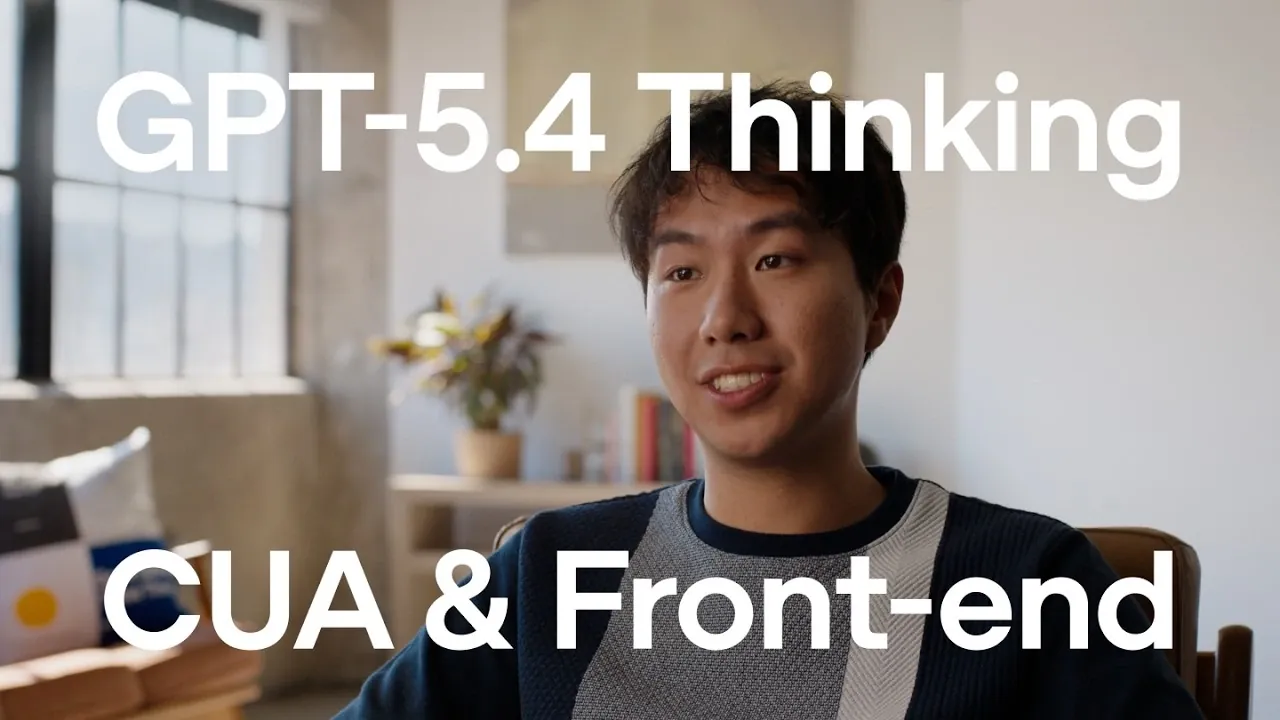
The integration of GPT-5.4 Thinking into frontend development introduces a new level of efficiency and precision, particularly through its enhanced Computer Use Ability (CUA). This feature allows the model to interact with digital systems in a human-like manner, eliminating the need for external environments and streamlining complex workflows. OpenAI highlights how ChatGPT 5.4 Thinking can handle intricate tasks, such as designing and testing a 3D chess game with advanced textures and rule adherence, all while significantly reducing computational overhead. These capabilities not only simplify technical processes but also prioritize high-quality output and usability.
In this overview, you’ll explore how ChatGPT 5.4 Thinking enables developers to convert design inputs, like images, into fully functional websites with accurate styling and responsive layouts. You’ll also learn how its self-checking mechanisms ensure alignment between design and output, reducing manual adjustments. Additionally, the model’s ability to manage concurrent processes, such as generating visual assets and validating functionality, offers practical insights into optimizing workflows for both small-scale and complex projects. This breakdown provides a clear look at how these features can enhance your development process and elevate the end-user experience.
GPT-5.4 Thinking Overview
TL;DR Key Takeaways :
- ChatGPT 5.4 Thinking introduces advanced human-like computer interaction (CUA), allowing seamless task execution within existing systems without external tools, enhancing usability and precision.
- The model can convert design inputs, such as images, into fully functional, responsive websites using image-to-website conversion tools, making sure accuracy and consistency through self-checking mechanisms.
- Efficiency is optimized by automating repetitive tasks, reducing token usage by up to two-thirds and handling concurrent processes, streamlining workflows and saving time and resources.
- Specialized capabilities include 3D rendering with realistic textures (e.g., glass and marble) and managing rule-based precision for complex systems like chess games, making sure high-quality outputs.
- ChatGPT 5.4 Thinking redefines AI-driven development by combining design-to-code automation, resource efficiency and precision, empowering developers to deliver innovative, cost-effective solutions with exceptional user experiences.
Human-Like Computer Interaction (CUA): A Breakthrough in Usability
A defining feature of ChatGPT 5.4 Thinking is its enhanced Computer Use Ability (CUA), which enables the model to interact with digital systems in a manner that closely resembles human behavior. This eliminates the need for external tools or environments, allowing tasks to be executed seamlessly within existing systems.
For instance, consider assigning the model a complex task such as building and testing a 3D chess game. GPT-5.4 Thinking can render advanced visual effects, including glass and marble textures, while adhering to intricate game rules like castling or en passant. This human-like interaction simplifies workflows, making sure both adaptability and precision.
Additionally, the model significantly reduces computational overhead by cutting token usage by up to two-thirds in specific scenarios. This makes it a cost-efficient solution for managing intricate rule-based systems or designing interactive applications, allowing developers to save both time and resources without compromising on quality.
From Design to Fully Functional Websites
GPT-5.4 Thinking introduces a innovative capability: converting design inputs, such as images, into fully functional websites. By using advanced image-to-website conversion tools, the model analyzes design elements and translates them into cohesive, responsive web pages.
For example, if you provide an image of a website layout, ChatGPT 5.4 Thinking can generate a corresponding site with accurate alignment, styling and functionality. This feature is further enhanced by its ability to handle concurrent image generation, allowing multiple visual assets to be created simultaneously. This not only accelerates the development process but also ensures consistency across all generated elements.
To uphold quality, the model employs self-checking mechanisms that compare the final output with the original design input. This ensures that the resulting website aligns with your vision and meets high standards of usability and design, reducing the need for extensive manual adjustments.

Discover other guides from our vast content that could be of interest on ChatGPT 5.
- ChatGPT 5.2 Performance : Faster Reasoning & Pro-Grade Coding Results
- ChatGPT 5.2 vs Rivals: Benchmark Wins & 30 Percent Fewer Hallucinations
- ChatGPT 5.2 Garlic : Release Window, Features & OpenAI Code Red
- ChatGPT 5.3 Upgrade Focus on Reasoning and Reliability Boost
- ChatGPT 5.2 Review : Instant vs Thinking vs Pro, Key Wins & Gaps
- OpenAI GPT-5.4 Leak During Codex Demo Sparks Release Questions
- ChatGPT 5.2 vs Gemini 3 vs Claude : Which AI Fits Your Needs
- ChatGPT 5.3 Instant Cuts Unneeded Disclaimers
- ChatGPT 5.2 vs Gemini 3 : Coding, Math, and Vision Results
- Opus 4.6 vs ChatGPT 5.3 : Code Size, Speed & Build Tradeoffs
Optimizing Efficiency and Streamlining Workflows
Efficiency lies at the core of GPT-5.4 Thinking’s design. By automating repetitive tasks and optimizing resource usage, the model allows developers to focus on higher-level decision-making and creative problem-solving. Its self-checking mechanisms play a crucial role in maintaining output quality, autonomously identifying and correcting potential errors. This minimizes the need for extensive manual reviews, saving valuable time and effort.
The model’s ability to handle concurrent processes further enhances workflow optimization. For example, during the development of a web application, GPT-5.4 Thinking can simultaneously generate visual assets, write code and validate functionality. This integrated approach ensures that even complex projects remain streamlined, efficient and on schedule.
Expanding Capabilities: 3D Rendering and Rule-Based Precision
Beyond frontend development, GPT-5.4 Thinking excels in specialized areas such as 3D rendering and rule-based task execution. Its ability to create realistic effects, like glass and marble textures, adds a new level of sophistication to digital design. Whether you’re developing a gaming application or a virtual showroom, the model’s rendering capabilities deliver visually stunning results that enhance user engagement.
In addition, ChatGPT 5.4 Thinking’s proficiency in handling complex rules makes it an ideal tool for applications requiring precision and logic. For instance, in a chess game, the model can manage intricate moves like castling or en passant with ease, making sure all interactions adhere to established rules. This level of accuracy extends to other rule-based systems, making it a versatile solution for a wide range of technical applications.
Redefining AI-Driven Development
ChatGPT 5.4 Thinking establishes a new standard in app and web development by combining human-like interaction, design-to-code automation and resource efficiency. Its ability to transform images into functional websites, optimize workflows and handle complex tasks with precision demonstrates the potential of AI to transform development environments. By integrating these capabilities into your projects, you can enhance productivity, reduce costs and deliver exceptional user experiences, setting a new benchmark for innovation in the digital landscape.
Media Credit: OpenAI
Disclosure: Some of our articles include affiliate links. If you buy something through one of these links, Geeky Gadgets may earn an affiliate commission. Learn about our Disclosure Policy.
