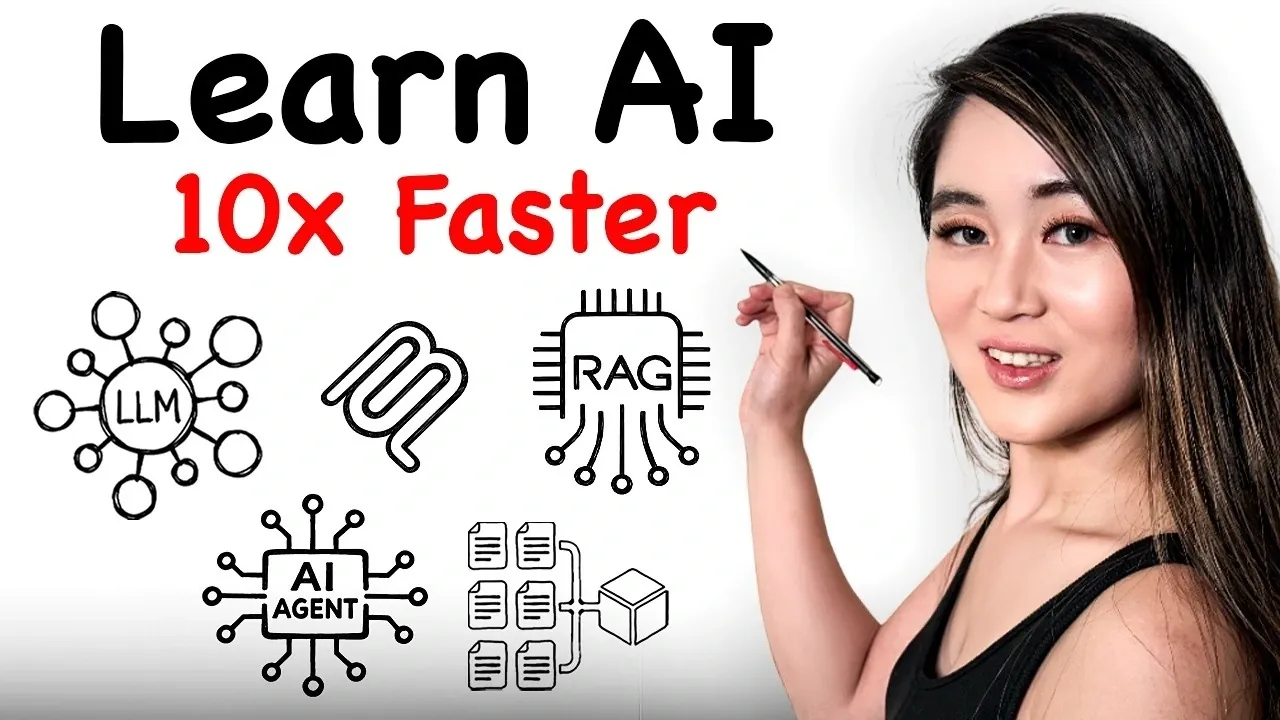
Artificial intelligence is a rapidly evolving field and understanding its core principles is essential for anyone looking to engage with its applications or development. In her latest feature, Maddy Zhang explores ten foundational AI concepts that are shaping the landscape of technology in 2026. Among these is the idea of Retrieval-Augmented Generation (RAG), a hybrid approach that combines database retrieval with AI-generated responses to enhance accuracy and contextual relevance. By addressing limitations in real-time knowledge access, RAG is proving invaluable in fields like healthcare and legal services, where precision is paramount.
This overview offers a closer look at several other critical topics, including how tokens and context windows affect an AI model’s ability to process information and the role of multimodal AI in integrating diverse data types like text, images and audio. You’ll also gain insights into the practical applications of reasoning models and fine-tuning, which allow AI systems to handle complex tasks and adapt to specialized needs. Whether you’re a developer, researcher, or simply curious about AI’s mechanics, these takeaways provide a clear framework for understanding its current and future impact.
10 Key AI Concepts
TL;DR Key Takeaways :
- Large Language Models (LLMs): Advanced neural networks trained on extensive text datasets, allowing tasks like reasoning, summarization and coding. Their versatility and domain generalization make them integral to solving complex problems across industries.
- Tokens and Context Windows: AI models process text as tokens within a context window, which limits the amount of information analyzed at once. Expanding context windows enhances AI’s ability to handle complex and extended tasks.
- AI Agents: Autonomous systems capable of reasoning, planning and executing tasks independently. They are pivotal in automating workflows and decision-making across industries like supply chain and financial analysis.
- Retrieval-Augmented Generation (RAG): Combines database retrieval with AI-generated responses to deliver accurate, context-specific outputs, addressing limitations in real-time or domain-specific knowledge access.
- Multimodal AI: Models that process and generate multiple data types (text, images, audio, video), allowing comprehensive understanding and applications in fields like healthcare, entertainment and autonomous systems.
1. Large Language Models (LLMs)
Large Language Models (LLMs) are advanced neural networks trained on extensive datasets of text. Their primary function is to predict the next word in a sequence, allowing them to perform tasks such as reasoning, summarization, coding and conversational interactions. Tools like GPT-4 demonstrate the versatility of LLMs, generating human-like text for applications in customer service, content creation and software development. The strength of LLMs lies in their ability to generalize knowledge across domains, but their performance is heavily influenced by the quality and diversity of their training data. As these models evolve, they are expected to become even more integral to solving complex problems across industries.
2. Tokens and Context Windows
AI models process text by breaking it into smaller units called tokens, which can represent words, characters, or subwords. The context window refers to the amount of information the model can analyze at once. For example, a model with a 4,000-token context window can process text within that limit, making it suitable for tasks like summarizing lengthy documents or conducting detailed analyses. Expanding context windows is a key area of research, as it directly impacts an AI’s ability to handle complex or extended tasks. This advancement will enable models to process larger datasets and deliver more nuanced outputs, improving their utility in fields like legal analysis and academic research.
3. AI Agents
AI agents are autonomous systems capable of reasoning, planning and executing tasks independently. Unlike traditional chatbots that follow predefined scripts, AI agents adapt to new situations and make decisions based on real-time data. These agents are increasingly used in areas such as supply chain optimization, financial analysis and personal productivity tools. Their ability to integrate with external systems and learn from interactions positions them as a cornerstone of next-generation AI applications. As their capabilities expand, AI agents are expected to play a pivotal role in automating complex workflows and enhancing decision-making processes across industries.
4. Model Context Protocol (MCP)
The Model Context Protocol (MCP) is a standardized framework that enables AI models to connect seamlessly with external tools, databases and APIs. This interoperability allows AI to access real-time data and perform more complex tasks. For instance, an AI model using MCP could retrieve live weather data to provide accurate travel recommendations or integrate with enterprise software to automate workflows. Standardized protocols like MCP are essential for scaling AI solutions across industries, making sure that models can operate efficiently in diverse environments. As AI adoption grows, MCP will likely become a critical component of enterprise-level AI systems.
5. Retrieval-Augmented Generation (RAG)
Retrieval-Augmented Generation (RAG) combines database retrieval with AI-generated responses to deliver accurate, context-specific answers. This approach addresses a key limitation of AI: the inability to access real-time or domain-specific knowledge. By retrieving relevant information from a database or knowledge base, RAG systems enhance the reliability and precision of AI outputs. For example, customer support systems using RAG can provide detailed answers by combining pre-existing documentation with AI-generated explanations. This hybrid approach is particularly valuable in industries where accuracy and context are paramount, such as healthcare, education and legal services.

Learn more about AI productivity by reading our previous articles, guides and features :
- Hidden Google Gemini 3 AI Features for Faster Work in 2026
- 10x Your Productivity with These AI Techniques and Strategies
- Best AI Tools to Start 2026: Perplexity, Gemini 3 Pro, DeepSeek 3.2
- 6 Smart Hacks for Perplexity to Speed up Workflows & Research
- Best AI Tools from Google: Top Picks for Work, Media & Code
- Best AI Tools Comparison, 14 Winners for Notes, Images & Video
- AI Power Users Win by Writing Precise Specs for the Right Model
- Perplexity AI Tips : Search Operators, Slash Commands, Spaces & More
- Is Claude the Best AI Tool for Writing, Coding and Data Analysis?
- AI Productivity Framework to Reduce Interruptions & Refocus Time
6. Fine-Tuning
Fine-tuning involves customizing pre-trained AI models using specialized datasets to align their behavior with specific requirements. This process allows developers to adjust a model’s tone, format, or functionality for particular use cases. For instance, a healthcare organization might fine-tune a general-purpose language model to understand medical terminology and provide accurate diagnostic suggestions. Fine-tuning is a cost-effective way to adapt existing models to niche applications without extensive retraining. As AI becomes more specialized, fine-tuning will remain a critical tool for tailoring models to meet the unique demands of various industries.
7. Context Engineering
Context engineering focuses on designing the information environment around AI models to optimize their performance. This involves structuring input data, prompts and surrounding context to guide the model’s behavior effectively. For example, carefully crafted prompts can help an AI system generate more relevant and coherent responses. Context engineering is particularly important for applications requiring high precision, such as legal document analysis or scientific research. By refining how information is presented to AI models, developers can significantly enhance their accuracy and reliability, making them more effective in solving complex problems.
8. Reasoning Models
Reasoning models are AI systems designed to think step-by-step, allowing them to solve complex problems and execute multi-step tasks. These models excel in scenarios requiring logical reasoning, such as mathematical problem-solving, coding, or strategic decision-making. By breaking tasks into smaller, manageable steps, reasoning models improve accuracy and reliability. This capability is especially valuable in fields like education, where clear, step-by-step explanations are critical for learning. As reasoning models advance, they are expected to play a larger role in areas requiring analytical thinking and problem-solving.
9. Multimodal AI
Multimodal AI refers to models that can process and generate multiple types of data, including text, images, audio and video. This capability expands the range of real-world applications for AI, from creating interactive virtual assistants to analyzing medical imaging. For example, a multimodal AI system could analyze a video for visual patterns while simultaneously generating a textual summary. By integrating diverse data types, multimodal AI provides a more comprehensive understanding of complex scenarios. This versatility makes it a valuable tool in industries such as healthcare, entertainment and autonomous systems.
10. Mixture of Experts (MOE)
The Mixture of Experts (MOE) architecture is an efficient design that activates specialized sub-networks within a larger model to handle specific tasks. This approach balances performance and computational cost by allocating resources only where they are needed. For instance, an MOE-based system might use one sub-network for language processing and another for image recognition, depending on the task. This modularity makes MOE architectures highly scalable and adaptable to diverse applications. As AI systems grow in complexity, MOE is expected to become a key strategy for optimizing performance while managing computational resources effectively.
These ten concepts form the foundation of modern AI systems, driving innovation and shaping the future of technology. From the mechanics of large language models to the integration of multimodal data, each concept plays a vital role in advancing AI’s capabilities. By understanding these ideas, you can better navigate the complexities of AI development, optimize system performance and contribute to impactful solutions. Whether you’re a software engineer, AI practitioner, or industry observer, these concepts are essential for staying ahead in the rapidly evolving field of artificial intelligence.
Media Credit: Maddy Zhang
Disclosure: Some of our articles include affiliate links. If you buy something through one of these links, Geeky Gadgets may earn an affiliate commission. Learn about our Disclosure Policy.
