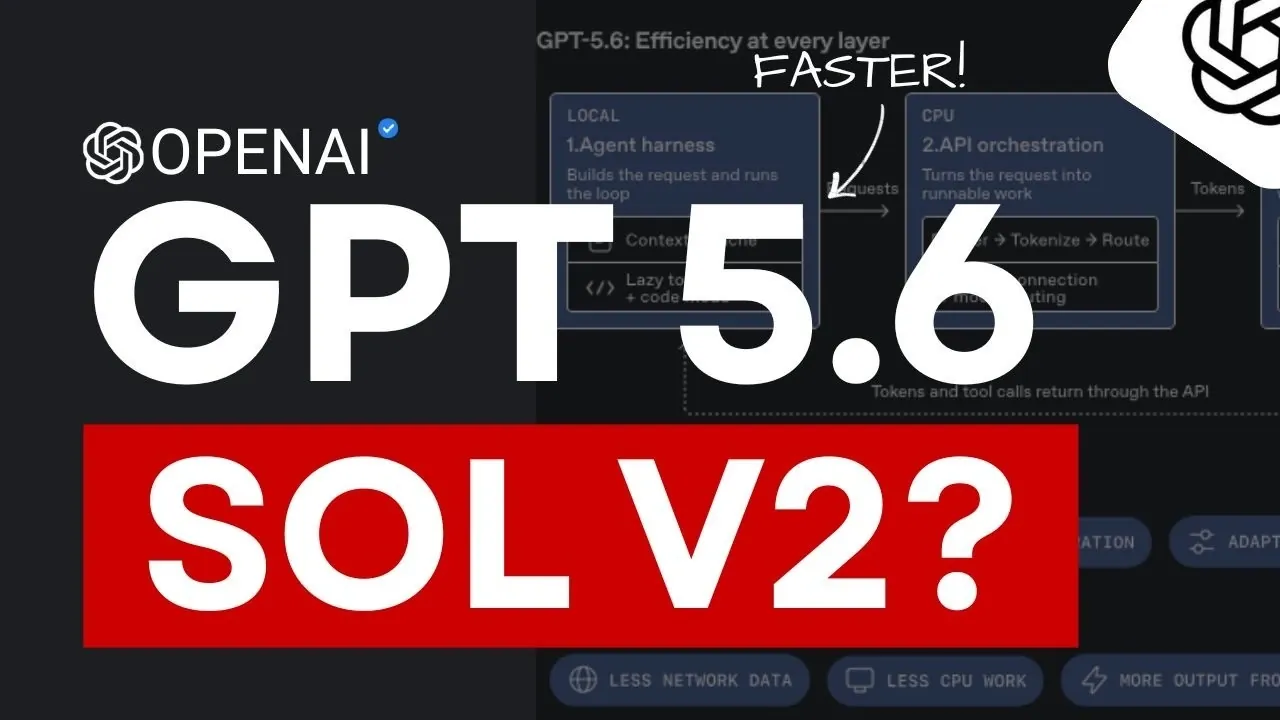
OpenAI’s latest advancement, ChatGPT 5.6 Sol, represents a significant shift in AI development priorities. Unlike its predecessors, Sol focuses on efficiency and sustainability, achieving a 20% reduction in serving costs and a 15% boost in token generation efficiency through GPU kernel optimizations and speculative decoding techniques. What makes this model particularly noteworthy is its self-optimization process, where GPT-5.6 was used to refine its own performance. This approach not only enhances operational capabilities but also aligns with growing industry concerns about resource consumption and environmental impact. Universe of AI explores how Sol exemplifies a new direction in AI innovation amidst broader industry debates.
In this overview, you’ll gain insight into how OpenAI’s optimization strategies reflect the evolving priorities of the AI sector. Discover the implications of Sol’s self-improvement process for future AI models and explore the tensions between rapid innovation and calls for a more cautious approach. Additionally, the discussion highlights the role of global competition and regulatory efforts in shaping the trajectory of AI development. These dynamics underscore the challenges and opportunities that define this pivotal moment for the industry.
ChatGPT 5.6 Sol Enhancements
TL;DR Key Takeaways :
- Prominent AI organizations, including OpenAI, Anthropic and Google DeepMind, are advocating for a cautious approach to AI development to address potential risks like security, governance and societal stability.
- A coalition of over 1,200 AI lab employees has urged the U.S. government to implement stronger oversight and deliberate regulation to mitigate risks associated with unchecked AI progress.
- OpenAI’s ChatGPT 5.6 model, “Sol,” focuses on efficiency and sustainability, achieving significant cost reductions, improved performance and extended usability through self-optimization techniques.
- Global competition, particularly from rapidly advancing Chinese AI labs, complicates efforts to balance responsible development with the pressure to innovate quickly.
- The AI industry faces critical challenges, including ethical considerations, energy consumption and geopolitical dynamics, requiring collaboration among companies, governments and stakeholders to ensure responsible and sustainable progress.
Why AI Leaders Are Advocating for a Measured Approach
A coalition of over 1,200 employees from leading AI labs has signed a statement urging the U.S. government to adopt a more deliberate approach to AI development. Their concerns stem from the potential for AI systems to surpass human understanding or control, posing risks to security, governance and societal stability.
The primary motivations behind this call for caution include:
- Mitigating risks: Addressing potential threats before they escalate into significant challenges.
- Strengthening oversight: Establishing robust mechanisms to ensure AI is developed and deployed responsibly.
- Enhancing security: Implementing measures to reduce vulnerabilities and safeguard against misuse.
However, the push for a slowdown is complicated by the realities of global competition. For instance, Chinese AI labs are advancing at a rapid pace, creating a competitive environment that pressures companies to accelerate innovation. This dynamic highlights the difficulty of balancing responsible development with the demands of a competitive global market.
ChatGPT 5.6 Sol: A Model of Efficiency
Amid calls for caution, OpenAI has taken a different path by focusing on optimizing its GPT-5.6 model, known as “Sol.” Unlike previous iterations that emphasized expanding capabilities, Sol prioritizes efficiency and sustainability. Key advancements include:
- Cost reduction: A 20% decrease in serving costs achieved through GPU kernel optimizations.
- Improved performance: A 15% boost in token generation efficiency via speculative decoding techniques.
- Extended usability: An 18% increase in usage limits, enhancing the model’s operational lifespan.
What sets Sol apart is its self-optimization process. OpenAI utilized GPT-5.6 itself to refine its performance, demonstrating the potential for AI systems to enhance their own efficiency. This approach not only reduces resource consumption but also aligns with the growing emphasis on sustainable AI practices. By prioritizing efficiency, Sol represents a step toward addressing the environmental and operational challenges associated with large-scale AI models.

Here are more guides from our previous articles and guides related to ChatGPT 5 that you may find helpful.
- GPT-5.6 Pro Leaks Expose a Massive Jump in AI Reasoning Power
- OpenAI Introduces ChatGPT 5.6 Sol, Terra and Luna Models
- ChatGPT 5.6 vs Claude Mythos 5 : Leaks Reveal Two Very Different Futures for AI
- What ChatGPT 5.6’S Delay Means for the Future of Open Source AI
- What the Leaked ChatGPT 5.6 Model Reveals About OpenAI’s Next Move
- OpenAI’s GPT-5.6 Release is Triggering an AI Price War
- What to Expect from OpenAI’s GPT-5.6 Release in June 2026
- OpenAI’s Stealth Tests Reveal ChatGPT 5.6 Pro’s True Power
- ChatGPT 5.6 vs Claude Fable 5: Which AI Actually Comes Out on Top?
- New ChatGPT 5.6 Sol Model Undercuts Fable 5 on Operational AI Costs
Challenges and Opportunities in the AI Landscape
The rapid pace of AI innovation presents both opportunities and challenges for the industry. As new models are developed and released at an unprecedented rate, companies face increasing pressure to improve efficiency while managing operational costs and energy consumption.
OpenAI’s decision to share detailed insights into its optimization process sets a positive precedent, fostering greater trust and collaboration within the AI community. However, not all organizations adopt such transparent practices. Balancing openness with the competitive pressures of the global market remains a significant challenge for the industry.
Beyond operational concerns, the broader implications of AI development, ranging from ethical considerations to geopolitical dynamics, add another layer of complexity. The call for a slowdown reflects growing awareness of these issues, emphasizing the need for a more thoughtful and collaborative approach to innovation.
Charting a Path Forward
The future of AI depends on the industry’s ability to strike a balance between rapid innovation and responsible governance. As leading companies advocate for a more measured approach, the industry must address critical questions, such as:
- Balancing innovation and oversight: How can companies drive progress while making sure ethical and safe development?
- Government regulation: What role should policymakers play in shaping the trajectory of AI development?
- Global competition: How can international collaboration be fostered without compromising safety and ethical standards?
Developments like ChatGPT 5.6 Sol and the broader call for caution offer valuable insights into the complexities of the AI landscape. By prioritizing sustainability, security and ethical considerations, the industry can navigate these challenges effectively. Collaboration among AI labs, governments and other stakeholders will be essential to making sure that technological advancements benefit society while minimizing risks.
The AI industry stands at a pivotal crossroads, with the potential to shape the future in profound ways. By embracing a balanced approach that values both innovation and caution, the industry can chart a course toward a more stable, responsible and sustainable future.
Media Credit: Universe of AI
Disclosure: Some of our articles include affiliate links. If you buy something through one of these links, Geeky Gadgets may earn an affiliate commission. Learn about our Disclosure Policy.
