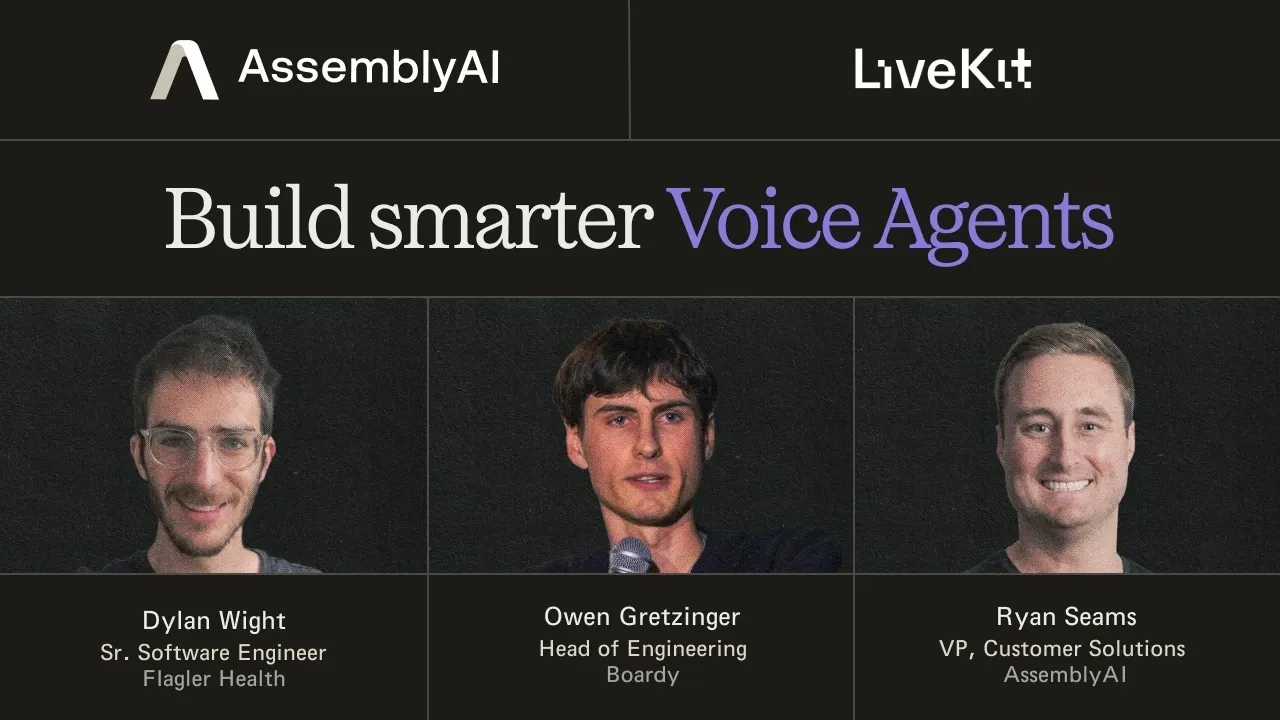
Voice agents are increasingly being designed to address specific challenges across industries, with a focus on enhancing user experiences through trust, personalization and technical precision. At the recent Build Smarter Voice Agents event in New York, AssemblyAI highlighted how these systems are reshaping fields like professional networking and healthcare. For example, Bordy, a networking-focused voice agent, facilitates tailored introductions between users and potential collaborators, streamlining professional connections. In healthcare, voice agents assist patients by providing clear, step-by-step instructions for medical preparations, particularly benefiting older adults who prefer phone-based communication.
Dive into this breakdown to explore how voice agents are being tailored for targeted applications. You’ll gain insight into the distinct design approaches required for structured workflows versus conversational interactions, as well as strategies for managing interruptions and turn-taking. Additionally, discover how metrics like conversion rates and user sentiment analysis are helping developers refine these systems for greater accuracy and reliability. This overview offers a comprehensive look at the evolving role of voice agents and the challenges developers are tackling to create smarter, more effective AI systems.
How Voice Agents Are Reshaping Industries
TL;DR Key Takeaways :
- Voice agents are transforming industries like professional networking and healthcare by addressing specific needs, enhancing efficiency and improving user experiences.
- Key design considerations include structured workflows for healthcare and conversational styles for networking, as well as managing interruptions and turn-taking for seamless interactions.
- Building trust through transparency and personalization is critical for user adoption, especially in sensitive sectors like healthcare.
- Technical challenges such as accuracy, context retention and managing voicemail/outbound calls are pivotal to creating reliable and efficient voice agents.
- Future advancements in voice AI include speech-to-speech models, multitasking systems and improved testing tools, allowing smarter and more intuitive interactions.
Voice agents are demonstrating their ability to address unique challenges across a variety of industries, offering practical solutions that enhance efficiency and user satisfaction. Two standout examples illustrate their growing impact:
- Professional Networking: Bordy, a voice agent designed for networking, exemplifies how AI can streamline professional connections. Acting as a virtual matchmaker, Bordy facilitates introductions between users and potential investors, customers, or talent. By using personalized conversations, Bordy tailors interactions to individual preferences, simplifying the networking process and making it more effective.
- Healthcare: In the healthcare sector, voice agents are playing a critical role in patient communication, particularly for older adults who prefer phone-based interactions. These agents provide clear instructions, reminders and follow-ups for pre-procedure preparations, reducing the risk of missed steps and improving overall patient outcomes.
Designing Voice Agents for Targeted Applications
The event emphasized the importance of tailoring voice agent design to meet the specific demands of different applications. Two critical design considerations emerged as key to creating effective systems:
- Structured vs. Conversational Design: In healthcare, voice agents often follow structured, step-by-step workflows to minimize errors and ensure compliance with protocols, such as avoiding the provision of medical advice. Conversely, networking agents like Bordy adopt a conversational style, fostering natural and relationship-driven interactions that encourage user engagement.
- Managing Interruptions and Turn-Taking: Handling interruptions, turn-taking and latency remains a significant challenge in voice agent design. Preemptive response generation was identified as a promising solution to maintain conversational flow, making sure users feel heard and understood even during complex interactions.
Here are more detailed guides and articles that you may find helpful on AI voice systems and technologies.
- Create AI Voices for Any Application With Eleven Labs’ New AI Voice Design Tool
- Mia AI custom GPT AI companion you can talk to with your voice
- Microsoft Vibe Voice : New Open source AI Voice Model Needs No Subscription
- Wispr Flow AI Tool Offers Effortless Voice Dictation in Every App
- How to build a speaking personal AI assistant using Node.js, ChatGPT, ElevenLabs and LangChain
- Build Real-Time AI Voice Agents with ChatGPT and Pipecat
- OpenAI’s Agents SDK Lets You Easily Build AI Voice Assistants
- How to Build an AI Voice Agent using OpenAI Real-Time API
- Nvidia PersonaPlex : Real-Time Conversational AI That Interrupts Politely, Listens Actively & Talks Like a Person
- Clone Any Voice in Seconds with Chatterbox a Free ElevenLabs Alternative
Building Trust in Voice Interactions
Trust is a cornerstone of successful voice agent adoption. The event explored strategies to foster user confidence and ensure positive experiences:
- Transparency: Clearly informing users that they are interacting with an AI system builds trust and prevents potential discomfort or confusion later in the conversation. Transparency is particularly important in sensitive industries like healthcare.
- Personalization: Tailoring interactions to individual users by using their names and referencing specific contexts, such as medical procedures or previous interactions, enhances relevance and strengthens the user-agent connection.
Addressing Technical Challenges in Voice AI
Developing reliable and efficient voice agents requires overcoming several technical hurdles. The event highlighted key challenges and potential solutions:
- Accuracy: Capturing critical information, such as email addresses, phone numbers and insurance details, demands high precision to avoid errors that could disrupt workflows or lead to user frustration.
- Voicemail and Outbound Calls: Effectively managing voicemail interactions and optimizing the timing of outbound calls are essential for maintaining user engagement and making sure timely communication.
- Context Retention: Making sure continuity across multiple interactions and communication channels, such as voice, text and email, remains a complex but vital task for creating seamless user experiences.
Measuring Success: Metrics and Observability
To refine voice agents and enhance user experiences, measuring performance is essential. The event underscored the importance of both quantitative and qualitative metrics in evaluating success:
- Quantitative Metrics: Metrics such as conversion rates, including successful introductions or task completions, provide measurable insights into the effectiveness of voice agents in achieving their intended goals.
- Qualitative Metrics: Tools like call transcripts and observability platforms enable developers to monitor user sentiment, identifying frustration or satisfaction. These insights guide iterative improvements to enhance user interactions.
The Future of Voice AI
The event concluded with a forward-looking discussion on advancements that are shaping the future of voice agents. Key trends and innovations include:
- Speech-to-Speech Models: Reducing reliance on transcription and allowing real-time interactions will make voice agents more seamless and efficient, improving their ability to handle dynamic conversations.
- Multitasking Systems: Voice agents capable of managing complex backend tasks while maintaining conversational flow will redefine user expectations, offering more sophisticated and intuitive interactions.
- Testing and Simulation Tools: Enhanced tools for simulating interactions will help developers anticipate and address edge cases, making sure smoother deployments and more reliable performance in diverse scenarios.
The Build Smarter Voice Agents event highlighted the fantastic potential of voice AI across industries. By addressing challenges in design, functionality and trust, voice agents are becoming indispensable tools for improving communication, efficiency and user experience. As technology continues to advance, voice AI is poised to deliver smarter, more intuitive interactions that meet the evolving needs of users in an increasingly connected world.
Media Credit: AssemblyAI
Disclosure: Some of our articles include affiliate links. If you buy something through one of these links, Geeky Gadgets may earn an affiliate commission. Learn about our Disclosure Policy.
