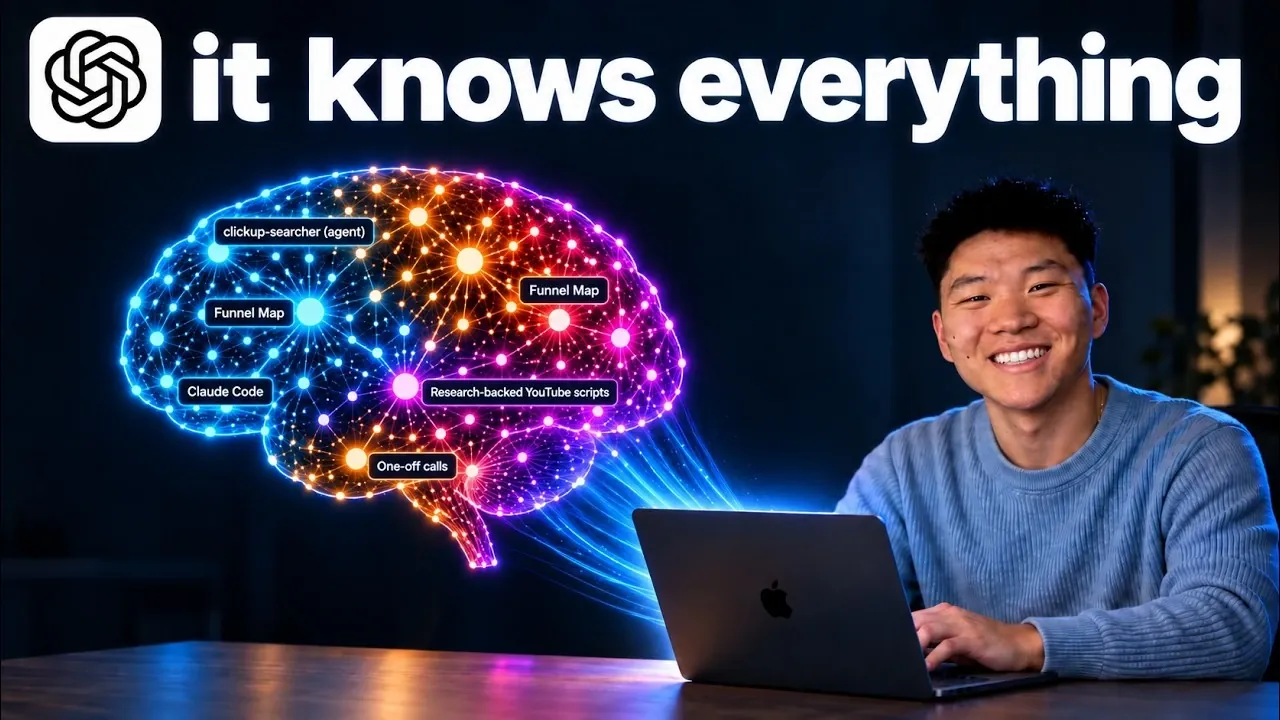
Nate Herk examines how ChatGPT 6 Astra can act as the backbone for building an AI Operating System (AIOS), a personalized system for managing knowledge and automating workflows. By using the “Four C’s” framework, Context, Connections, Capabilities and Cadence, you can design a scalable second brain tailored to your needs. For instance, incorporating Codeex during the initial setup provides a structured foundation, allowing the AI to deliver more precise and context-aware support from the outset.
Explore how to configure an AIOS that integrates with platforms like Slack and ClickUp, automates recurring tasks such as meeting summaries and incorporates optimization features like the Audit Skill and 3D Brain Skill. Gain insight into creating a system that not only organizes information but also adapts and evolves to meet your personal and professional demands.
What is an AI Operating System (AIOS)?
TL;DR Key Takeaways :
- The AI Operating System (AIOS), powered by GPT-6 Astra, acts as a “second brain” by centralizing knowledge, automating tasks and optimizing workflows for personal and professional use.
- The “Four C’s” framework, Context, Connections, Capabilities and Cadence, ensures the AIOS adapts to user needs, integrates tools, automates tasks and maintains efficiency over time.
- Key features include a business wiki, seamless tool integration, automated meeting summaries and real-time updates, all designed to enhance productivity and reduce context switching.
- Optimization tools like Audit Skill, Level-Up Skill and 3D Brain Skill help refine the AIOS, making sure it remains aligned with user goals and capable of handling complex workflows.
- The AIOS is scalable and customizable, supporting integration with new technologies, hybrid AI models and vendor-independent knowledge bases to grow alongside evolving user requirements.
An AI Operating System (AIOS) is a personalized, AI-driven platform designed to streamline decision-making, automate repetitive tasks and centralize knowledge management. Powered by GPT-6 Astra, the AIOS functions as a virtual co-founder, learning your goals, priorities and workflows. It integrates seamlessly with your existing tools and data sources, creating a unified hub for managing both personal and business information.
This system is not just a tool but a dynamic assistant that evolves with you, adapting to your changing needs and making sure your workflows remain efficient and effective. By centralizing your data and automating processes, the AIOS reduces complexity and enhances productivity.
The Four C’s Framework
The “Four C’s” framework is the foundation of an efficient AIOS. Each component plays a critical role in making sure the system operates effectively and adapts to your evolving requirements:
- Context: Serves as the system’s foundation by storing essential information, such as your goals, business details and long-term priorities. This enables the AI to understand your unique environment and provide tailored assistance.
- Connections: Links dynamic data from tools like email, Slack and project management apps. This ensures real-time relevance and seamless integration across platforms.
- Capabilities: Automates tasks and executes skills, such as generating meeting summaries, managing files, or drafting reports. These capabilities free up your time for more strategic activities.
- Cadence: Establishes routines and autonomous agents to maintain system efficiency. By optimizing workflows over time, Cadence ensures the AIOS remains aligned with your objectives.
This framework ensures that your AIOS is not only functional but also adaptable, growing alongside your personal and professional needs.

Expand your understanding of second brain with additional resources from our extensive library of articles.
- GenSpark SecondBrain Turns Audio Into a Searchable Database
- Build an Automated Second Brain with Obsidian and Codex
- Build a Personal AI Second Brain for ChatGPT, Claude & Gemini
- How to Build a Second Brain with NotebookLM and Obsidian
- Why 2026 Is the Perfect Time to Build a Second Brain with Simple AI Tools
- Why Apple Notes is the Ultimate Digital Second Brain You Need
- How to Organize Your Workflows with a Claude Powered Second Brain
- Claude Code & Obsidian Setup for a Flexible Second Brain System
- Build a Second Brain with AI in Just 10 Minutes : Unlock Your Mind’s Potential
- Build a Second Brain Uisng Obsidian with Claude Code
How to Set Up Your AIOS
Building an AIOS requires a structured approach to ensure it aligns with your workflows and goals. Begin by organizing your files and projects into a logical folder system using tools like Codeex. This initial organization provides the AI with a clear structure to work within.
During the onboarding process, input both personal and business data. This step is crucial for tailoring the system to your specific needs. By providing comprehensive context, you enable the AI to deliver more accurate and relevant assistance. Once the foundational setup is complete, the AIOS can begin integrating with your existing tools and automating tasks.
Key Features of the AIOS
The AIOS offers a range of features designed to enhance productivity and streamline knowledge management. These include:
- Business Wiki: A centralized repository for storing and retrieving critical information, making sure that knowledge is easily accessible when needed.
- Tool Integration: Seamlessly connects with platforms like Slack, ClickUp and email, allowing efficient communication and task management.
- Meeting Summaries: Automatically generates concise summaries of discussions and decisions, saving time and improving accuracy.
- Real-Time Updates: Keeps the system relevant by integrating dynamic data and conducting regular audits to ensure accuracy and efficiency.
These features work together to reduce context switching, improve collaboration and enhance decision-making.
Optimization Tools for Your AIOS
To maintain the efficiency and effectiveness of your AIOS, several optimization tools are available. These tools help you refine the system and ensure it continues to meet your needs:
- Audit Skill: Evaluates system performance and identifies areas for improvement, making sure the AIOS remains aligned with your goals.
- Level-Up Skill: Recommends enhancements based on audit findings, allowing you to improve functionality and efficiency.
- Grill Me Skill: Conducts in-depth interviews to extract and store valuable knowledge, enriching the system’s database.
- 3D Brain Skill: Visualizes relationships between data points, offering a clearer understanding of complex information and improving decision-making.
These tools ensure that your AIOS remains a valuable asset, capable of adapting to new challenges and opportunities.
Scalability and Customization
The AIOS is designed to grow with you, adapting to new technologies and requirements. By building a vendor-independent knowledge base, you can integrate new AI models and tools as they become available. For example, platforms like Carpathy’s LLM Wiki enable dynamic data integration, while options for local hosting or custom domain integration provide additional flexibility and control.
This scalability ensures that your AIOS remains relevant and effective, even as your needs evolve. Whether you’re integrating new tools or expanding your workflows, the system is built to accommodate growth and change.
Practical Applications of an AIOS
An AIOS simplifies complex workflows and enhances decision-making by providing context-aware AI responses. By automating repetitive tasks and centralizing knowledge, it reduces context switching and improves collaboration. Here are a few examples of how you can use an AIOS:
- Draft reports or presentations with AI assistance, saving time and making sure accuracy.
- Schedule meetings and manage calendars automatically, streamlining your daily operations.
- Analyze data and generate insights for strategic decision-making, allowing you to focus on innovation and growth.
These capabilities free up time for higher-value activities, allowing you to focus on tasks that require creativity and strategic thinking.
Model Recommendations for Efficiency
To optimize performance and costs, consider a hybrid approach. Use GPT-6 Astra for complex tasks requiring advanced reasoning, while lighter models like 5.6 Soul handle routine operations. This strategy ensures you maximize the system’s capabilities without overburdening resources.
By balancing advanced and lightweight models, you can achieve a cost-effective, high-performance AIOS that meets your needs without unnecessary resource consumption.
Transform Your Workflow with an AIOS
Building an AIOS powered by ChatGPT 6 Astra can transform how you manage knowledge, tasks and workflows. By following the “Four C’s” framework and using advanced tools, you create a system that evolves with your needs. Regular audits and updates ensure your AIOS remains an indispensable asset, enhancing productivity and decision-making in both personal and professional contexts.
Media Credit: Nate Herk | AI Automation
Disclosure: Some of our articles include affiliate links. If you buy something through one of these links, Geeky Gadgets may earn an affiliate commission. Learn about our Disclosure Policy.
