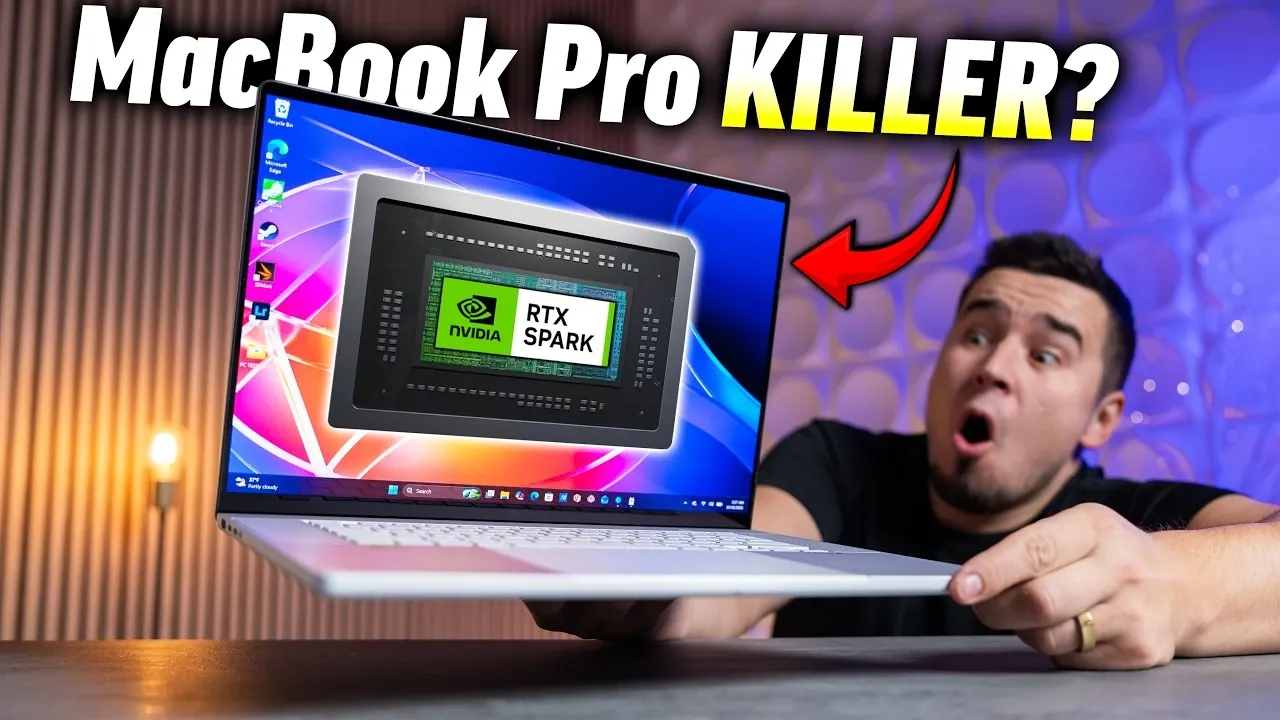
The Asus ProArt P16, equipped with Nvidia’s new RTX Spark System-on-Chip (SOC), is making a significant impact in the high-performance laptop market. Designed specifically for professionals engaged in AI development, 3D rendering and other graphics-intensive tasks, this laptop combines innovative technology with professional-grade features. However, its reliance on Windows on ARM and a premium price point may limit its appeal to a niche audience. The video below from Max Tech gives us more details.

Design and Build: Precision Meets Practicality
The ProArt P16 distinguishes itself with a CNC-milled aluminum chassis that strikes a balance between durability, portability, and sleek aesthetics. Its 16-inch OLED 4K display, featuring a 16:10 aspect ratio, offers stunning visuals with vivid colors, deep contrast and a peak brightness of up to 1,600 nits. The inclusion of an anti-reflective coating enhances usability in diverse lighting conditions, making it a reliable tool for creative professionals who demand accuracy and clarity in their work.
The laptop’s ergonomic design ensures comfort during extended use. The keyboard is thoughtfully designed for a comfortable typing experience, while the large force-touch trackpad provides precise control, catering to intricate workflows. A comprehensive selection of ports, including USB 4, USB-A, HDMI, an SD card slot and a headphone jack, ensures compatibility with a wide range of peripherals. This combination of form and function positions the ProArt P16 as a versatile and practical choice for demanding users.
Performance: Redefining Professional Computing
At the heart of the ProArt P16 lies Nvidia’s RTX Spark SOC, a powerful integration of CPU and GPU capabilities into a single chip. This architecture delivers exceptional multi-core performance, excelling in tasks such as 3D rendering, video editing and AI-driven workflows. Benchmarks reveal that the RTX Spark outperforms many AMD and Intel chips in various scenarios, though it falls slightly behind Apple’s M5 Max in sustained workloads.
One of the standout features of the ProArt P16 is its unified memory architecture, supporting up to 128GB of RAM. This capability is particularly valuable for professionals working with large datasets, machine learning models, or complex simulations. The laptop also demonstrates outstanding rendering performance in tools like Blender and handles photo editing with ease, making it a versatile choice for creative professionals across industries.
Battery Life: Balancing Power and Longevity
Battery life is one area where the ProArt P16 presents a trade-off. While it surpasses many AMD-powered laptops in longevity, it falls short when compared to competitors from Apple, Intel and Snapdragon. For professionals who require extended battery life during demanding tasks, this could be a limitation. However, for those who prioritize raw performance over portability, the ProArt P16’s battery life may be an acceptable compromise.
Target Audience and Use Cases
The ProArt P16 is tailored for professionals who rely on GPU-accelerated workflows, such as video editing, 3D rendering and AI development. Its extensive unified memory makes it particularly appealing for users handling large datasets or running local AI models. Additionally, it caters to those who prefer Windows over macOS or require software that is unavailable on Apple’s platform.
For professionals seeking a high-performance laptop that integrates seamlessly into Windows-based workflows, the ProArt P16 offers a unique combination of power, versatility, and design.
Challenges and Considerations
Despite its impressive capabilities, the ProArt P16 is not without its challenges. Its reliance on Windows on ARM introduces potential compatibility issues with certain applications, which could limit its utility for some users. Additionally, its premium price—$7,000 for the 128GB RAM configuration, places it in direct competition with Apple’s MacBook Pro, a device with a more mature ecosystem and proven performance.
For those seeking a more affordable alternative, Asus offers a $4,400 configuration with 64GB of RAM and a 1TB SSD. This version provides better value for professionals who need high-performance hardware without the full expense of the top-tier configuration. While it lacks the maximum memory capacity, it retains the core features that make the ProArt P16 a compelling choice for creative and technical professionals.
Key Takeaways
The Asus ProArt P16, powered by Nvidia’s RTX Spark SOC, represents a bold entry into the high-performance laptop market. Its innovative design, exceptional performance, and professional-grade features make it a strong contender for professionals in creative and technical fields. However, its reliance on Windows on ARM and high price point may confine its appeal to a specific audience.
For professionals seeking an alternative to Apple’s ecosystem, the ProArt P16 offers a unique blend of power, versatility, and design. While it may not yet surpass the MacBook Pro in every aspect, it establishes itself as a serious competitor, carving out a niche in the realm of high-performance laptops.
Here is a selection of other guides from our extensive library of content you may find of interest on Nvidia RTX Spark.
- Nvidia DGX Spark Price Hits $4,699 Amid Memory Shortages
- Nvidia N1X Spark Debuts with 20 ARM Cores in ASUS ProArt P16
- Nvidia RTX 4060 Runs Cyberpunk 2077 on Snapdragon X2 Elite
- How Nvidia Packed an RTX 5070 and 128GB of RAM Into a 14Mm Laptop
Source & Image Credit: Max Tech
Disclosure: Some of our articles include affiliate links. If you buy something through one of these links, Geeky Gadgets may earn an affiliate commission. Learn about our Disclosure Policy.
