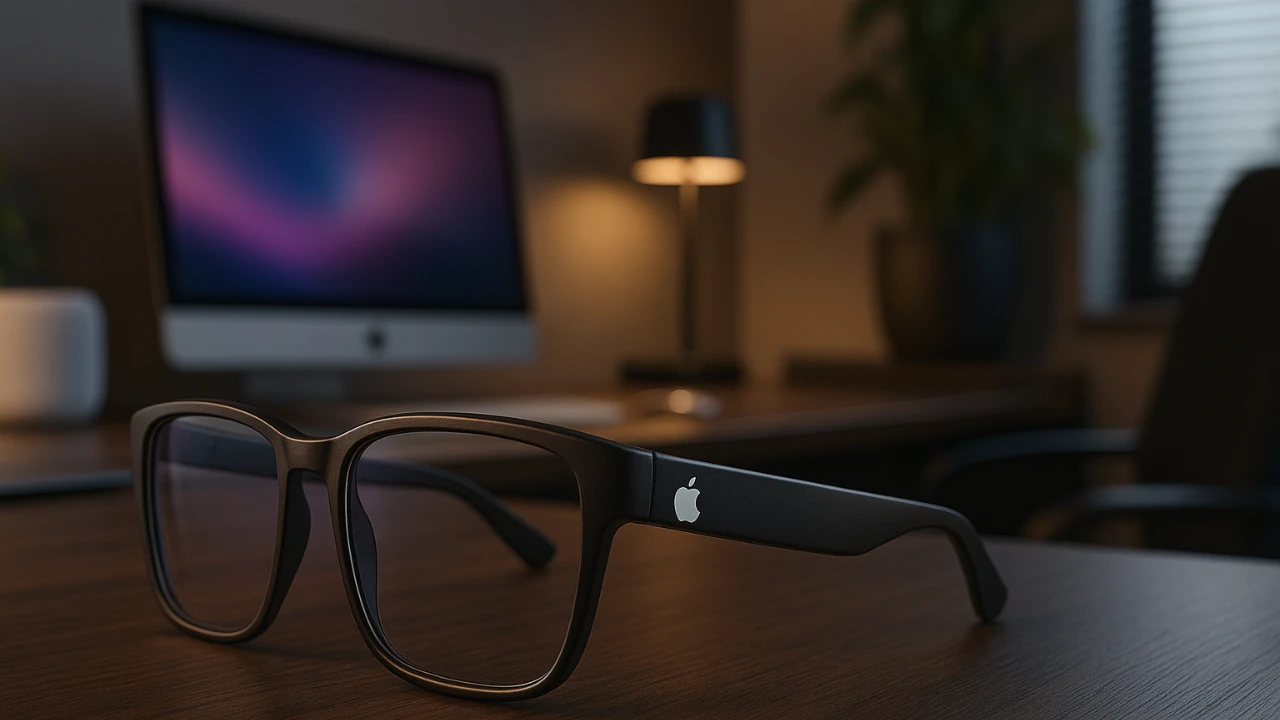
For years, the technology world has looked toward Cupertino for the “next iPhone”—a device that would fundamentally alter our relationship with the digital world. For a brief moment, it appeared that the device might be the Apple Vision Pro. However, as we move through 2025, a different narrative has emerged from the supply chain and industry analysts. The future isn’t a ski-goggle headset; it is a discreet, lightweight pair of spectacles powered by Apple Intelligence.
According to the latest reports surfacing in late 2025, Apple is preparing for a massive hardware “super cycle” in 2026 and 2027. At the center of this storm is a product tentatively known as Apple Glasses—a device that promises to mainstream wearable AI in a way the Vision Pro never could.
Here is the definitive look at everything we know about Apple’s plans, the N401 chip, and the strategic pivot known internally as “Project Atlas.”
The “Super Cycle” Timeline: 2026 Unveil, 2027 Launch
The timing of Apple’s entry into the smart glasses market is not coincidental; it is being orchestrated to coincide with a historic milestone. Multiple reports, including those from TechTimes, indicate that Apple is aligning the release of its smart glasses with the 20th Anniversary of the iPhone in 2027.
While 2025 has been a year of software refinement, 2026 is shaping up to be the year of the “Sneak Peek.” Following a playbook similar to the original Apple Watch and the Vision Pro, analysts predict Apple will unveil the glasses in late 2026 to generate hype and allow developers to prepare for a new form factor.
This launch window places the glasses alongside other rumored heavy hitters, specifically the iPhone Fold (Apple’s first foldable smartphone) and the iPhone 18. This alignment suggests that Apple views the glasses not as a niche accessory, but as a pillar of its next generation of mobile computing—a “hardware renaissance” designed to reinvigorate the ecosystem.
“Project Atlas” and the Strategic Pivot
To understand the device, one must understand its origin. In late 2024, Bloomberg reported on a secret initiative within Apple’s Product Systems Quality team called “Project Atlas.” This involved internal user studies where Apple employees tested existing smart glasses—specifically Meta’s Ray-Ban collaboration—to determine what features resonated with users.
The findings from Project Atlas reportedly triggered a major strategic pivot. Apple realized that the barrier to entry for the Vision Pro (weight, isolation, battery life, and price) was too high for the average consumer. In contrast, the Meta Ray-Bans proved that people are willing to wear cameras and microphones on their faces, provided the glasses look like normal eyewear and weigh less than 50 grams.
Consequently, Apple shelved its immediate plans for complex AR glasses (with holographic displays) in favor of a “Smart Glasses” approach: a screen-less, fashion-forward device focused on capturing the world and delivering audio.
Under the Hood: The N401 Chip
The most significant technical detail to emerge regarding these glasses is the silicon that will power them. Unlike the Vision Pro, which utilizes the laptop-grade M2 chip, the Apple Glasses are rumored to run on a proprietary low-power processor dubbed the N401.
1. The Architecture
The N401 is reportedly a derivative of the S-series chips found in the Apple Watch (potentially based on the S9 or S10 architecture). This choice is critical for two reasons:
- Thermal Management: Glasses cannot have cooling fans. The chip must run cool enough to sit against the user’s temples without generating uncomfortable heat.
- Battery Efficiency: The device needs to last “all day.” By using an efficient watch-style architecture, Apple can maximize battery life for a device with physically small cells.
2. The “Tethered” Brain
Even with the efficient N401, the glasses will likely not be standalone computing devices. They are expected to function as a strict iPhone accessory. Heavy computational lifting—such as processing complex AI queries or uploading 4K video—will be offloaded to the connected iPhone via a high-bandwidth, ultra-low-latency connection. This symbiotic relationship allows the glasses to remain slim and stylish while leveraging the immense power of the iPhone in your pocket.
The Killer Feature: Apple Intelligence, Not Augmented Reality
If there is no screen, what do the glasses actually do? The answer lies in Apple Intelligence.
9to5Mac correctly identifies that this will be Apple’s first hardware product built explicitly for the AI era. While the iPhone runs AI, the Glasses are AI. Without a display interface, the primary interaction method will be voice (Siri) and computer vision.
Visual Intelligence
Building on the “Visual Intelligence” features introduced with the iPhone 16 Camera Control, the glasses will use onboard cameras to “see” the world for you.
- Contextual Querying: You could look at a restaurant and ask, “Does this place have vegan options?” or look at a concert poster and say, “Add this date to my calendar.”
- Memory Aid: The glasses could serve as a “life recorder,” helping you remember where you parked the car or summarizing a conversation you just had.
Audio Augmented Reality
The “AR” in this device is auditory, not visual. Using the advanced Spatial Audio and beamforming microphones from the AirPods Pro development lines, the glasses will whisper directions, read notifications, and translate foreign languages in real-time directly into the user’s ear, all while keeping them present in the real world.
Market Ambitions: The 3–5 Million Unit Target
Perhaps the most telling new detail is Apple’s sales confidence. Unlike the Vision Pro, which was manufactured in limited quantities (under 500,000 units), supply chain rumors suggest Apple is preparing for a launch year volume of 3 to 5 million units.
This figure is aggressive. It signals that Apple intends to price this device for the mass market—likely in the $349 to $499 range—positioning it as a high-end alternative to AirPods rather than a replacement for the Mac. If Apple hits this target, it would instantly capture a dominant share of the smart glasses market, eclipsing the current sales figures of Meta’s Ray-Bans.
The Design Philosophy: Fashion First
One area where Apple refuses to compromise is aesthetics. The failure of Google Glass (2013) was largely attributed to its “cyborg” appearance. Apple’s approach, informed by the “Project Atlas” studies, is to make the technology disappear.
Expect the glasses to feature:
- Hidden Tech: Cameras disguised within the frame corners and speakers integrated invisibly into the stems.
- Privacy Indicators: A crucial, Apple-designed LED system to alert bystanders when video is being recorded, addressing the “creepy” factor of hidden cameras.
- Multiple Styles: Just as the Apple Watch offers various finishes and bands, the glasses will likely launch with multiple frame shapes (Wayfarer, Round, Aviator) to ensure they are viewed as a fashion accessory.
Conclusion: The “Attention-Grabbing” Product of 2026
While the foldable iPhone may dominate the headlines for smartphone enthusiasts, the Apple Glasses represent a more profound shift in Apple’s DNA. They mark the transition from “looking at” our technology (screens) to “looking through” it (ambient computing).
By stripping away the complex displays and focusing on the N401 chip, Apple Intelligence, and a sleek design, Apple is betting that the world isn’t ready for full holograms yet—but it is ready for a smarter way to see the world. If the 2027 timeline and the 5-million-unit target hold true, the “Apple Glass” era is about to begin, and it might just make the smartphone feel obsolete sooner than we think.
Have a look at some of our previous articles from our vast library that you may find relevant to your interests in Apple Glasses.
- Apple Glasses Release Date, Features, and Pricing
- Apple Glasses: Everything We Know So Far
- Apple Glasses Leaks: What We Know So Far
- Apple Glasses Features, Pricing, and Release Date
- Apple Glasses in 2026 or 2027: Are We Getting Closer?
Disclosure: Some of our articles include affiliate links. If you buy something through one of these links, Geeky Gadgets may earn an affiliate commission. Learn about our Disclosure Policy.
