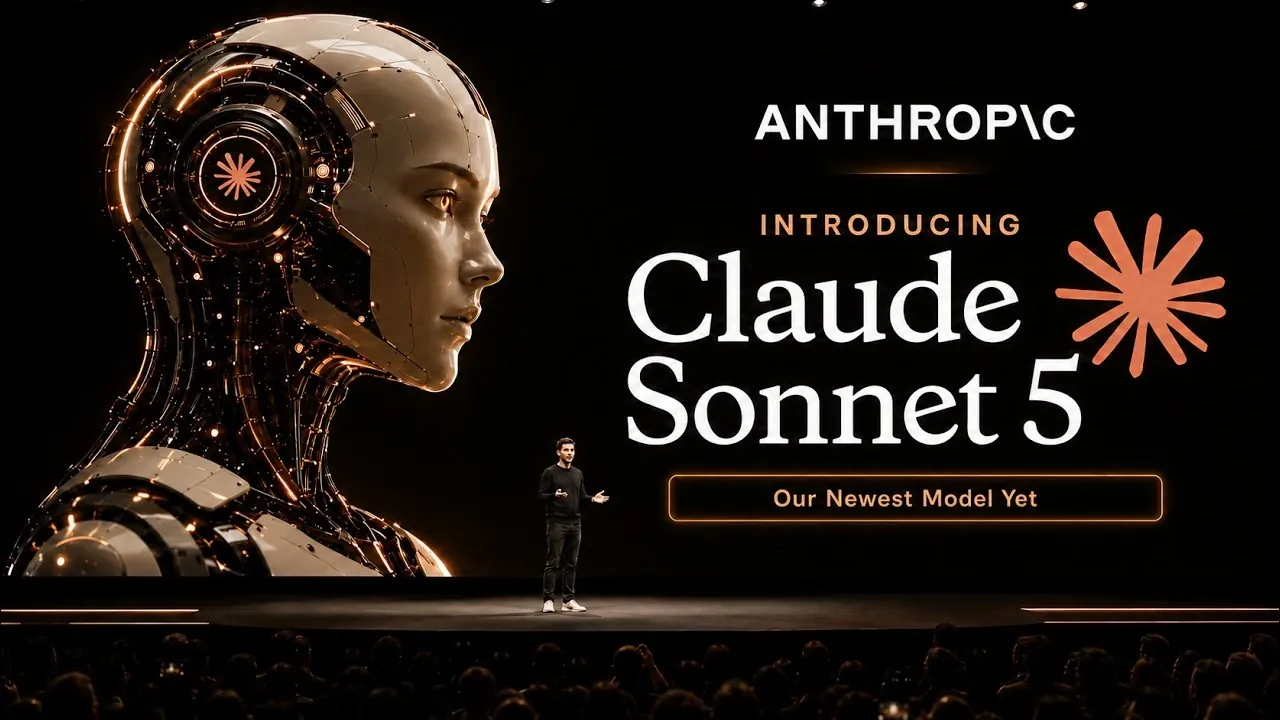
Anthropic has officially launched Sonnet 5, a mid-tier AI model designed to bridge the gap between affordability and performance. With features like a 1-million-token context window and enhanced capabilities for reasoning and agentic coding, it offers practical solutions for users tackling multi-step workflows and knowledge-intensive tasks. AI Grid highlights that while Sonnet 5 improves on its predecessor, Sonnet 4.6, it remains a step below premium models like Opus 4.8 in terms of efficiency and complexity handling. This makes it a compelling option for those prioritizing cost-effectiveness without sacrificing essential functionality.
Explore how Sonnet 5 performs in real-world scenarios, from managing extensive data inputs to supporting structured problem-solving. Gain insight into its token efficiency trade-offs, its suitability for safety-critical environments and its limitations in resource-intensive applications. Whether you’re evaluating its alignment safeguards or comparing it to alternatives like GLM 5.2, this announcement provides a clear breakdown to help you assess whether Sonnet 5 meets your specific needs.
Who is Sonnet 5 For?
TL;DR Key Takeaways :
- Sonnet 5 is a mid-tier AI model by Anthropic, designed for affordability and performance, targeting tasks like reasoning, agentic coding and knowledge work.
- It features a 1-million-token context window, allowing it to handle large-scale inputs such as extensive datasets and lengthy documents.
- The model emphasizes safety and alignment, incorporating robust safeguards for ethical and secure use.
- While cost-effective, Sonnet 5 is less efficient in token usage compared to premium models like Opus 4.8, making it less suitable for resource-intensive tasks.
- Ideal for general-purpose tasks, it is best suited for users prioritizing practicality, safety and affordability over premium performance or advanced specialization.
Sonnet 5 is crafted for users seeking a cost-effective alternative to high-end AI models. It is particularly well-suited for tasks involving reasoning, agentic operations, and large-scale data processing. With a 1-million-token context window, it can handle extensive inputs, such as analyzing large codebases or synthesizing lengthy documents. While it does not aim to compete directly with top-tier models like Opus 4.8, it offers a practical and affordable solution for general-purpose tasks.
This model is ideal for professionals who prioritize practicality over premium performance. It caters to industries and individuals requiring robust AI capabilities without the higher costs associated with top-tier models.
Features of Sonnet 5
Sonnet 5 introduces several enhancements that distinguish it from its predecessor, Sonnet 4.6. These features are designed to improve its usability and effectiveness across a range of applications:
- Improved reasoning and agentic coding: Sonnet 5 is capable of managing complex workflows with greater precision and efficiency, making it suitable for intricate tasks.
- 1-million-token context window: This feature allows the model to process large-scale inputs, such as extensive datasets or lengthy documents, enhancing its utility for knowledge-intensive tasks.
- Enhanced safety alignment: The model incorporates robust safeguards to prevent misuse and ensure compliance with cybersecurity and ethical standards.
These improvements make Sonnet 5 a reliable choice for users operating within Anthropic’s ecosystem, particularly those who value safety and alignment in their AI tools.

Here are additional guides from our expansive article library that you may find useful on Claude Sonnet.
- What GLM 5.2 Reveals About the Enterprise AI Talent Gap
- Claude Sonnet 5 Rumors : Half the Price of Opus 4.5, Launching Soon
- Claude Sonnet 5 Leak Shows 1M Tokens and Faster TPU Training
- Claude Sonnet 5 : 1M Context, Lower Cost & Early Coding Tests
- Claude Sonnet 4.8 Leaks Reveal About Anthropic’s Next AI Release
- The Leaked ‘Claude Jupiter’ Model Just Revealed the Next Big Step for AI
- Claude Opus 4.8 Leak: Everything We Know About the Next Big AI Update
- The Secret Behind Claude’s 6X Performance Boost: Exploring Dream Mode
- Claude Just Gained an “Infinite” Context Window : Here is What It Means for Your Workflows
- Claude Sonnet 4.6 Matches Sonnet 4.5 Pricing with Faster Results
Performance: How Does Sonnet 5 Compare?
Sonnet 5 demonstrates clear advancements over Sonnet 4.6 in areas such as reasoning and task execution. However, it falls short when compared to premium models like Opus 4.8. Key performance comparisons include:
- Efficiency: Sonnet 5 requires approximately 30% more tokens than Opus 4.8 to complete similar tasks, which can increase costs for resource-intensive projects.
- Complexity: While Opus 4.8 excels at handling highly intricate, multi-step workflows, Sonnet 5 is better suited for moderately complex tasks.
When compared to open source alternatives like GLM 5.2, Sonnet 5 holds its ground in terms of performance but struggles to compete on cost, particularly for agentic coding tasks. This makes it a viable option for users who prioritize safety and alignment over raw efficiency.
Cost vs Token Efficiency
One of Sonnet 5’s primary selling points is its affordability compared to premium models like Opus 4.8. However, its token inefficiency can diminish this advantage for users working on long or complex projects. For instance, tasks requiring extensive computational resources may result in higher overall costs due to the additional tokens needed.
This trade-off makes Sonnet 5 less appealing for developers or organizations focused on optimizing resource use. For users with budget constraints, evaluating the balance between initial affordability and long-term efficiency is crucial.
Ideal Use Cases
Sonnet 5 is best suited for users who need a balance between cost and performance for general-purpose tasks. Its strengths include:
- Multi-step workflows: Tasks requiring reasoning, agentic capabilities and structured problem-solving.
- Knowledge work: Applications such as document analysis, data synthesis and research-oriented tasks.
- Safety-critical environments: Scenarios where alignment, compliance and ethical safeguards are top priorities.
However, it is less effective for highly specialized or resource-intensive tasks. Developers focused on raw coding or projects requiring high token efficiency may find better value in alternatives like GLM 5.2.
Limitations to Consider
Despite its strengths, Sonnet 5 has several limitations that may influence its suitability for certain users:
- Token inefficiency: Higher token usage can lead to increased costs for extensive or complex tasks, reducing its appeal for resource-intensive projects.
- Restricted capabilities: The model’s stringent safeguards may limit its effectiveness in certain cybersecurity or high-risk applications.
- Occasional misalignment: In some cases, Sonnet 5 may underperform compared to other models in its class, particularly for tasks requiring advanced specialization.
These drawbacks highlight the importance of assessing your specific needs and priorities before selecting Sonnet 5 as your AI solution.
Making the Right Choice
Sonnet 5 represents a significant step forward for Anthropic, offering a versatile and affordable AI model for general-purpose tasks. Its improvements in reasoning, agentic coding, and safety alignment make it a strong contender for users who prioritize these features. However, its token inefficiency and specific limitations may reduce its appeal for advanced or resource-intensive use cases.
For users seeking alternatives, models like GLM 5.2 provide competitive performance at a lower cost, particularly for coding-focused applications. Ultimately, the decision to choose Sonnet 5 depends on your specific needs, priorities and budget. By carefully evaluating its features and limitations, you can determine whether it aligns with your goals and expectations.
Media Credit: TheAIGRID
Disclosure: Some of our articles include affiliate links. If you buy something through one of these links, Geeky Gadgets may earn an affiliate commission. Learn about our Disclosure Policy.
