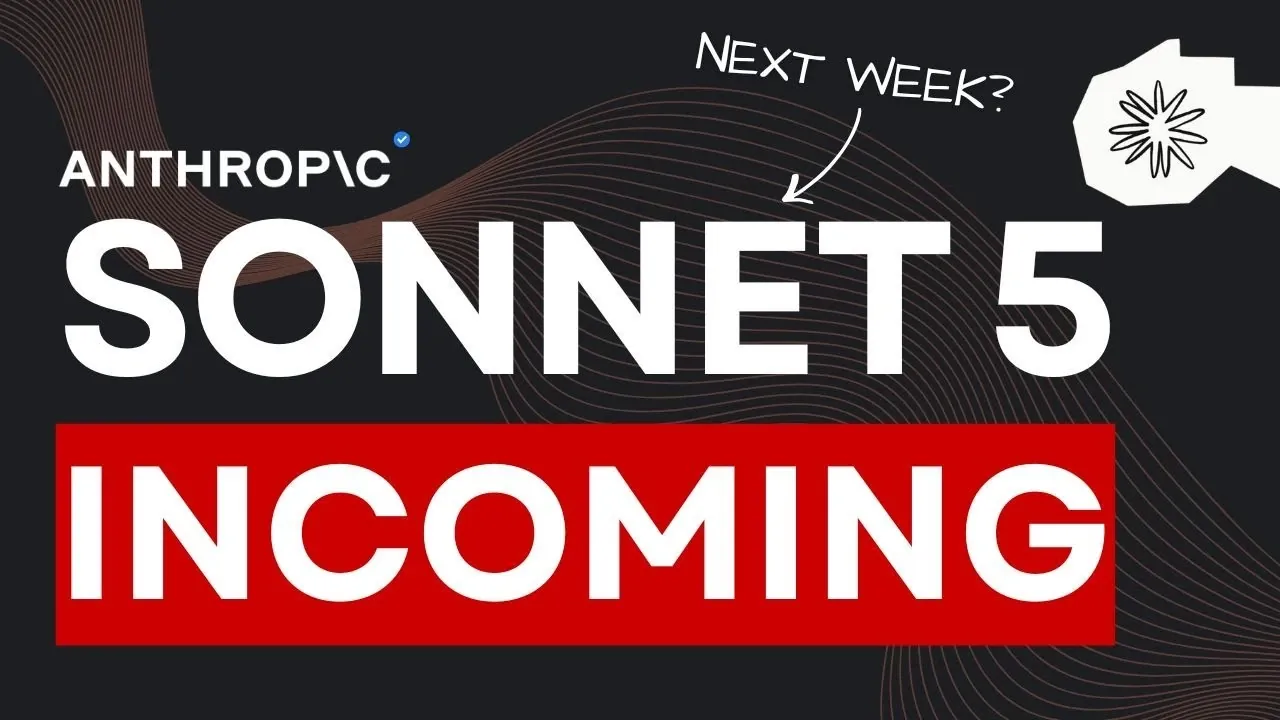
What if the next two weeks could redefine the future of artificial intelligence? That’s the question on everyone’s mind as the AI landscape braces for a wave of new releases. Universe of AI breaks down how industry giants like OpenAI, Google, Anthropic, and XAI are racing to outdo one another with their latest models, each promising to push the boundaries of what AI can achieve. From OpenAI’s rumored GPT-5.3, poised to set new standards in reasoning, to Anthropic’s Claude Sonnet 5, which could deliver high-end performance at half the cost of its competitors, the stakes couldn’t be higher. And with whispers of Google’s Gemini 3 Pro and XAI’s mysterious Fenick model, the competition is heating up in ways that could reshape the market, and our expectations, forever.
This deep dive explores the innovations, rivalries, and high-stakes strategies driving the AI race forward. You’ll gain insights into how these new models aim to tackle complex challenges, from advanced problem-solving to ethical AI development, and why their success, or failure, could shift the balance of power in the industry. Whether you’re curious about Anthropic’s rumored agent-to-agent communication or wondering if OpenAI’s latest iteration will live up to the hype, there’s plenty to unpack. As the countdown begins, one thing is clear: the next chapter of AI evolution is unfolding, and it’s one you won’t want to miss.
AI Industry Showdown
TL;DR Key Takeaways :
- OpenAI is set to launch GPT-5.3, a model expected to excel in advanced reasoning and problem-solving, particularly in specialized fields like mathematics and legal analysis, potentially solidifying its leadership in the AI market.
- Google is introducing two new models, Gemini 3 Pro and Gemini 3 Flash G, targeting enterprise-level reasoning tasks and high-speed production environments, intensifying competition with OpenAI.
- Anthropic’s Claude Sonnet 5 aims to disrupt the market with superior performance and cost-efficiency, alongside innovative features like agent-to-agent communication for collaborative AI applications.
- XAI, led by Elon Musk, is preparing to launch Gro 4.2, emphasizing transparency and ethical AI development, with speculation surrounding a mysterious Fenick model that could further shake up the competitive landscape.
- The simultaneous release of multiple advanced AI models is expected to reshape the industry, with companies competing on performance, pricing, and innovation, marking a pivotal moment for the future of AI development.
OpenAI’s GPT-5.3: A Leap in Reasoning?
OpenAI is reportedly on the cusp of launching GPT-5.3, a model that could set new standards in AI reasoning and problem-solving. Early indications suggest that this iteration will excel in specialized fields such as mathematics, legal analysis, and other domains where precision and advanced reasoning are critical. These capabilities could make GPT-5.3 a valuable tool for professionals and enterprises seeking AI solutions tailored to complex problem-solving.
This release follows OpenAI’s recent decision to phase out older models, signaling a strategic focus on innovative systems. Industry insiders speculate that GPT-5.3 may debut around mid-February, potentially aligning with Valentine’s Day. If the model delivers on its promises, it could further solidify OpenAI’s position as a leader in the AI market, setting a high bar for competitors.
Google’s Gemini 3 Pro and Flash G: Tailored for Versatility
Google AI is preparing to expand its Gemini series with the release of two new models: Gemini 3 Pro and Gemini 3 Flash G. These models are designed to cater to distinct user needs, offering versatility and targeted functionality:
- Gemini 3 Pro: This version is engineered for advanced reasoning and problem-solving, making it ideal for enterprise users who require sophisticated analytical capabilities. Its focus on high-level cognitive tasks positions it as a direct competitor to OpenAI’s GPT-5.3.
- Gemini 3 Flash G: Optimized for speed and efficiency, this variant is designed for production environments where rapid response times are essential. Its streamlined architecture aims to deliver reliable performance without compromising on quality.
These models are expected to intensify the rivalry between Google and OpenAI, as both companies vie for dominance in the AI sector. The dual-release strategy highlights Google’s commitment to addressing diverse market demands while maintaining a competitive edge.
Claude Sonnet 5 Launching Next Week?

Take a look at other insightful guides from our broad collection that might capture your interest in Claude Sonnet.
- ChatGPT 5 vs Claude Sonnet: Real-World AI Coding Comparison
- Claude 4.5 Sonnet vs Gemini 3 Pro : AI Coding Face-Off Who Wins?
- Claude Agents 2.0 are INSANE : Non-Stop AI Coding Until Its
- NotebookLM Alternative That Uses GPT 5.2, Claude Sonnet 4.5
- Sonnet 4.5 vs GLM 4.6 vs Codex : Detailed AI Coding Comparison
- Claude Sonnet 4.5 Tested : Coding to Complex Problem Solving
- MiniMax M2 : Open Source AI Model Simplifying Complex Tasks
- New Claude Sonnet 4.5 AI Memory Tool Remembers Everything
- Claude Sonnet 4.5: What You Need to Know as a Developer
- GPT-5 vs Claude Code : AI Battle Royale Creative Edge vs Precision
Anthropic’s Claude Sonnet 5: Redefining Industry Standards
Anthropic is set to make waves with the release of Claude Sonnet 5, a model that could challenge existing benchmarks in the AI industry. Preliminary overviews suggest that Claude Sonnet 5 may outperform its competitors in both performance and cost-efficiency. For example, it is rumored to deliver results comparable to leading models like Opus 4.5 but at half the cost, making it an attractive option for businesses seeking high-quality AI solutions at a lower price point.
Additionally, updates to Anthropic’s Claude Code are expected to introduce new features such as agent-to-agent communication. This capability could transform collaborative AI applications, allowing systems to work together seamlessly on complex tasks. If these advancements materialize, Claude Sonnet 5 could disrupt the market and pose a significant challenge to established players like OpenAI and Google.
XAI’s Gro 4.2 and the Mystery of Fenick
XAI, led by Elon Musk, is also preparing to enter the fray with the launch of Gro 4.2. While specific details about the model remain under wraps, it is expected to emphasize transparency and ethical AI development, core principles of XAI’s mission. This focus on responsible AI could resonate with users and organizations prioritizing ethical considerations in technology adoption.
Adding to the intrigue is the rumored Fenick model, which some speculate is connected to Anthropic’s Claude Sonnet 5. If Fenick delivers on its anticipated capabilities, it could outpace Google’s leaked “Snow Bunny” model, further complicating the competitive dynamics. XAI’s strategic positioning and potential innovations make it a key player to watch in the unfolding AI race.
Shifting Competitive Dynamics
The simultaneous release of multiple advanced AI models is poised to reshape the competitive landscape. Companies are closely monitoring each other’s moves, aiming to outpace rivals in both performance and pricing. As these models are introduced, they will undergo rigorous real-world testing and benchmarking, providing critical insights into their actual capabilities and limitations.
Several key questions remain unanswered:
- Will the performance claims of these new models withstand scrutiny in practical applications?
- Are the proposed pricing strategies sustainable in the long term?
- How will these developments influence the broader AI market and its future trajectory?
These questions highlight the uncertainty and high stakes surrounding the upcoming releases, as companies strive to establish themselves as leaders in this rapidly evolving field.
Looking Ahead: What’s at Stake?
The next few weeks will be pivotal for the AI industry, as the unveiling of new models promises to bring significant advancements and challenges. Performance benchmarks, pricing strategies, and practical applications will play a crucial role in determining which companies emerge as market leaders. The outcomes of these developments will not only shape the competitive dynamics of the industry but also influence the broader adoption and integration of AI technologies across various sectors.
As the AI community watches with anticipation, the stakes have never been higher. Whether it’s OpenAI’s GPT-5.3, Google’s Gemini 3, Anthropic’s Claude Sonnet 5, or XAI’s Gro 4.2, the coming weeks could mark a defining moment in the evolution of artificial intelligence. The race is on, and the results will likely have far-reaching implications for the future of technology and innovation.
Media Credit: Universe of AI
Disclosure: Some of our articles include affiliate links. If you buy something through one of these links, Geeky Gadgets may earn an affiliate commission. Learn about our Disclosure Policy.
