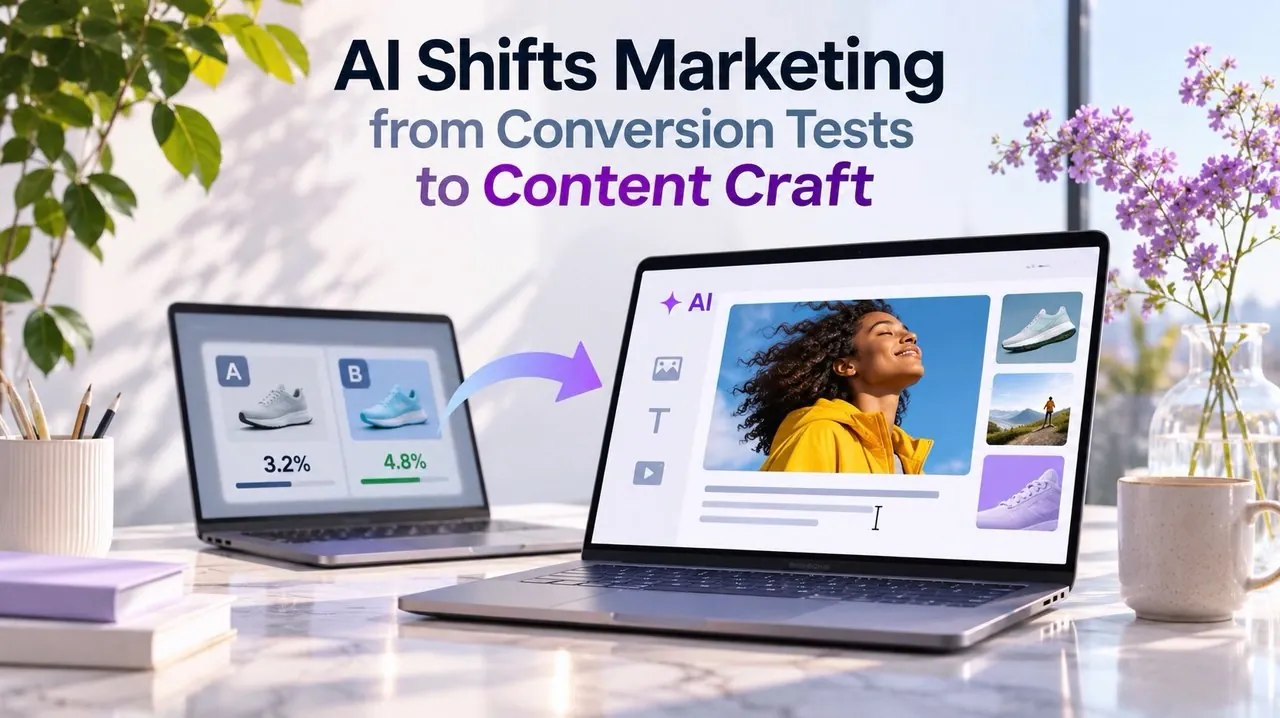
AI software can take on marketing optimization, but employers still need people who can create content that earns an audience. Content producer, content creator and head of content lead the fastest-growing roles cited by the podcast Marketing Against the Grain, giving you a concrete signal about where demand is heading. Working with AI matters, but so does having the expertise to recognize when its output falls short. Discover how audience-building skills and human judgment are shaping what employers want from your next marketing role.
AI and the Changing Marketing Job Market
TL;DR Key Takeaways :
- US marketing job postings are down 58% from early 2022, though Marketing Against the Grain cautions that COVID overhiring may make the comparison imperfect.
- Marketing roles are broadening, with 76% of marketers covering more than one role.
- With the right context, intelligence and tools, an AI agent can run A/B tests and create variations toward a website conversion goal.
- Content producer, content creator and head of content are the top three roles cited among the fastest-growing jobs.
- Agents are expected to become a core part of the buying process, expanding brand positioning beyond company websites.
US marketing job postings are down 58% compared with early 2022, according to a recently released and widely shared report. A report the host refers to as Lenny’s report also showed fewer roles being hired for engineers and other occupations. Marketing Against the Grain cautions that the comparison may be imperfect because companies overhired during COVID.
Marketing roles are also becoming broader: 76% of marketers cover more than one role, while the median startup age at its first marketing hire is 3.2 years. The host says some marketers are becoming more employable and advancing faster, and that some content specialists are attracting offers that exceed executive pay.
AI Agents Broaden Marketing Roles
Companies expect AI to help each marketer do more, reducing the need to hire for every separate task. Roles and skills are merging at AI startups, where marketers use AI to work across areas such as copy and design rather than remaining in one specialty. The host says he has seen this at most of the AI startups he works with.
An in-house AI agent can draw on company context, use tools and operate within a system that allows it to carry out work. Even when that assistance expands the tasks you can take on as a marketer, you still need a defined area of accountability.
Future hires are expected to need both fluency with AI agents and domain expertise. Marketing Against the Grain warns that without expertise, you may struggle to recognize weak AI output or guide the tool toward better work.

AI Takes On Optimization Work
AI is handling work in marketing channels that are managed or adjusted algorithmically, making some optimization roles less distinct. Conversion rate optimization, which aims to increase the share of website visitors who take a desired action, was once a major marketing role.
An agent with the right context, intelligence and tools can run A/B tests and create variations to pursue a website conversion goal, with incremental improvement each month as the aim. A person would probably still approve work and make small corrections, although the agent could do much of the work autonomously.
Marketing automation manager appears far down the hiring data, another sign of the shift. In the host’s view, AI can take on optimization work more readily than the craft required to make content people care about.
Content Talent Draws Strong Offers
Content producer, content creator and head of content are the top three roles cited among the fastest-growing jobs. The host’s explanation is that companies need audiences and distribution now that AI has taken over much informational software content: audience and distribution, rather than product or optimization, are what hold companies back.
Employers want skills that include understanding internet culture, working across formats, appearing on camera and presenting executives’ ideas in ways that attract attention. They also include bringing content formats to life with AI tools. Content that encourages engagement, follows and subscriptions calls for different work from producing routine informational material.
Competition can be costly for employers. A company the host advises could not match a competing offer for a 23-year-old creator who understood online culture and was strong on camera. He says a small selection of content professionals earn more than executives because those skills are hard to find.
That creator developed his craft in the evenings while working another job, then overhauled work inside his company and brought it online. The example shows how you can build an audience and practice without waiting for a qualification or a brand to provide an opportunity.
Creator Programs Face Rising Costs
Creator talent manager, video editor, social media strategist and social media manager also appear among the content-related roles discussed. The host says creator costs are rising as business-to-business companies include creators in their budgets, and that creators are now part of every B2B budget.
Marketing Against the Grain recommends that brands distinguish their creator programs with incentives competitors cannot offer, although competition depends on the market and may be less intense in some spaces. The host’s example is his own company: he points to HubSpot’s purchase of The Hustle in 2021 and the creator program he says he started there as an early investment in B2B creator programs and personality-driven content.
Brand Work Reaches Beyond Company Websites
Brand strategy and positioning remain important even when products perform similar functions. The host argues that if AI commoditizes B2B software, to the point of replicating products and features with a single prompt, brand is what is left to compete on. He points to consumer categories such as toothpaste, where a small number of brands dominate despite products serving the same basic purpose, and says he was surprised to see brand strategist at only 26% in the cited data.
Product marketing also involves more than shaping a visitor’s impression on a company’s own website. A G2 study says B2B buyers purchase software through human or agent reviews, so positioning now includes influencing how the wider market talks about the company. Product marketer appears low in the cited hiring data.
Answer engine optimization and generative engine optimization are two growing areas focused on recommendations from AI systems. Brand affinity influences communities, which in turn influence agents and answer engines. Those labels may be too narrow: marketers may also need to reach coding and knowledge-work agents, including tools such as ChatGPT and Claude, as agents are expected to become a core part of the buying process.
For marketers weighing their next move, Marketing Against the Grain advises developing a craft alongside the ability to work with AI. It regards AI as an assistant for someone with the judgment to guide its output, not a substitute for that judgment. Building that expertise takes practice and iteration, whether the work is content, design or positioning.
We see the clearest guide to career safety in how work is judged, rather than in a job title: tasks with a clear score, such as conversion rate, are easiest to hand to software, while work that depends on taste is not. An agent’s ability to run A/B tests toward a conversion goal makes that distinction concrete. The hard-to-match offer for the creator with a feel for internet culture shows the other side: employers still struggle to find the taste that software cannot readily supply.
The hiring shift gives you a reason to assess your skills by the attention you can earn, not just the campaigns you can adjust. If you are planning your next marketing role, the demand for audience-building craft is worth a closer look alongside employers’ expectations that you work across specialties with AI.
Media Credit: Marketing Against the Grain
Disclosure: Some of our articles include affiliate links. If you buy something through one of these links, Geeky Gadgets may earn an affiliate commission. Learn about our Disclosure Policy.
