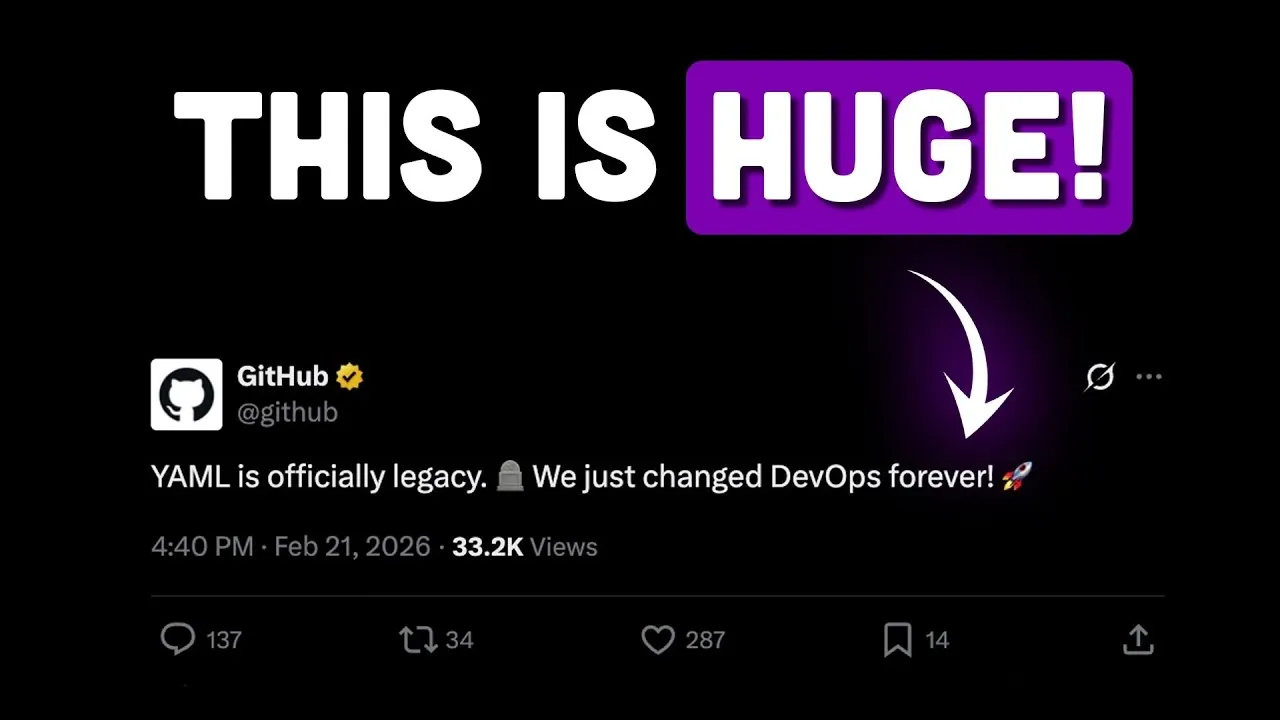
GitHub is reshaping CI/CD pipeline management with the introduction of Agentic Workflows, as detailed by Better Stack. This approach integrates natural language programming and AI-driven decision-making to create workflows that adapt to context while maintaining transparency and control. For example, the system supports a feature called “productive ambiguity,” which allows AI agents to make informed decisions in complex scenarios, such as analyzing code for inefficiencies or automating documentation updates. By building on the security and auditability of GitHub Actions, Agentic Workflows offer a practical way to balance automation with human oversight in modern software development.
You’ll learn how to define workflows using natural language and compile them securely with the `gh aw compile` command. The deep dive also explores how to use features like explicit permissions management to enhance security and integrate seamlessly with GitHub Actions. Additionally, you’ll see real-world examples, such as AI agents performing automated code reviews or monitoring performance metrics, to understand how these workflows can address challenges traditional automation cannot.
Introducing Agentic Workflows
TL;DR Key Takeaways :
- GitHub’s new Agentic Workflows integrate natural language programming with AI-driven decision-making, offering a more adaptable and intelligent alternative to traditional CI/CD workflows.
- Key features include AI-powered automation, secure workflow compilation, explicit permissions management and seamless integration with GitHub Actions for enhanced security and usability.
- Agentic Workflows enable dynamic, context-sensitive decisions through “productive ambiguity,” allowing teams to automate complex tasks like bug triaging, code reviews and documentation updates.
- Security is a core focus, with features like detailed logs, secrets management and explicit approvals for sensitive actions, making sure transparency and control.
- While still a research prototype with some limitations, Agentic Workflows represent a significant step forward in autonomous DevOps, paving the way for more intelligent and efficient software development practices.
Why Agentic Workflows Matter
Agentic Workflows aim to streamline and enhance CI/CD pipeline management by allowing workflows to be defined using natural language. This aligns with GitHub’s “Continuous AI” vision, which emphasizes using artificial intelligence for tasks requiring judgment, creativity, and adaptability. Unlike traditional workflows that follow rigid, predefined paths, Agentic Workflows embrace a concept called “productive ambiguity.” This allows AI to make context-sensitive decisions while maintaining transparency and control, resulting in a more dynamic and efficient approach to automation.
This innovation is particularly relevant in modern software development, where the complexity of systems often demands a balance between automation and human oversight. By introducing workflows that adapt to changing contexts, Agentic Workflows provide a solution that is both intelligent and practical, allowing teams to focus on higher-value tasks.
Core Features of Agentic Workflows
Agentic Workflows combine the adaptability of AI with the robust security and auditability of GitHub Actions. Key features include:
- AI-Driven Decision-Making: Automate complex tasks such as bug triaging, documentation updates and architectural reviews using AI-powered agents capable of making informed decisions.
- Secure Workflow Compilation: Transform natural language instructions into secure, executable workflows with the `gh aw compile` command, making sure both usability and safety.
- Explicit Permissions Management: Enhance security by requiring explicit approvals for sensitive actions, such as write operations or deployments.
- Seamless Integration with GitHub Actions: Use existing features like logs, secrets management and permissions for a unified and familiar experience.
These features collectively enable teams to automate tasks that were previously too complex or context-dependent for traditional workflows, all while maintaining a high standard of security and control.
GitHub Actions are DEAD!

Enhance your knowledge on AI automations by exploring a selection of articles and guides on the subject.
- How to Build Custom AI Agents to Automate Your Workflow
- How to Use Claude AI to Automate Your Life and Boost Productivity
- Automate boring tasks using the Lindy AI automation platform
- Notion’s AI Teammate Runs Projects End to End
- How to use ChatGPT to create automated systems and workflows
- Chrome AI Automation by Gemini: Behind Logins, Forms, and Emails
- Manus 1.6 Brings Faster, Reliable AI Workflow Automation
- Best AI Tools to Start 2026: Perplexity, Gemini 3 Pro, DeepSeek 3.2
- Auto Claude: Free Open Source AI Coding Assistant with GitHub
- Use Nano Banana to Create Pro Visuals of Products at Scale
How to Get Started with Agentic Workflows
Setting up an Agentic Workflow is designed to be straightforward, making it accessible to teams of all experience levels. Follow these steps to begin:
- Create a markdown file in your repository containing natural language instructions for the agent. For example, you might specify tasks like analyzing code for inefficiencies or updating documentation based on recent changes.
- Use the `gh aw compile` command to compile these instructions into a secure GitHub Actions workflow. This step ensures that the workflow is both executable and adheres to security best practices.
- Push the compiled workflow to your repository to activate it. Once activated, the workflow will begin executing tasks as defined in your instructions.
This process ensures that workflows are not only easy to create but also secure and reliable, making them suitable for a wide range of applications, from small projects to enterprise-level systems.
Real-World Applications and Benefits
Agentic Workflows excel in scenarios where traditional automation falls short. For instance, consider a “Big O Auditor” agent designed to analyze code commits. This agent can calculate algorithmic complexity, identify inefficiencies and suggest optimizations. In one case, it flagged inefficient code, provided detailed feedback and proposed actionable improvements, demonstrating the potential of AI-driven workflows to deliver insights that deterministic workflows cannot match.
Other potential applications include:
- Automated Code Reviews: Use AI agents to identify potential bugs, enforce coding standards and suggest improvements during the development process.
- Documentation Updates: Automatically generate or update documentation based on recent code changes, making sure that project documentation remains accurate and up-to-date.
- Performance Monitoring: Deploy agents to analyze application performance metrics and recommend optimizations in real-time.
These examples highlight the versatility of Agentic Workflows, making them a valuable tool for teams looking to enhance productivity and innovation.
Security and Integration
Security is a fundamental aspect of Agentic Workflows. By building on the GitHub Actions ecosystem, these workflows inherit a range of robust security features, including:
- Detailed Logs: Maintain transparency and traceability for all operations, making sure that every action is documented and auditable.
- Secrets Management: Protect sensitive information, such as API keys and credentials, using GitHub’s built-in secrets management capabilities.
- Explicit Permissions: Require approvals for high-risk actions, such as deployments or write operations, to minimize vulnerabilities and maintain control.
Additionally, Agentic Workflows integrate seamlessly with AI providers like GitHub Copilot via API keys. This enables advanced capabilities without compromising security, making sure that teams can use the full potential of AI while adhering to best practices.
Challenges and Future Potential
While Agentic Workflows offer numerous advantages, they are not without challenges. As a research prototype, the system may experience latency issues and requires human oversight for final verification. These limitations highlight the importance of balancing automation with human judgment, particularly in high-stakes scenarios.
Despite these challenges, the potential benefits of Agentic Workflows are significant. By refining this technology, GitHub is paving the way for more intelligent and autonomous CI/CD pipeline management. Future developments could include enhanced integration with other tools, improved AI capabilities and expanded use cases, further solidifying the role of AI in modern software development.
Agentic Workflows represent a promising step forward in the evolution of DevOps practices. By combining natural language programming with AI-driven decision-making, they offer a flexible and intelligent alternative to traditional automation, allowing teams to tackle complex challenges with confidence and efficiency.
Media Credit: Better Stack
Disclosure: Some of our articles include affiliate links. If you buy something through one of these links, Geeky Gadgets may earn an affiliate commission. Learn about our Disclosure Policy.
