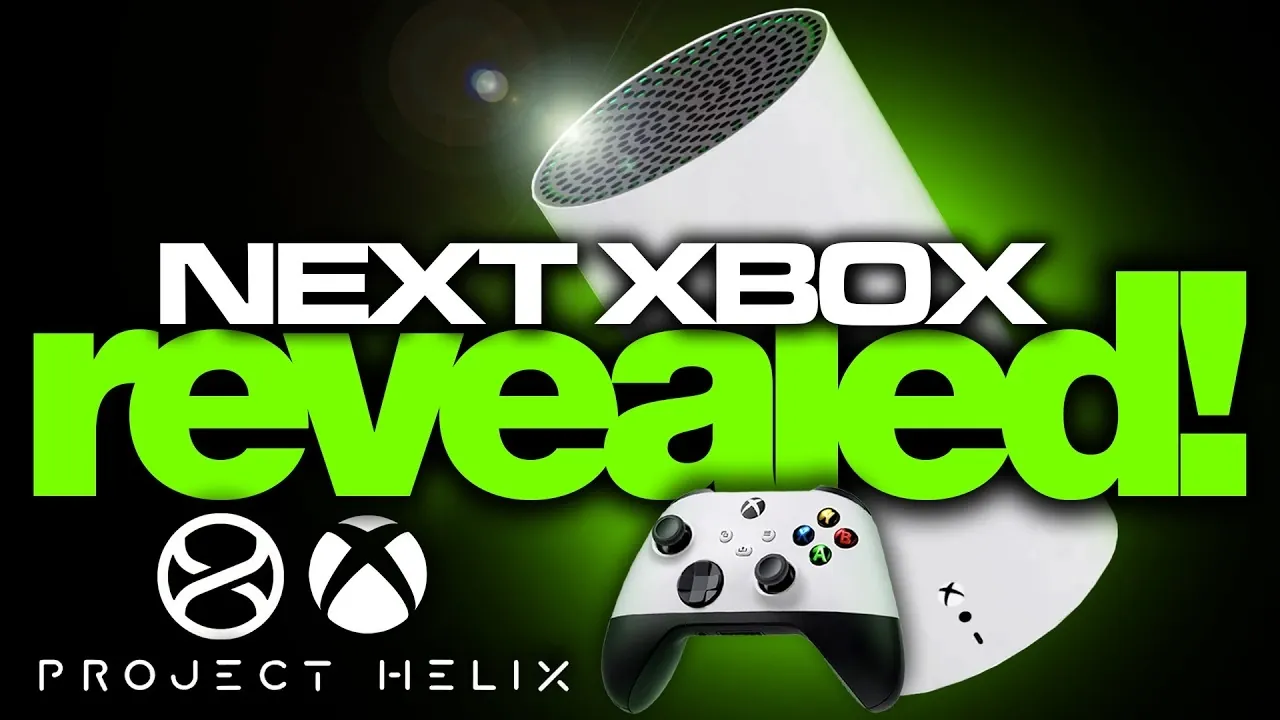
Xbox has officially unveiled its next-generation console, Project Helix, at the 2026 Game Developers Conference (GDC). Built in collaboration with AMD, the system features the custom “Magnus” chip, which integrates neural rendering and DirectX13 to enhance graphics and performance. According to colteastwood, the console emphasizes unifying Xbox and PC gaming ecosystems, with specific advancements like crossplay functionality and expanded support for developers aiming to streamline game creation across platforms.
In this update, you’ll learn how Project Helix incorporates AI-driven enhancements to improve backward compatibility and optimize older titles. You’ll also see how features like “Xbox mode” in Windows 11 aim to deliver a console-like experience for PC users, alongside updates to Quick Resume that enhance platform integration. This breakdown provides a closer look at the technical and functional aspects shaping the next phase of Xbox gaming.
Xbox Project Helix Overview GDC 2026
TL;DR Key Takeaways :
- Xbox unveiled its next-generation console, Project Helix, at GDC 2026, with a release planned for late 2027 or early 2028.
- Powered by the custom AMD “Magnus” chip, the console introduces neural rendering, advanced ray tracing and AI upscaling for innovative performance and photorealistic visuals.
- Project Helix emphasizes seamless cross-platform integration between Xbox and PC, featuring innovations like “Xbox mode” in Windows 11 for a unified gaming experience.
- Backward compatibility with AI-driven enhancements ensures older Xbox titles are modernized, alongside a focus on game preservation and re-releases of classic franchises.
- Developer kits will be available in early 2027, allowing studios to optimize games for the console’s advanced hardware and features.
Breakthrough Hardware and Performance
At the heart of Project Helix is the custom AMD “Magnus” chip, a processor engineered to handle the most demanding gaming scenarios. This chip introduces neural rendering, an AI-driven technology that dynamically enhances graphics quality in real-time. Combined with advanced ray tracing, AI upscaling, and path tracing capabilities, the console promises to deliver photorealistic visuals without compromising performance.
The inclusion of DirectX13, Microsoft’s latest graphics API, further improves the console’s graphical capabilities, allowing developers to create immersive and visually stunning experiences. Additionally, AMD’s FSR Diamond technology ensures sharp, detailed visuals even at lower resolutions, making high-quality gaming accessible across a variety of display setups. Together, these innovations position Project Helix as a leader in next-generation gaming hardware, setting new benchmarks for both performance and visual fidelity.
Seamless Cross-Platform Integration
A standout feature of Project Helix is its focus on unifying Xbox and PC gaming. By creating a shared development environment, Microsoft aims to simplify game creation for developers while delivering a consistent and cohesive experience for players. This integration not only reduces development costs but also enables seamless crossplay between Xbox consoles and PCs, breaking down barriers between platforms.
For PC gamers, Microsoft is introducing an “Xbox mode” in Windows 11. This mode offers a console-like interface designed to simplify navigation and enhance usability, making it easier for players to access their games and settings. Whether you prefer gaming on a console or a PC, Project Helix ensures a streamlined and intuitive experience across platforms, bridging the gap between the two ecosystems.
Expand your understanding of Xbox with additional resources from our extensive library of articles.
- Xbox Project Helix Leak: Price Range, Specs & Release Window
- Asha Sharma Takes over Xbox as Phil Spencer Exits in 2026
- 2027 Xbox Console Plans Include a PC-Style Hybrid & OEM Devices
- Project Helix Leak: Microsoft’s Next Xbox May Cost over $1,000
- Xbox Game Pass Rumors: Day-One Releases Could Be Removed in 2026
- PS6 Price and Performance vs Xbox Magnus, What to Expect
- How to Hack Your Xbox 360 Using a USB Flash Drive
- PlayStation 6 vs Xbox Magnus with Zen 6 CPU and RDNA 5 GPU
- Best Gaming Handheld 2025: Legion Go 2 vs Ally X vs Claw 8
- Xbox Orders 50 Million AMD Chips for Magnus Next-Gen Console
Commitment to Backward Compatibility
Backward compatibility remains a cornerstone of Microsoft’s gaming strategy and Project Helix takes this commitment to the next level. The console will allow players to access their existing Xbox game library with improved performance and enhanced resolution, making sure that older titles feel fresh and modern. Using AI-driven enhancements, these games can be updated to deliver visuals and gameplay that rival remastered versions.
In addition to supporting backward compatibility, Microsoft is focusing on game preservation by reintroducing iconic first-party franchises. Through updated re-releases of classic games, the company seeks to celebrate its gaming heritage while appealing to both long-time fans and new players. This dual approach underscores Microsoft’s dedication to honoring its legacy while embracing the future.
Enhanced Features for Developers and Gamers
Project Helix introduces a range of features designed to enhance the gaming experience for both developers and players. One of the most notable advancements is the inclusion of pre-compiled shaders, which significantly reduce game loading times. This ensures faster and smoother game launches, allowing players to dive into their favorite titles with minimal delays.
The popular Quick Resume feature, which enables players to switch between games instantly, is also being expanded. Microsoft plans to extend this functionality to Windows 11 PCs, further blurring the line between console and PC gaming. This innovation highlights the company’s commitment to creating a unified gaming ecosystem that prioritizes convenience and accessibility.
For new players transitioning from consoles to PCs, Microsoft is introducing simplified game settings with optimized defaults. These settings are designed to lower the barrier to entry for PC gaming, making it more accessible to a broader audience. By streamlining options and providing user-friendly interfaces, Project Helix aims to attract both seasoned gamers and newcomers alike.
Release Timeline and Future Vision
Developer kits for Project Helix are expected to roll out in early 2027, giving studios ample time to optimize their games for the new hardware. The console’s launch, anticipated in late 2027 or early 2028, will coincide with Xbox’s 25th anniversary, a milestone that underscores Microsoft’s long-standing commitment to innovation and the gaming community.
Looking ahead, Project Helix represents more than just a new console, it embodies Microsoft’s vision for the future of gaming. By bridging the gap between consoles and PCs, the company aims to create a unified ecosystem powered by innovative technology and strong developer partnerships. As hybrid gaming systems become increasingly prevalent, Project Helix is poised to lead the industry into a new era, shaping the future of interactive entertainment.
Key Takeaways
- Project Helix, Xbox’s next-generation console, was unveiled at GDC 2026 with a planned release in late 2027 or early 2028.
- The console features the custom AMD “Magnus” chip, neural rendering and advanced graphics technologies like ray tracing and AI upscaling.
- Seamless cross-platform integration between Xbox and PC gaming is a central focus, supported by features like “Xbox mode” in Windows 11.
- Backward compatibility and AI-driven game enhancements ensure older titles are modernized for the new hardware.
- Developer kits will be available in early 2027, giving studios time to optimize games for the system’s capabilities.
By combining technological innovation, accessibility, and a commitment to gaming heritage, Project Helix is set to redefine the gaming landscape. As the industry moves toward a more interconnected future, Xbox’s next-generation console stands ready to establish itself as a leader in the evolution of gaming technology.
Media Credit: colteastwood
Disclosure: Some of our articles include affiliate links. If you buy something through one of these links, Geeky Gadgets may earn an affiliate commission. Learn about our Disclosure Policy.
