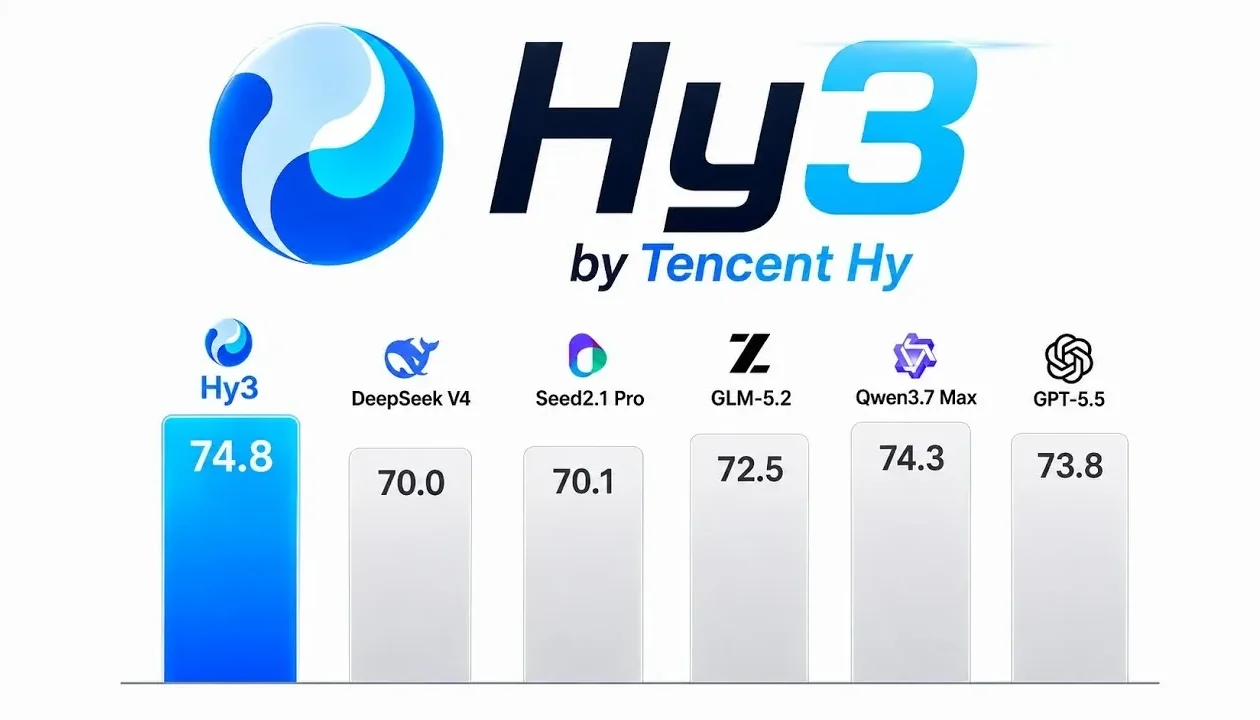
Tencent’s latest AI model, Hy3, introduces a noteworthy mid-tier option in the competitive landscape of generative language models. With its 295-billion-parameter architecture and a focus on secure, localized deployments, Hy3 is designed to meet the needs of businesses that prioritize privacy and efficiency. Sam Witteveen highlights how Hy3’s mixture of experts (MoE) design allows only 21 billion parameters to remain active during inference, optimizing resource use without sacrificing performance. Additionally, its 3.88 billion parameter speculative decoding model enhances response times, making it particularly effective for task-oriented applications, even if it falls short in coding-related tasks compared to models like GLM 5.2.
Explore how Hy3 balances efficiency with functionality by excelling in reasoning benchmarks and decision-support tasks, while also addressing compliance challenges through localized deployment options. Gain insight into its 256K token context window, which supports most real-world applications and its adaptability through fine-tuning for specific business needs. This breakdown will also examine its limitations, such as slower response times in its free version and underperformance in programming tasks, helping you assess whether Hy3 aligns with your operational goals.
What Sets Hy3 Apart?
TL;DR Key Takeaways :
- Tencent’s Hy3 is a 295-billion-parameter AI model designed as a mid-tier alternative, focusing on secure, localized and task-oriented AI solutions with minimized hallucinations.
- Hy3 utilizes a mixture of experts (MoE) architecture, activating only 21 billion parameters during inference for optimized resource use and features a 3.88 billion parameter speculative decoding model for faster response times.
- The model excels in reasoning and decision-making tasks, making it suitable for industries prioritizing analytical capabilities, though it underperforms in coding-related tasks compared to larger models like GLM 5.2.
- Hy3 supports secure, localized deployments, offering fine-tuning for custom use cases, making it ideal for industries with strict privacy and compliance requirements.
- A free version of Hy3 is available on Open Router for limited exploration, with a paid version expected to follow, providing scalable and competitive solutions for businesses.
Hy3 uses a mixture of experts (MoE) architecture, featuring an impressive 295 billion parameters, with only 21 billion active during inference. This innovative design ensures optimized resource utilization while maintaining competitive performance. A standout feature is its 3.88 billion parameter speculative decoding model, which enhances response times without compromising accuracy. Additionally, Hy3 supports a context window of 256K tokens—smaller than some competitors but sufficient for most real-world applications, making sure a balance between efficiency and functionality.
Performance Highlights
Hy3 demonstrates strong performance in several areas, particularly in agentic tasks and reasoning benchmarks, making it a valuable choice for businesses requiring AI to assist with decision-making and problem-solving. Its ability to handle complex reasoning tasks positions it as a dependable tool for industries that prioritize analytical capabilities. However, Hy3’s performance in coding-related tasks falls short compared to models like GLM 5.2. Despite this limitation, it remains a competitive option among mid-tier models, offering a balanced combination of efficiency and functionality.

Uncover more insights about GLM 5.2 in previous articles we have written.
- What ChatGPT 5.6’S Delay Means for the Future of Open Source AI
- What GLM 5.2 Reveals About the Enterprise AI Talent Gap
- How Anthropic’s Claude Oceanus is Writing 80 Percent of Merged Code
- ChatGPT Finally Automates Your Daily Workflow While You Sleep
- Anthropic Claude Mythos AI World’s Newest Obsession a 10-Trillion Parameter
- Running Local Al Models on a Mac Studio 128GB : 4B, 20B & 120B Tested
Key Applications of Hy3
Hy3 is specifically designed for organizations that prioritize secure and localized AI deployments. Its architecture supports fine-tuning, allowing businesses to customize the model for specific use cases. This adaptability makes it particularly appealing for industries with stringent privacy and compliance requirements. Key applications include:
- Data Security: Hy3’s compatibility with local hardware reduces reliance on cloud-based infrastructure, enhancing data protection.
- Customizability: Businesses can fine-tune the model to address unique operational needs, making sure tailored performance.
- Decision Support: Its reasoning capabilities make it ideal for assisting in decision-making processes across various sectors.
Strengths of Hy3
Hy3’s design and training optimizations provide several distinct advantages that enhance its appeal to businesses:
- Reduced hallucinations and errors: By minimizing common-sense mistakes, Hy3 improves reliability in real-world applications.
- Efficient parameter utilization: Its architecture ensures cost-effective AI solutions without sacrificing quality or performance.
- Localized deployment support: This feature addresses security and compliance concerns, making it suitable for industries with strict data privacy regulations.
Limitations to Consider
Despite its strengths, Hy3 has certain limitations that businesses should evaluate:
- Underperformance in coding tasks: Developers seeking AI assistance for programming may find Hy3 less effective compared to other models like GLM 5.2.
- Rate-limited free version: The free version available on Open Router experiences slower response times due to rate limiting, which could impact user experience.
Availability and Accessibility
Tencent has introduced a free version of Hy3 on Open Router for a limited time, allowing users to explore its capabilities and assess its suitability for their needs. A paid version is expected to follow, offering scalable solutions for businesses at competitive pricing. This phased rollout provides organizations with an opportunity to evaluate the model’s performance and potential before committing to a subscription, making sure a thoughtful adoption process.
Future Prospects for Hy3
Hy3’s potential for future development is significant. Anticipated advancements in chain-of-thought reasoning and expanded utility could further solidify its position in the competitive AI market. As hardware technology continues to evolve, the feasibility of local deployment will increase, enhancing its appeal to businesses seeking secure and efficient AI solutions. Tencent’s ongoing investment in refining Hy3’s capabilities suggests a commitment to addressing its current limitations and expanding its applications in diverse industries.
Hy3 represents Tencent’s strategic entry into the evolving AI landscape, offering a mid-tier alternative that balances practicality, security and adaptability. While it has room for improvement, particularly in coding tasks, its strengths in reasoning, localized deployment and reduced hallucinations make it a noteworthy contender for businesses navigating the complexities of AI integration.
Media Credit: Sam Witteveen
Disclosure: Some of our articles include affiliate links. If you buy something through one of these links, Geeky Gadgets may earn an affiliate commission. Learn about our Disclosure Policy.
