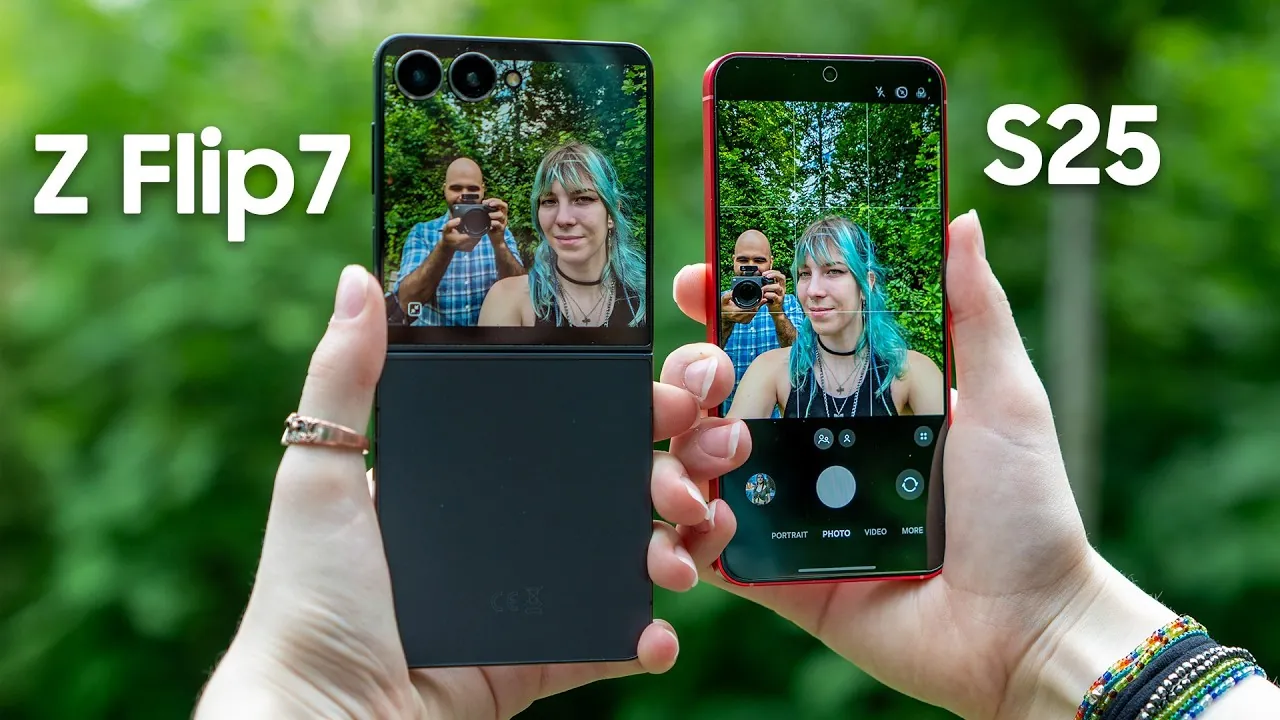
The Samsung Galaxy Z Flip 7 and Galaxy S25 showcase two distinct approaches to smartphone design and functionality. The Z Flip 7 emphasizes innovation with its foldable design and creative camera features, while the S25 focuses on durability and performance, offering a more traditional yet highly capable smartphone experience. Each device caters to specific user preferences, presenting unique advantages and trade-offs. The video below from Techmo gives us more details on the handsets and how they compare.

Design and Display: Innovation Meets Practicality
The Galaxy Z Flip 7’s foldable design is its standout feature. When folded, its compact 4.1-inch cover screen provides quick access to notifications, widgets, and essential functions. Unfolding the device reveals a 6.9-inch AMOLED display, delivering an immersive and vibrant viewing experience ideal for streaming, gaming, or multitasking. However, the foldable design introduces potential durability concerns. Despite advancements in hinge technology, the mechanism remains more susceptible to wear and dust compared to traditional designs.
On the other hand, the Galaxy S25 adopts a more conventional smartphone design, featuring a 6.2-inch AMOLED display. While smaller, it features a higher pixel density and reduced reflectivity, resulting in sharper visuals and better outdoor visibility. Its solid construction and IP68 water and dust resistance make it a reliable choice for users prioritizing durability and simplicity. For those who value a rugged, no-nonsense design, the S25 stands out as a dependable option.
Camera Capabilities: Creativity or Versatility?
Camera performance is a key differentiator between these two devices. The Galaxy S25 is equipped with a versatile triple-camera system, including a 50 MP main sensor, a telephoto lens for optical zoom, and an ultrawide lens for expansive shots. This setup excels in low-light photography, zoom scenarios, and capturing intricate details, making it an excellent choice for photography enthusiasts.
In contrast, the Z Flip 7 features a dual-camera system without a telephoto lens. However, its foldable design enables creative use of the main camera as a selfie camera via the cover screen, a feature that appeals to content creators and vloggers. While both devices deliver high-quality images, the S25’s ultrawide and telephoto lenses provide greater versatility and superior performance in challenging lighting conditions. For users seeking professional-grade photography, the S25 offers a more comprehensive solution.
Performance and Heat Management
Both devices are powered by the latest Exynos 2500 and Snapdragon 8 Gen 3 chipsets, making sure fast and responsive performance for everyday tasks and demanding applications. However, the Galaxy S25 consistently outperforms the Z Flip 7 in benchmark tests, particularly in multi-core processing. Its traditional design allows for better heat dissipation, making it more reliable during intensive tasks such as gaming, video editing, or prolonged multitasking.
The Z Flip 7’s compact foldable design, while innovative, presents challenges in heat management. During resource-intensive applications, the device tends to run hotter, which may impact performance over extended periods. For users who prioritize sustained performance and reliability, the S25 is the more dependable choice.
Battery Life and Efficiency
Battery life is another area where these devices differ. The Galaxy Z Flip 7 features a 4300 mAh battery, which outlasts the S25’s 4000 mAh battery in standardized tests. This advantage is largely due to optimizations in power efficiency, allowing the Z Flip 7 to deliver longer usage times despite its foldable design.
The S25, while equipped with a slightly smaller battery, provides reliable day-to-day performance. Its adaptive power-saving features ensure consistent battery life for most users, though heavy users may find the Z Flip 7’s extended battery life more appealing. For those who prioritize efficiency and longevity, the Z Flip 7 offers a slight edge.
Software and Features: Shared Strengths
Both devices run Samsung’s OneUI 8, offering a seamless and user-friendly interface. This latest version introduces refined gestures, enhanced customization options, and improved multitasking capabilities. Features like Samsung DeX, which transforms your smartphone into a desktop-like interface, are supported on both models, catering to productivity-focused users.
AI-powered tools such as Circle to Search and AI Select are also available on both devices. These features streamline tasks like object recognition, image editing, and text extraction, enhancing the overall user experience. Regardless of the model, users can expect a robust software ecosystem that complements the hardware.
Target Audience: Innovation or Reliability?
The Galaxy Z Flip 7 is designed for users who value creativity and innovation. Its foldable design, unique camera functionality, and compact form factor make it particularly appealing to younger audiences, content creators, and those who prioritize style and novelty.
In contrast, the Galaxy S25 is tailored for users who prioritize durability, performance, and versatility. Its traditional design, robust construction, and advanced camera system make it a reliable choice for professionals, photography enthusiasts, and anyone seeking a dependable daily driver. Each device reflects Samsung’s commitment to catering to diverse user needs, making sure there’s a suitable option for every type of user.
Below are more guides on the Samsung Galaxy Z Flip 7 from our extensive range of articles.
- Samsung Galaxy Z Flip 7: Features, Specs, and More
- Samsung Galaxy Z Flip 7: The Top 7 Features Revealed
- Everything You Need to Know About the Samsung Galaxy Z Flip 7
- Samsung Galaxy Z Flip 7: Features, Specs, and Release Date
- Samsung Galaxy Z Flip 7: Top Features and Upgrades
Source & Image Credit: Techmo
Disclosure: Some of our articles include affiliate links. If you buy something through one of these links, Geeky Gadgets may earn an affiliate commission. Learn about our Disclosure Policy.
