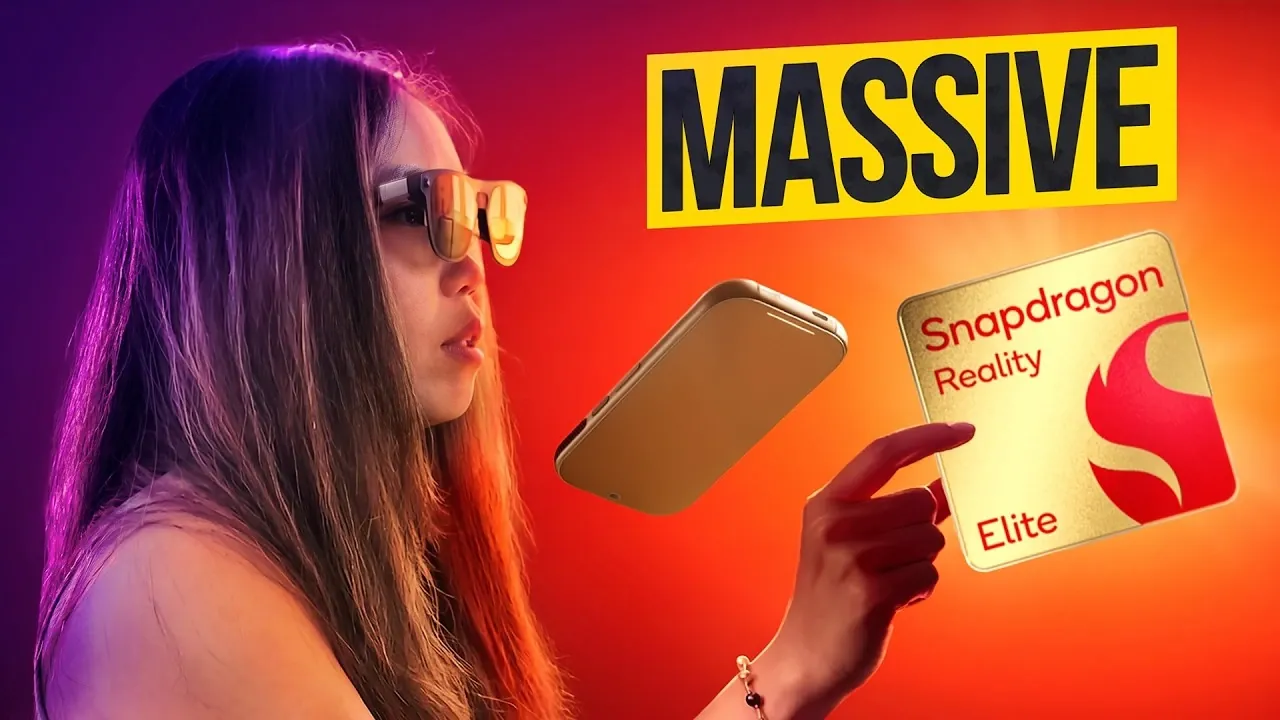
Qualcomm’s Snapdragon Reality Elite chip brings notable advancements to Extended Reality (XR) hardware. With a 60% improvement in graphics processing and a 30% boost in CPU performance, it enhances both visual quality and operational speed for devices like VR headsets and AR glasses. Cas and Chary XR explain how the chip’s 160% increase in AI processing power enables real-time applications such as gesture tracking and 3D avatar creation, while also supporting lightweight designs for longer usage.
Discover how the Snapdragon Reality Elite integrates AR and VR functionalities, allowing AR devices to perform VR-level tasks and supporting mixed-reality applications like the XREAL Air. Gain insight into its local AI processing capabilities, which prioritize privacy and responsiveness and explore its potential use cases in fields such as healthcare and entertainment. This deep dive examines the technical features shaping the future of XR hardware.
A Versatile Platform for XR Devices
TL;DR Key Takeaways :
- The Snapdragon Reality Elite chip integrates VR and AR, allowing smaller, lighter and more powerful XR devices with exceptional performance and innovative AI capabilities.
- It delivers significant performance upgrades, including a 60% boost in graphics, 30% faster CPU, 4.4K resolution per eye and advanced pass-through technology for seamless AR/VR blending.
- Advanced AI integration enhances real-time applications like object recognition, gesture tracking and 3D avatar creation, improving speed, privacy and user personalization.
- The chip bridges AR and VR technologies, allowing multifunctional devices and expanding XR applications across industries like healthcare, education and entertainment.
- Challenges such as thermal management and full utilization of the chip’s capabilities remain, but the Snapdragon Reality Elite sets a new standard for immersive technology innovation.
The Snapdragon Reality Elite chip is engineered to support a wide spectrum of XR devices, including VR headsets, AR glasses and compute pucks. Its adaptability enables manufacturers to create sleek, portable designs without compromising on performance. Whether users are exploring virtual environments or overlaying digital elements onto the physical world, this chip ensures smooth and reliable functionality across platforms. Key advantages of the Snapdragon Reality Elite include:
- Support for lightweight, ergonomic device designs
- Enhanced portability paired with robust performance
- Seamless compatibility across AR and VR ecosystems
This versatility not only broadens the scope of XR applications but also enhances user experiences by delivering consistent performance across diverse devices.
Performance Enhancements for Immersive Experiences
The Snapdragon Reality Elite chip introduces significant performance upgrades, making it a cornerstone for next-generation XR experiences. Its capabilities include:
- A 60% boost in graphics processing for smoother and more detailed visuals
- A 30% increase in CPU performance for faster and more efficient operations
- 4.4K resolution per eye, delivering stunning visual clarity
- Advanced pass-through technology for seamless blending of AR and VR
These improvements are critical for applications ranging from immersive gaming to professional simulations. Additionally, the chip’s neural engine offers a 160% increase in AI processing power, allowing real-time features such as object recognition, gesture tracking and 3D avatar creation. This combination of enhanced graphics, processing and AI capabilities ensures that XR devices powered by the Snapdragon Reality Elite deliver lifelike visuals and responsive interactions.

Browse through more resources below from our in-depth content covering more areas on Snapdragon.
- Samsung Galaxy Watch 9 Leaks: New 3nm Snapdragon Chip Could Finally Solve Battery Life
- Snapdragon 8 Gen 6 Pro: The 2nm Powerhouse Inside the Samsung Galaxy S27 Ultra
- Unboxing the $1,899 Razr Fold: Is Motorola’s First Large Foldable Worth the Premium?
- Snapdragon 8 Gen 3 mobile games emulation performance tested
- Benchmark Showdown: Snapdragon 8 Elite Gen 5 vs A19 Pro vs Exynos 2600 — Who Wins?
- Galaxy Z Fold 8 Wide Listed with Snapdragon 8 Gen 5 and One UI 9
- The Android Tablet That Runs Steam Games : Lenovo Legion Tab Gen 5
- Samsung’s Galaxy Watch 9 and Ultra 2 Just Leaked Months Early
- Samsung Galaxy S27 Ultra: Is the Snapdragon 8 Elite Gen 6 Pro Confirmed?
- Samsung Galaxy Tab S12+: Why the 10,500mAh Battery Upgrade Changes Everything
AI Integration: The Core of Innovation
A defining feature of the Snapdragon Reality Elite is its advanced AI integration, which processes tasks locally rather than relying on cloud connectivity. This approach enhances both speed and privacy, allowing a range of real-time applications, such as:
- Object and text recognition for practical and educational uses
- 3D model and avatar generation for immersive interactions
- Personalized AI assistants that adapt to user preferences
By reducing latency and improving responsiveness, local AI processing allows for more intuitive and personalized XR experiences. This innovation not only enhances device functionality but also paves the way for new possibilities in how users interact with digital environments.
Bridging the Gap Between AR and VR
The Snapdragon Reality Elite chip is driving the convergence of AR and VR technologies, blurring the lines between these traditionally distinct experiences. While AR glasses have historically been limited to overlaying information and VR headsets have focused on immersive environments, this chip enables AR devices to perform tasks once exclusive to VR, such as gaming and workspace extension. Examples of this convergence include:
- The XREAL Air, which combines a lightweight design with multifunctional capabilities
- Play for Dream’s MR device, showcasing the chip’s adaptability across mixed reality platforms
This blending of AR and VR capabilities expands the potential applications of XR technology, making it more accessible and versatile for both personal and professional use.
Transforming Industries Through XR
Qualcomm’s Snapdragon platform already powers the majority of XR devices and the Reality Elite chip further cements the company’s role as a driving force in immersive technology. By allowing manufacturers to create compact yet powerful devices, Qualcomm is shaping the future of XR across various industries. The chip’s impact extends beyond hardware, influencing how XR is utilized in sectors such as:
- Healthcare, for advanced training, diagnostics and simulations
- Education, for interactive and engaging learning experiences
- Entertainment, for more immersive gaming, storytelling and media consumption
These applications demonstrate the fantastic potential of XR technology, powered by the Snapdragon Reality Elite, to enhance productivity, creativity and engagement across multiple domains.
Future Directions and Challenges
The Snapdragon Reality Elite chip hints at a future where XR devices could operate independently of traditional apps, generating tools and solutions on demand through local AI processing. This shift could simplify user experiences and unlock new possibilities for XR technology, making it more intuitive and accessible. However, several challenges remain:
- Managing thermal performance to maintain efficiency in compact devices
- Making sure manufacturers fully use the chip’s advanced capabilities
Addressing these challenges will be crucial for maximizing the chip’s potential and making sure its long-term success in the rapidly evolving XR industry.
Driving the Future of Immersive Technology
The Snapdragon Reality Elite chip represents a significant leap forward in XR technology. Its enhanced performance, advanced AI integration and ability to unify AR and VR experiences highlight its potential to reshape the immersive technology landscape. Qualcomm’s leadership in this space underscores the importance of this innovation in driving the evolution of XR devices and applications. As the industry continues to grow, the Snapdragon Reality Elite sets a new benchmark for what XR technology can achieve, paving the way for a more connected and immersive future.
Media Credit: Cas and Chary XR
Disclosure: Some of our articles include affiliate links. If you buy something through one of these links, Geeky Gadgets may earn an affiliate commission. Learn about our Disclosure Policy.
