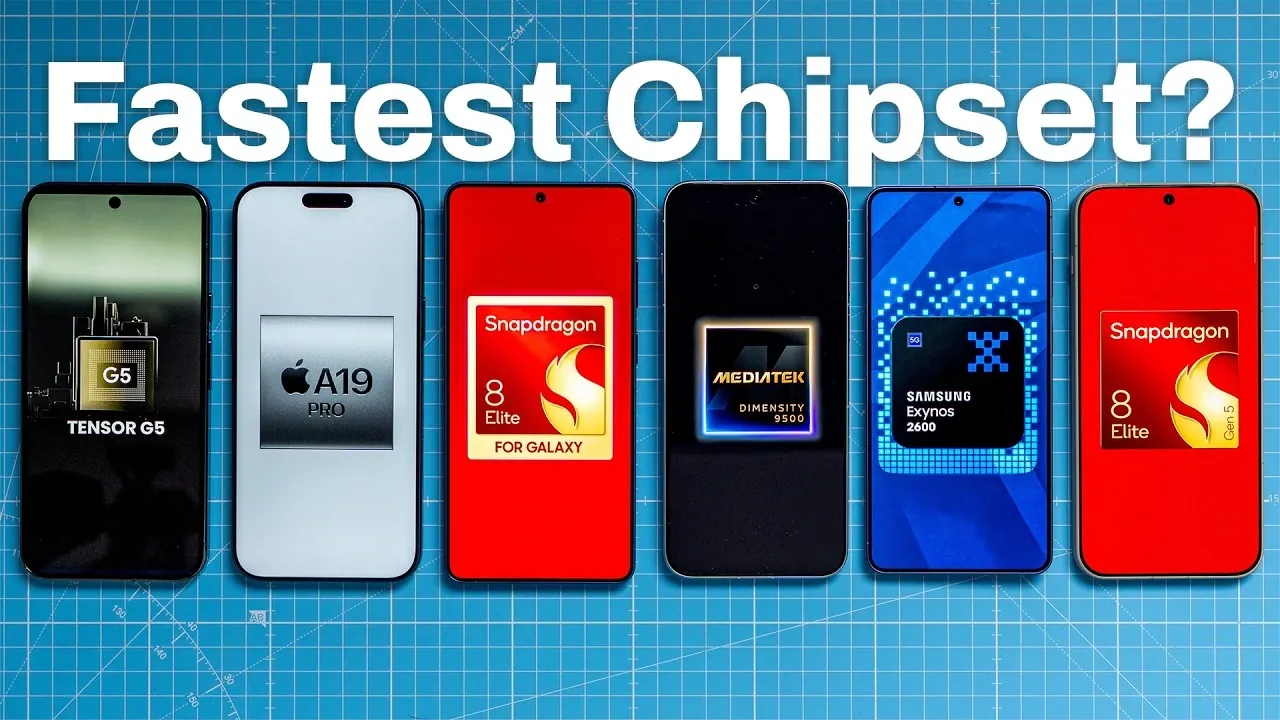
Choosing the right processor is a crucial factor when selecting a flagship smartphone. The chipset directly impacts performance, efficiency, and overall user experience, especially for demanding tasks like 4K video editing, gaming, and multitasking. This comparison evaluates the latest processors, MediaTek Dimensity 9500, Snapdragon 8 Elite Gen 5 (standard and Galaxy Edition), Apple A19 Pro, Exynos 2600, and Tensor G5, across key performance metrics. The results highlight the MediaTek Dimensity 9500 as the most well-rounded performer, while the Tensor G5 struggles to keep up with its competitors. The video below from TechMo gives us more details about how the processors perform.

4K Video Export: Speed Matters
Video export speed is a practical indicator of real-world performance. The MediaTek Dimensity 9500 emerged as the fastest processor, completing a 4K video export in just 1 minute and 34 seconds. Apple’s A19 Pro followed closely, finishing the task in 1 minute and 40 seconds, showcasing its efficiency in creative workloads. The Snapdragon 8 Elite Gen 5 variants also delivered competitive results, reinforcing their reputation for high performance. However, the Tensor G5 lagged significantly, taking 3 minutes and 5 seconds to complete the same task. This stark difference highlights the performance gap between top-tier processors and Google’s offering, making the Tensor G5 less suitable for users with demanding video editing needs.
Temperature Management: Keeping Cool Under Pressure
Effective temperature management is essential for maintaining consistent performance and user comfort during intensive tasks. The Apple A19 Pro excelled in this category, keeping its screen temperature at a cool 28°C under load. Android devices powered by the Snapdragon 8 Elite Gen 5 and MediaTek Dimensity 9500 also performed well, with temperatures ranging between 32°C and 34°C, making sure stable performance without overheating. In contrast, the Exynos 2600 and Tensor G5 struggled to manage heat effectively, with higher temperatures that could lead to throttling and reduced performance over extended use. This disparity underscores the importance of thermal efficiency in modern processors.
Benchmark Results: Performance Insights
Benchmark scores provide a standardized way to measure processor performance. In Geekbench tests, the Apple A19 Pro led in single-core performance, showcasing its strength in tasks requiring high per-core efficiency. The Snapdragon 8 Elite Gen 5 Galaxy Edition dominated in multi-core performance, making it an excellent choice for multitasking and parallel workloads. The MediaTek Dimensity 9500 delivered competitive results in both single-core and multi-core tests, demonstrating its versatility. However, the Exynos 2600 and Tensor G5 fell short, particularly in multi-core performance, highlighting their limitations in handling demanding workloads. These results reflect the growing divide between processors manufactured by TSMC and those produced by Samsung Foundry, with TSMC-based chipsets consistently outperforming their rivals.
Gaming Performance: Frame Rates and Stability
Gaming performance is a critical factor for many users and smooth frame rates with minimal stuttering are essential for an enjoyable experience. The MediaTek Dimensity 9500 topped the charts in the Wildlife Extreme Test, rendering 7,163 frames with ease. The Snapdragon 8 Elite Gen 5, in both its standard and Galaxy Edition variants, followed closely, delivering a seamless gaming experience with high frame rate stability. The Exynos 2600 outperformed the A19 Pro and Tensor G5, but it still lagged behind the top performers. The Tensor G5, in particular, struggled with frame rate consistency, making it less suitable for graphically demanding games. These results highlight the importance of GPU performance and optimization in modern processors, with the Dimensity 9500 setting a high standard for gaming enthusiasts.
Antutu Benchmark: Comprehensive Performance
Antutu scores provide a holistic evaluation of a processor’s capabilities, including CPU, GPU, memory and user experience. Devices powered by the Snapdragon 8 Elite Gen 5, such as the OnePlus 12 and Vivo X300 Pro, achieved the highest scores, with the Galaxy S26 Ultra also performing admirably. The MediaTek Dimensity 9500 secured a strong position, reinforcing its status as a top-tier chipset. However, the Exynos 2600 and Tensor G5 lagged behind, further emphasizing their struggles in both synthetic benchmarks and real-world tasks. These results confirm the dominance of TSMC-manufactured processors in delivering superior performance and efficiency.
Overall Rankings: The Verdict
After evaluating performance across all categories, the MediaTek Dimensity 9500 emerged as the most well-rounded processor, achieving a score of 94/100. The Snapdragon 8 Elite Gen 5 (91.7/100) and its Galaxy Edition variant (91/100) followed closely, showcasing their power and versatility for Android users. Apple’s A19 Pro scored 89/100, excelling in single-core performance and thermal efficiency, making it an excellent choice for sustained workloads. The Exynos 2600 (84/100) and Tensor G5 (51/100) fell short, highlighting their limitations in both benchmarks and real-world scenarios.
Key Takeaways
- The MediaTek Dimensity 9500 consistently excelled across all tests, making it the most balanced and high-performing processor in this comparison.
- Snapdragon 8 Elite Gen 5 variants demonstrated exceptional multi-core performance and gaming capabilities, solidifying their position as top choices for Android users.
- Apple’s A19 Pro impressed with its single-core performance and superior thermal efficiency, making it ideal for sustained workloads.
- The Exynos 2600 struggled to compete, particularly in benchmarks and gaming, where it lagged behind its peers.
- The Tensor G5 delivered underwhelming results across the board, highlighting the need for significant improvements in future iterations.
- Chipsets manufactured by TSMC, such as the MediaTek Dimensity 9500 and Snapdragon 8 Elite Gen 5, showcased superior efficiency compared to Samsung-manufactured alternatives like the Exynos 2600.
Source & Image Credit: Techmo
Disclosure: Some of our articles include affiliate links. If you buy something through one of these links, Geeky Gadgets may earn an affiliate commission. Learn about our Disclosure Policy.
