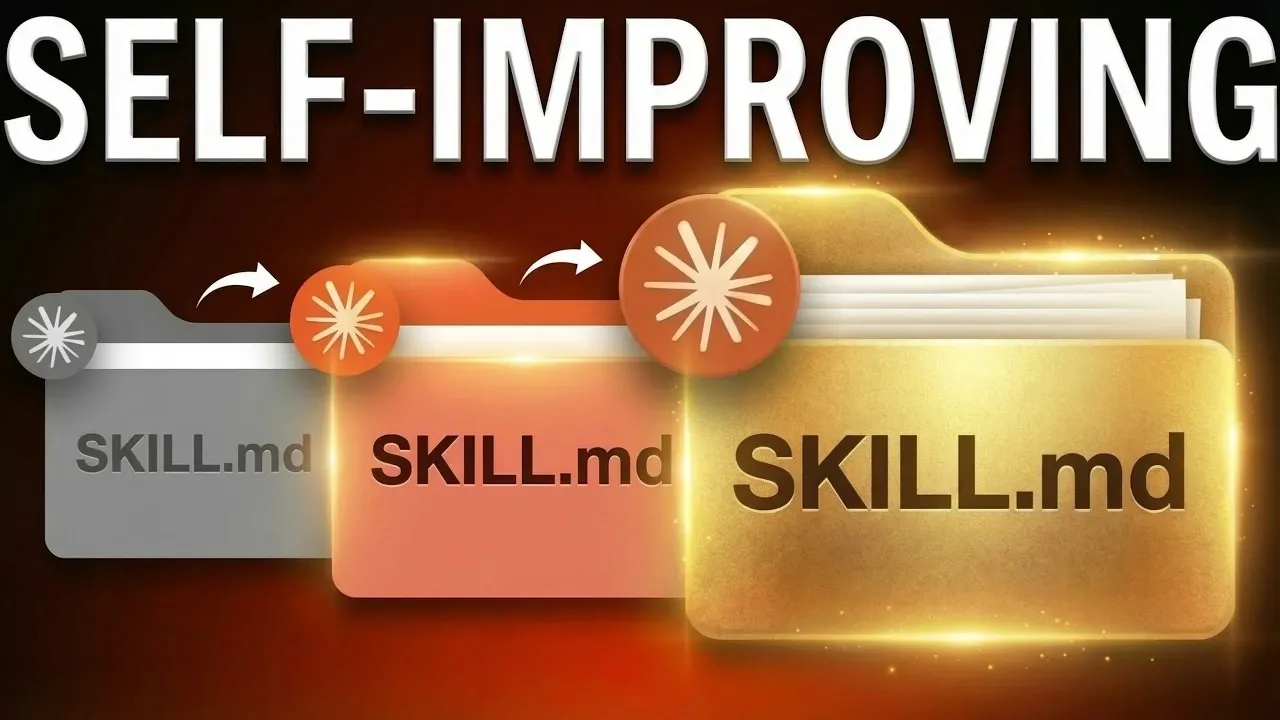
Building self-improving AI skills in Claude Code involves using an autonomous iterative loop to refine performance over time. Simon Scrapes introduces this concept through the lens of Andrej Karpathy’s “auto-research” framework, which emphasizes structured, data-driven improvement. The process begins with testing specific skills, analyzing results against predefined metrics and refining outputs based on measurable success. For example, binary assertions like word count accuracy or adherence to sentence structures provide clear benchmarks for improvement. This approach minimizes manual intervention while making sure consistent progress in skill development.
Learn how to structure YAML descriptions for precise task execution, implement binary assertions to evaluate output quality and automate iterative loops for continuous refinement. You’ll also gain insight into addressing limitations, such as balancing automated processes with human oversight for subjective tasks. Whether you’re optimizing technical outputs or creative content, this guide offers actionable steps to help you build adaptable, high-performing AI systems.
Self-Improving AI Framework
TL;DR Key Takeaways :
- Self-improving AI skills in Claude Code use an autonomous iterative loop inspired by Andrej Karpathy’s “auto-research” framework, allowing continuous testing, evaluation and refinement with minimal human intervention.
- The auto-research framework operates through a structured process of testing, analyzing and refining AI outputs based on predefined metrics, making sure systematic and measurable improvements over time.
- Refining YAML skill descriptions and using binary assertions (true/false checks) are key to enhancing task execution and output quality, making sure clarity, precision and alignment with user-defined standards.
- Automating the self-improvement process through tools like `eval.json` files and iterative loops reduces manual oversight, streamlines development and improves AI performance across complex tasks.
- While automated processes excel at structural improvements, human oversight remains essential for subjective aspects like tone, creativity and contextual accuracy, making sure a balanced approach to AI refinement.
Understanding Karpathy’s Auto-Research Framework
At the core of this approach lies the auto-research framework, a system that allows AI to autonomously assess its performance using predefined metrics. This framework operates through a structured, three-step process:
- Testing: The AI performs a specific skill and generates outputs for evaluation.
- Analyzing: The results are measured against predefined metrics to determine success or failure.
- Refining: If the changes lead to measurable improvements, they are retained; otherwise, they are reverted.
This iterative loop runs continuously, allowing the AI to optimize itself until it achieves the desired performance or is manually interrupted. The framework ensures systematic, data-driven improvements, making it a reliable tool for advancing AI capabilities.
Applying the Framework to Claude Code Skills
Claude Code skills can be enhanced by integrating this iterative process into their development. The foundation of this process lies in structured files, such as `program.md`, YAML descriptions and training scripts. These elements work together to define and refine the AI’s abilities. Binary assertions—simple true or false checks, are used to evaluate outputs objectively. For example, you might assess:
- Accuracy of word count in generated text.
- Adherence to specific sentence structures.
- Compliance with predefined rules or guidelines.
These assertions provide a clear and measurable basis for improvement, making sure the AI evolves in a consistent and reliable manner. By automating this process, you can reduce manual oversight while maintaining high standards of performance.

Enhance your knowledge on Claude Code Skills by exploring a selection of articles and guides on the subject.
- Claude Code Skills 2.0 : Workflow Skills vs Capability Uplift Skills
- How Claude Code Combines SEO & Storytelling for Better Content
- Claude Code Workflow for Faster PRs, Tests, and Parallel Tasks
- Claude Skills Guide for Coding, Business, and Content Workflows
- Claude Code Agent Teams Workflows for Large Projects in 2026
- The Complete Guide to Creating and Sharing Claude Skills
- Claude Skills: A New Way to Customize AI to Your Exact Requirements
- Claude Skills : AI CustomizationTips, Tools & Practical Examples
- How Claude Skills Are Already Transforming AI Workflows
- Claude Code Skills Best Practices: Why 20–30 Beats 1,000
Refining Skill Descriptions for Better Task Execution
Skill descriptions play a critical role in how effectively the AI interprets and executes tasks. Refining YAML descriptions through iterative testing is essential for improving the AI’s understanding of its objectives. This process involves:
- Testing the descriptions against specific tasks to identify gaps or ambiguities.
- Adjusting phrasing or parameters to better align with desired outcomes.
- Repeating the iterative loop until the descriptions achieve optimal clarity and accuracy.
By making sure that skill descriptions are precise and unambiguous, you enhance the AI’s ability to activate and execute tasks effectively. This refinement process is particularly valuable for complex or nuanced tasks where clarity is paramount.
Improving Output Quality Through Iterative Refinement
Output quality is a key focus area when developing self-improving Claude Code skills. By defining user-specific metrics, such as adherence to structural guidelines or persuasive techniques, you can evaluate and refine the AI’s outputs. The iterative loop addresses failed assertions and continues refining until the outputs meet the desired criteria. This ensures:
- Consistency in the quality of generated outputs.
- Alignment with user expectations and requirements.
- Improved reliability in task execution across various applications.
This process is especially useful for tasks requiring precision, such as technical writing, data analysis, or creative content generation. By focusing on measurable improvements, you can ensure that the AI delivers high-quality results tailored to specific needs.
Steps to Implement the Self-Improvement Process
To set up a self-improvement system for Claude Code skills, follow these steps:
- Create an `eval` folder containing an `eval.json` file with binary assertions to test skill outputs.
- Use prompts to test the AI’s skills against these assertions and refine the `skill.md` file based on the results.
- Automate the iterative loop to run continuously, logging changes and tracking improvements over time.
This setup allows the AI to self-improve with minimal manual intervention, streamlining the development process and saving time. By automating the evaluation and refinement process, you can focus on higher-level tasks while the AI handles routine optimizations.
Addressing Limitations of the Approach
While binary assertions are highly effective for structural and format-based improvements, they are less suited for addressing subjective elements such as tone, creativity, or contextual accuracy. Human judgment remains essential for:
- Evaluating qualitative aspects of the AI’s outputs, such as emotional tone or narrative flow.
- Fine-tuning skills for tasks that require nuanced understanding or creativity.
- Making sure outputs align with broader goals, user preferences, or brand guidelines.
This limitation highlights the importance of combining automated processes with human oversight. By balancing these two approaches, you can achieve optimal results while using the strengths of both automation and human expertise.
Practical Example: Enhancing a Marketing Copywriting Skill
A marketing copywriting skill provides a practical example of this approach in action. Using binary assertions, metrics such as word count, sentence structure and adherence to persuasive techniques were tested. Initial iterations revealed inconsistencies in the outputs, which were addressed through the iterative loop. After two refinement cycles, the skill achieved a perfect score, demonstrating its ability to generate high-quality marketing content. This example illustrates how iterative loops can enhance AI skills in real-world, business-oriented scenarios.
The Two Layers of Self-Improvement
The self-improvement process operates on two distinct levels, each contributing to the AI’s overall effectiveness:
- Skill Activation Improvement: Refining YAML descriptions to improve how the AI activates and interprets tasks, making sure accurate execution.
- Output Quality Improvement: Using binary assertions and iterative loops to enhance the quality of the AI’s outputs, making sure they meet user-defined standards.
Together, these layers enable the AI to refine both its understanding of tasks and the quality of its outputs autonomously. This dual-layered approach reduces manual effort while driving continuous optimization, making it a powerful tool for advancing AI capabilities across various domains.
Media Credit: Simon Scrapes
Disclosure: Some of our articles include affiliate links. If you buy something through one of these links, Geeky Gadgets may earn an affiliate commission. Learn about our Disclosure Policy.
