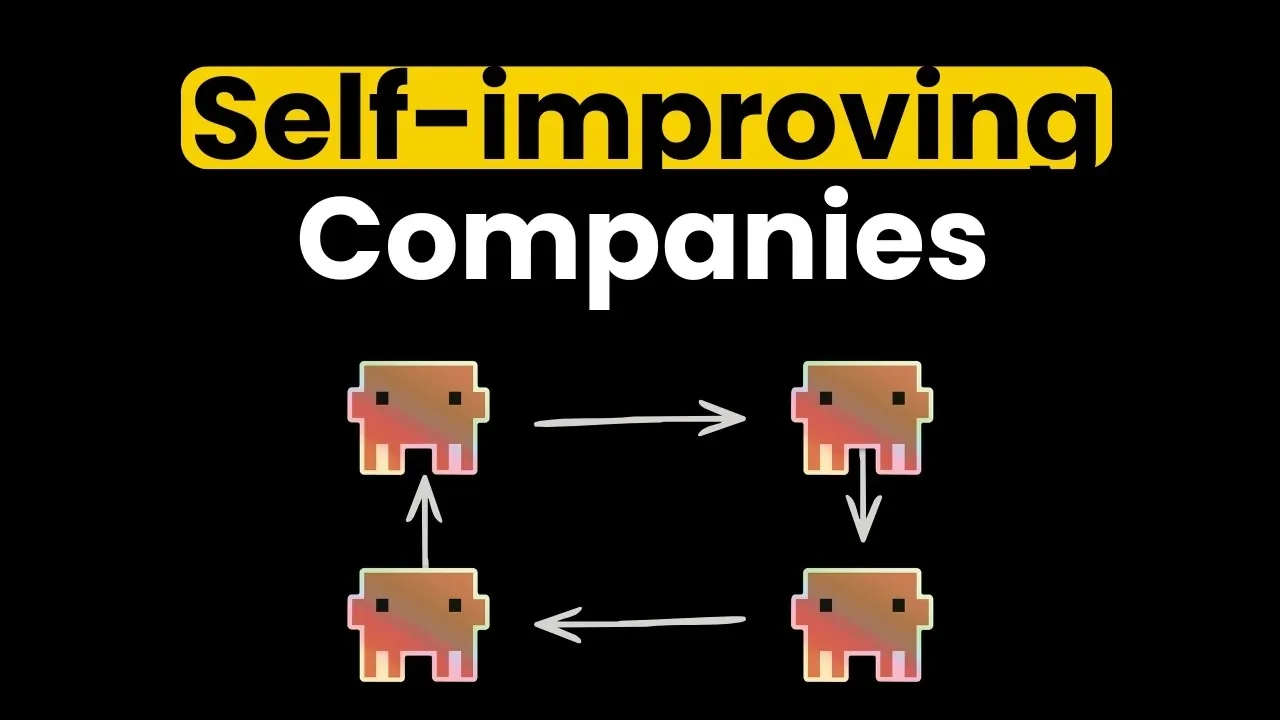
The concept of self-improving companies revolves around using AI-driven agents to automate tasks, refine processes and achieve continuous growth. As explained by AI Jason, these systems rely on components like feedback loops, memory layers and procedural learning to create workflows that evolve over time. For instance, an AI agent managing SEO might analyze keyword performance, adjust strategies based on engagement metrics and autonomously improve content relevance. This iterative approach reduces manual intervention while enhancing efficiency, making it a cornerstone for businesses aiming to stay competitive in an increasingly automated landscape.
In this guide, you’ll explore how to design and implement AI-native workflows that foster operational autonomy. Gain insight into the essential components of AI loops, such as quality gates and policy layers and understand their role in making sure consistent results. Discover practical applications across industries, from ad campaign optimization to content creation and learn how to address challenges like data complexity and system interoperability. By the end, you’ll have a clear framework for building systems that not only perform but also learn and adapt, driving long-term success.
What Are Self-Improving Companies?
TL;DR Key Takeaways :
- Self-improving companies use AI-driven agents to automate tasks, optimize workflows and enhance performance through iterative learning and feedback loops.
- Transitioning to AI-native workflows involves creating closed-loop systems where agents execute tasks, analyze results and refine strategies autonomously for continuous improvement.
- Core components of AI loops include memory layers, policy layers, quality gates and feedback mechanisms, which collectively enable learning, adaptation and operational excellence.
- Practical applications of AI loops include SEO automation, ad campaign management and content creation, driving efficiency, innovation and improved ROI across industries.
- Implementing AI-native workflows requires tools like open source platforms, plugins, agent-native APIs and cron jobs, while addressing challenges such as data complexity and system interoperability.
Self-improving companies are organizations that integrate AI agents into their operations to automate processes and refine outcomes. These agents are designed to learn from their actions, adapt their strategies and deliver progressively better results. For example, industries like digital marketing and e-commerce have embraced AI systems to manage tasks such as SEO, content creation and ad campaign optimization. The results have been remarkable, with significant improvements in efficiency and revenue generation.
The foundation of these achievements lies in workflows where AI agents operate independently while using feedback mechanisms to enhance their performance. These systems not only reduce manual intervention but also ensure that processes are continuously optimized for better outcomes.
Transitioning to AI-Native Workflows
To establish a self-improving company, transitioning from traditional, human-driven workflows to AI-native systems is essential. AI-native workflows are designed around closed-loop systems, where agents not only execute tasks but also analyze results and refine their strategies. This iterative process ensures that the system becomes increasingly effective over time.
For instance, consider SEO automation. An AI agent can research keywords, generate content and monitor performance metrics. Based on user engagement and search rankings, the agent adjusts its approach, leading to improved results with minimal human oversight. This shift not only enhances efficiency but also allows businesses to focus on strategic decision-making rather than routine tasks.

Here is a selection of other guides from our extensive library of content you may find of interest on AI business.
- How OpenAI Just Solved an 80-Year-Old Math Mystery Nobody Else Could
- DIY $8,500 Zeus Supercomputer Replaces Cloud Tools for AI Business
- Why OpenAI is Suddenly Losing the AI Race to Anthropic
- Claude Cowork vs ChatGPT Codex : Which is Actually Better for Everyday Users?
- Why Better AI Models Aren’t the Bottleneck Anymore : AI Business Opportunities
- How Paperclip Turns Claude Code Into an Entire Automated AI Company
- The best AI tools for small businesses
Core Components of AI Loops
Building effective AI loops requires the integration of several key components that enable learning, adaptation and continuous improvement:
- Memory Layer: This component acts as the agent’s knowledge repository, storing information about tasks, outcomes and procedural learnings. It enables the system to reference past experiences and make informed decisions.
- Policy Layer: The policy layer defines workflows and standard operating procedures (SOPs) that guide the agent’s actions. This ensures alignment with organizational objectives and consistency in performance.
- Quality Gates: These checkpoints evaluate the outputs of the agent, either through human oversight or automated quality checks, to maintain high standards and reliability.
- Feedback Mechanism: Feedback loops capture performance data and insights, allowing the agent to refine its processes and strategies continuously for better outcomes.
These components work together to create a robust system capable of self-improvement and operational excellence.
Practical Applications of AI Loops
AI-driven agents have the potential to transform various business functions by enhancing efficiency and effectiveness. Here are some practical applications:
- SEO Automation: AI agents can autonomously research keywords, create optimized content and adjust strategies based on performance metrics, significantly reducing manual effort and accelerating results.
- Ad Campaign Management: By analyzing performance data, testing different ad formats and iterating strategies, AI agents can optimize campaigns to achieve maximum return on investment (ROI).
- Content Creation: AI systems can generate high-quality blog posts, social media updates and other forms of content, improving relevance and engagement through iterative learning.
These applications demonstrate how AI loops can drive innovation and efficiency across diverse industries.
Tools and Techniques for Implementation
Implementing AI-native workflows requires the right tools and techniques to support the functionality of AI agents. Key resources include:
- Open source Tools: Platforms such as JBrain and Loopony provide advanced memory management systems for tracking and analyzing agent performance.
- Plugins: Specialized plugins enable seamless data integration, allowing agents to access and use information efficiently.
- Agent-Native APIs: Frameworks like the “Printing Press” API streamline communication between agents and other systems, making sure smooth interactions.
- Cron Jobs: Scheduled tasks ensure that agents execute functions consistently and monitor progress in real-time, enhancing reliability and efficiency.
By using these tools, businesses can create a solid foundation for AI-driven operations.
Challenges and Solutions
While the benefits of AI-native workflows are significant, their implementation comes with challenges. These include managing complex data structures, designing efficient APIs and making sure seamless interactions between agents and systems. Additionally, self-healing capabilities are crucial for agents to adapt to errors or incomplete data.
To overcome these challenges:
- Use advanced tools for data management and retrieval to handle complex datasets effectively.
- Design APIs that assist smooth communication between agents and other systems, making sure interoperability.
- Incorporate self-healing mechanisms to enhance resilience and adaptability, allowing agents to recover from errors autonomously.
By addressing these challenges strategically, businesses can unlock the full potential of AI-native workflows.
Case Studies and Success Stories
Real-world examples illustrate the fantastic impact of AI-native workflows. For instance:
- A digital marketing agency implemented AI-driven SEO automation, resulting in a 40% increase in organic traffic within six months.
- An e-commerce platform utilized AI agents to optimize ad campaigns, reducing customer acquisition costs by 25% while improving overall ROI.
These success stories highlight how AI loops can drive growth, efficiency and competitive advantage across industries.
The Future of Self-Improving Companies
As AI technologies continue to advance, the scope of self-improving systems will expand across various domains. From supply chain management to customer service, AI loops have the potential to transform business operations. By staying ahead of technological trends and adopting innovative tools, companies can position themselves as leaders in their respective industries.
Building a self-improving company requires a strategic approach to integrating AI-driven agents, memory layers and feedback loops. By using these technologies, businesses can create systems that not only perform tasks but also learn and adapt, making sure sustained growth and operational excellence.
Media Credit: AI Jason
Disclosure: Some of our articles include affiliate links. If you buy something through one of these links, Geeky Gadgets may earn an affiliate commission. Learn about our Disclosure Policy.
