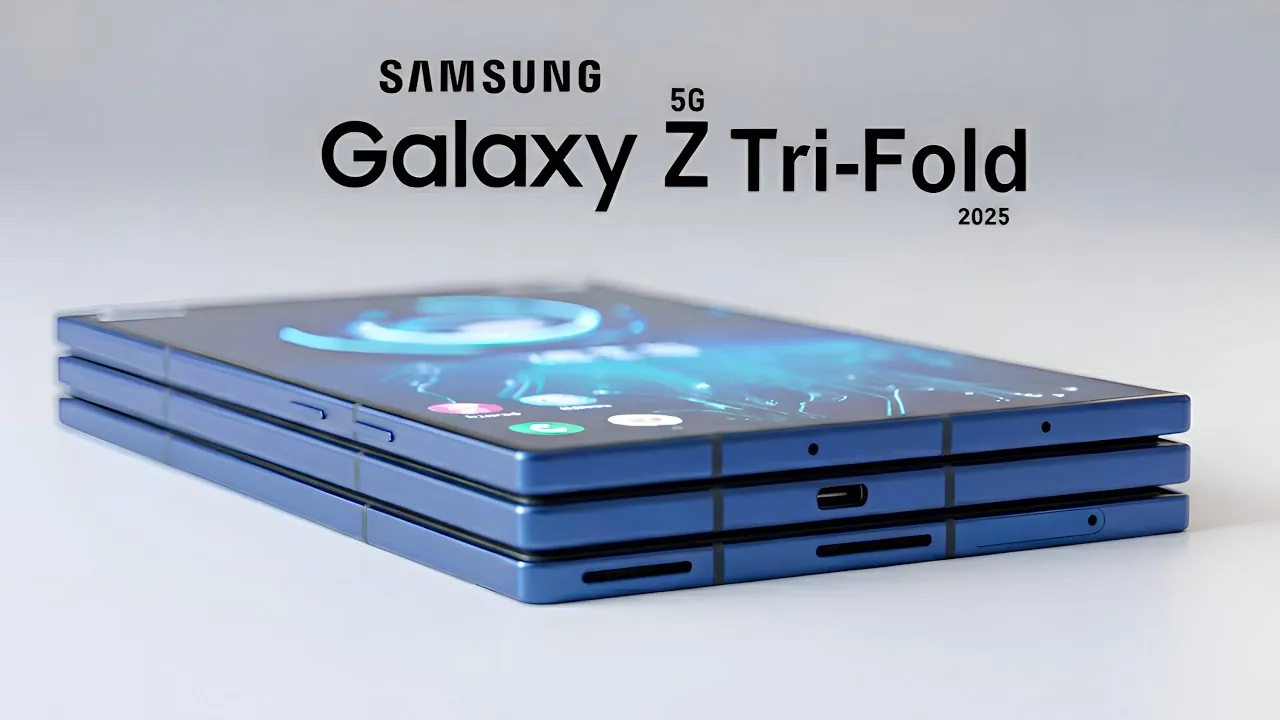
Samsung continues to push the boundaries of mobile technology with the Galaxy Trifold, a prototype that introduces an innovative three-screen folding design. This ambitious device combines advanced engineering with a bold vision for the future of smartphones. While its limited availability and premium price point may restrict its audience, the Galaxy Trifold serves as a significant milestone in foldable technology. Here’s an in-depth look at what this device offers and how it could influence the evolution of mobile devices.

A Three-Screen Design That Stands Out
The Galaxy Trifold represents Samsung’s most advanced foldable design to date, featuring a unique combination of folding and flipping mechanisms. This innovative approach allows the device to transition seamlessly between a compact smartphone form and a tablet-like display. The result is an immersive viewing experience and enhanced multitasking capabilities, catering to both productivity and entertainment needs.
For users, this design offers unparalleled versatility. You can use the device as a standard smartphone for everyday tasks or unfold it to enjoy a larger screen for activities like video streaming, gaming, or working on multiple applications simultaneously. However, this innovative design comes with certain trade-offs. The inclusion of three screens and advanced hinge technology increases the device’s thickness and weight, potentially impacting its portability and ease of use in daily life.
The engineering complexity behind the Trifold’s design also raises questions about durability. Foldable devices are inherently more prone to wear and tear, and the addition of multiple folding mechanisms could amplify these concerns. Samsung’s ability to address these challenges will be critical to the device’s long-term success.
Limited Availability in Select Regions
If you’re eager to experience the Galaxy Trifold, its availability may pose a significant challenge. Samsung has announced plans to release the device in a limited number of regions, including South Korea, China, Taiwan, Singapore, and possibly the UAE. Major markets such as the United States, Europe, and India are unlikely to see the device on store shelves in the near future.
This selective rollout reflects Samsung’s strategic approach to introducing new technology. By targeting specific regions, the company can gather valuable user feedback and address potential issues before considering a broader release. For consumers outside these regions, the Galaxy Trifold will remain an elusive product, accessible only to a niche audience.
This cautious strategy also highlights the experimental nature of the device. Samsung appears to be using the Trifold as a testing ground for advanced foldable technology, prioritizing refinement over immediate mass-market adoption. For you, this means the Galaxy Trifold is less about widespread availability and more about exploring the possibilities of what foldable devices can achieve.
A Prototype Testing the Waters
The Galaxy Trifold is more than just a product; it’s a prototype designed to test the limits of foldable technology. Samsung has a history of using limited releases to refine its innovations, as demonstrated with the original Galaxy Fold. By restricting the availability of the Trifold, the company can closely monitor user experiences, identify potential design flaws, and improve its technology for future iterations.
For consumers, this means the Galaxy Trifold is not necessarily intended for immediate adoption. Instead, it serves as a glimpse into the future of mobile devices. The insights gained from this prototype will likely influence the development of more practical, durable, and affordable foldable devices in the years to come.
Samsung’s approach underscores the importance of iterative development in the tech industry. By introducing the Trifold as a prototype, the company can experiment with new ideas and gather real-world data without committing to a full-scale launch. This strategy allows Samsung to stay at the forefront of innovation while minimizing the risks associated with untested technology.
Engineering Complexity and High Costs
The Galaxy Trifold’s sophisticated design comes with significant engineering challenges. The intricate folding and flipping mechanisms require a high degree of precision to ensure both durability and functionality. Additionally, the inclusion of three screens and advanced hinge technology adds to the device’s bulk and weight, making it less portable than traditional smartphones.
Manufacturing such a complex device is also an expensive endeavor. Early estimates suggest that the Galaxy Trifold could cost more than a high-end gaming laptop, placing it firmly in the luxury category. For most consumers, this price point will likely be a barrier, limiting the device’s appeal to early adopters and tech enthusiasts who are willing to invest in innovative technology.
The high cost of production also raises questions about the scalability of foldable devices. While the Trifold showcases what’s possible, its price tag highlights the challenges of bringing advanced technology to a broader audience. For you, this means that foldable devices may remain a niche product until manufacturers can find ways to reduce costs without compromising quality.
What This Means for the Future of Foldable Technology
The Galaxy Trifold represents a bold step forward in the evolution of foldable smartphones. While it may not achieve mass-market success in its current form, it serves as a critical testing ground for advanced technology. The insights gained from this prototype will likely pave the way for more refined, affordable, and accessible foldable devices in the future.
For consumers, this signals the potential for foldable technology to become more mainstream as manufacturers address current limitations such as weight, durability, and cost. The Galaxy Trifold is a bold experiment, but its true value lies in the advancements it could inspire. As the technology matures, you can expect to see foldable devices that are not only more practical but also more affordable, making them accessible to a wider audience.
Samsung’s commitment to innovation ensures that the lessons learned from the Trifold will influence the next generation of mobile devices. Whether or not you have the opportunity to experience the Galaxy Trifold firsthand, its impact on the industry is undeniable. This device is a testament to the potential of foldable technology and a glimpse into the future of mobile innovation.
Find more information on Foldable smartphone technology by browsing our extensive range of articles, guides, and tutorials.
- Samsung Galaxy Z Fold 8 Features, Specs, and Release Date
- Samsung Galaxy Z Roll and Tri-Fold: Next-Gen Foldable Phones
- Samsung Galaxy Z Tri-Fold Price, Features, and Release Date
- Samsung Galaxy Z Tri-Fold: Specs, Design Leaks, and Why It Could
- Google Pixel 10 Pro Fold Rumors: Price, Features, and More
Source & Image Credit: Demon’s Tech
Disclosure: Some of our articles include affiliate links. If you buy something through one of these links, Geeky Gadgets may earn an affiliate commission. Learn about our Disclosure Policy.
