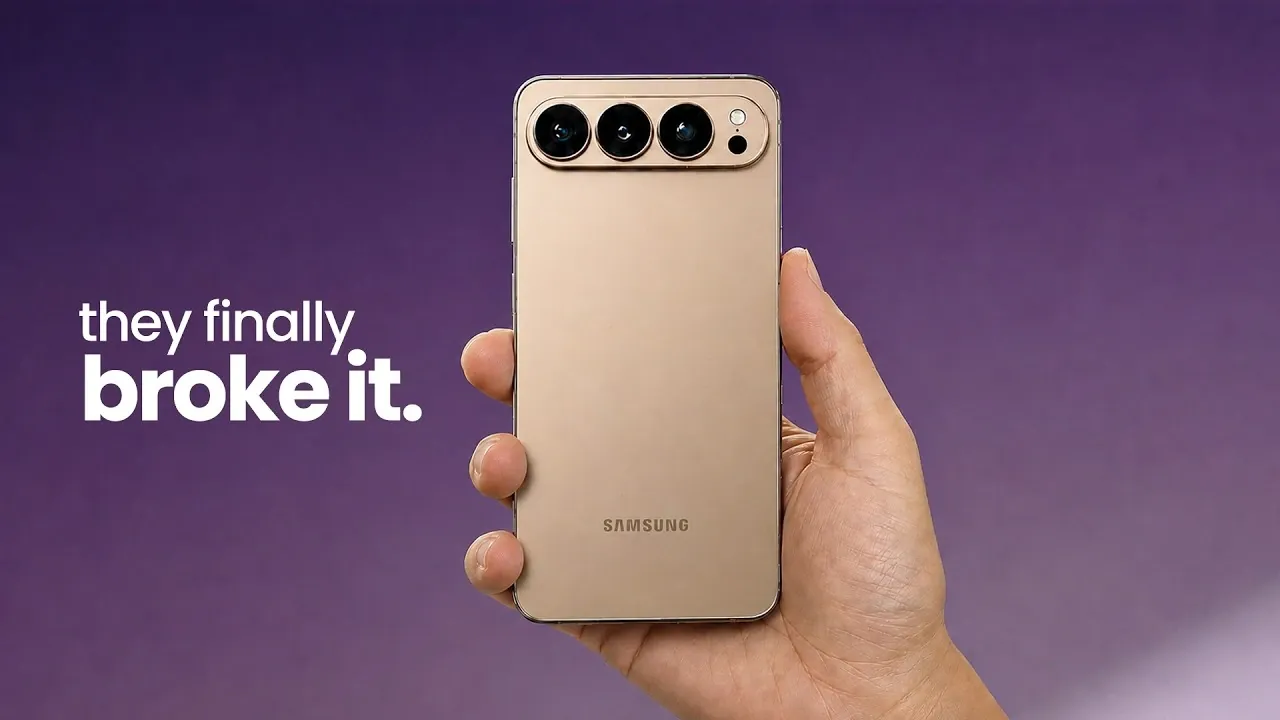
Samsung’s Galaxy S27 series marks a pivotal moment in the evolution of its flagship smartphone lineup. By splitting the series into distinct categories, Samsung aims to cater to a broader audience while maintaining its reputation for innovation. The Galaxy S27 Pro emerges as a compact yet feature-rich alternative to the Ultra, while the base Galaxy S27 adopts a more cost-conscious approach. This strategic shift reflects Samsung’s efforts to balance premium features with affordability, but it also raises questions about the long-term identity of its flagship devices. The video below from Techtics gives us more details about the handset.

Galaxy S27 Pro: Compact Powerhouse
The Galaxy S27 Pro is designed to bridge the gap between the base model and the Ultra, offering a premium experience in a smaller, more portable form factor. It combines innovative technology with a streamlined design, making it an attractive option for users seeking high-end features without the bulk of larger devices. Key highlights of the S27 Pro include:
- Privacy Display Technology: First introduced in the Galaxy S26 Ultra, this innovative feature allows users to toggle between standard and privacy modes. This ensures that sensitive information remains visible only to the user, enhancing security in public spaces.
- Advanced Camera System: The S27 Pro features a 200 MP main sensor, a 50 MP ultrawide camera, and a 50 MP telephoto lens with 3.5x zoom. These specifications deliver exceptional imaging capabilities, rivaling those of the Ultra model.
Despite its impressive features, the S27 Pro does not include the S Pen, a hallmark of Samsung’s Ultra models. This omission positions the Pro as a premium yet simplified option for users who prioritize portability and performance over the full Ultra experience. While the absence of the S Pen may deter some power users, the S27 Pro’s compact design and robust feature set make it a compelling choice for many.
Galaxy S27: A Budget-Friendly Flagship
The base Galaxy S27 represents a departure from Samsung’s traditional flagship ethos, focusing on affordability without entirely sacrificing quality. This model is designed to appeal to budget-conscious consumers, but it comes with notable compromises. Key changes in the base S27 include:
- Display Technology: For the first time in 16 years, Samsung has opted to use BOE display panels in its base model. While this decision helps reduce production costs, it also signals a shift in quality expectations. The base S27 retains the older M13 screen material, while the Ultra upgrades to the more advanced M14, creating a noticeable distinction between the models.
- Camera Stagnation: The camera specifications of the base S27 remain largely unchanged since the Galaxy S22. This reflects a deliberate trade-off aimed at maintaining competitive pricing, but it may disappoint users expecting significant advancements in imaging technology.
While these changes make the base S27 more accessible to a wider audience, they also risk diluting its flagship appeal. By relying on older components and maintaining stagnant camera specs, Samsung positions the base S27 closer to the mid-range segment, potentially alienating long-time flagship enthusiasts.
Processor Strategy: Exynos vs Snapdragon
Samsung’s processor strategy for the Galaxy S27 lineup introduces a new layer of differentiation, with distinct chipsets powering different models. This approach reflects Samsung’s renewed focus on its in-house Exynos processors while continuing to use Qualcomm’s Snapdragon chips for premium performance. Here’s how the processor allocation breaks down:
- Base S27 and S27 Plus: These models are powered by the Exynos 2700 chip, highlighting Samsung’s commitment to enhancing its proprietary processor technology.
- S27 Pro and Ultra: Both models feature Qualcomm’s Snapdragon 8 Elite Gen 6 Pro, making sure top-tier performance for users seeking the best in speed and efficiency.
Samsung plans to equip 50% of Galaxy S27 shipments with Exynos chips, a significant increase from the 25% allocation in previous generations. While this move could improve production efficiency and reduce reliance on external suppliers, it raises concerns about potential performance disparities between Exynos and Snapdragon variants. Consumers may question whether the Exynos-powered models can match the performance and reliability of their Snapdragon counterparts, a challenge Samsung must address to maintain consumer confidence.
Strategic Implications
The Galaxy S27 series reflects Samsung’s evolving approach to flagship devices, showcasing a deliberate effort to diversify its offerings and cater to a wider range of consumer preferences. The S27 Pro stands out as a compelling middle ground, combining premium features with a more compact design. For users who value portability and high-end functionality, the Pro offers an attractive alternative to the Ultra. However, the absence of the S Pen and slightly downgraded zoom capabilities may limit its appeal to power users who demand the full suite of Ultra features.
In contrast, the base Galaxy S27 prioritizes affordability over innovation, targeting a broader audience at the expense of its flagship identity. By relying on older display materials and maintaining stagnant camera specifications, Samsung risks redefining the base model as a mid-range device rather than a true flagship. This shift could alienate long-time fans of the Galaxy S series who expect innovative technology across all models.
Samsung’s increased reliance on Exynos chips further underscores its commitment to cost efficiency and self-reliance. However, the mixed reception of previous Exynos processors suggests that this strategy may face challenges in convincing consumers who prioritize performance consistency. To succeed, Samsung must ensure that the Exynos-powered models deliver a seamless and reliable user experience comparable to their Snapdragon counterparts.
The Galaxy S27 series represents a calculated shift in Samsung’s flagship strategy, balancing premium features with affordability to meet the diverse needs of its consumer base. As the lineup evolves, its success will depend on how effectively Samsung navigates the trade-offs between cost, quality, and innovation.
Rumored Samsung Galaxy S27 Series Specifications
| Feature | Galaxy S27 (Base) | Galaxy S27 Pro | Galaxy S27 Ultra |
| Display Size | 6.3-inch Dynamic AMOLED 2X | 6.47-inch Dynamic AMOLED 2X | 6.9-inch Dynamic AMOLED M16 |
| Refresh Rate | 120Hz variable | 120Hz variable | 144Hz variable |
| Display Tech | Standard anti-reflective glass | Hardware-level Privacy Display | Hardware-level Privacy Display |
| Processor | Exynos 2700 (Most regions) / Snapdragon 8 Elite Gen 6 Pro | Snapdragon 8 Elite Gen 6 Pro (2nm) | Snapdragon 8 Elite Gen 6 Pro (2nm) |
| Memory (RAM) | 12GB LPDDR5X | 12GB LPDDR6 | 12GB / 16GB LPDDR6 |
| Storage Architecture | 256GB / 512GB (UFS 4.1) | 256GB / 512GB (UFS 5.0) | 256GB / 512GB / 1TB (UFS 5.0) |
| Main Camera | 50MP (f/1.8) | 200MP (ISOCELL HP2) | 200MP (New variable aperture) |
| Ultrawide Camera | 50MP | 50MP | 50MP |
| Telephoto Camera | 50MP (3x Optical) | 50MP (3.5x Optical) | 50MP (5x Periscope) + 10MP (3x Optical) |
| Biometrics | Ultrasonic Fingerprint + Polar ID | Ultrasonic Fingerprint + Polar ID | Ultrasonic Fingerprint + Polar ID |
| Battery Capacity | ~4,300mAh | 5,000mAh | 5,300mAh to 6,000mAh (Silicon-Carbon) |
| Charging Speeds | 25W Wired / 20W Qi2 | 45W Wired / 20W Qi2 | 45W to 60W Wired / 25W Qi2 |
| S Pen Support | No | No | Yes (Embedded Slot) |
Uncover more insights about the Samsung Galaxy S27 Pro in the previous articles we have written.
- Why the Galaxy S27 Ultra is a Complete Reset for Samsung
- Why the Samsung Galaxy S27 Pro Might Just Beat the Ultra
- Why the Samsung Galaxy S27 Pro is Worth the Wait
- Samsung’s Secret 4th Flagship: The Galaxy S27 Pro Is the “Mini Ultra” We’ve Been Begging For
- Samsung’s Galaxy S27 Ultra Leak Reveals a Massive Design Gamble
Source & Image Credit: Techtics
Disclosure: Some of our articles include affiliate links. If you buy something through one of these links, Geeky Gadgets may earn an affiliate commission. Learn about our Disclosure Policy.
