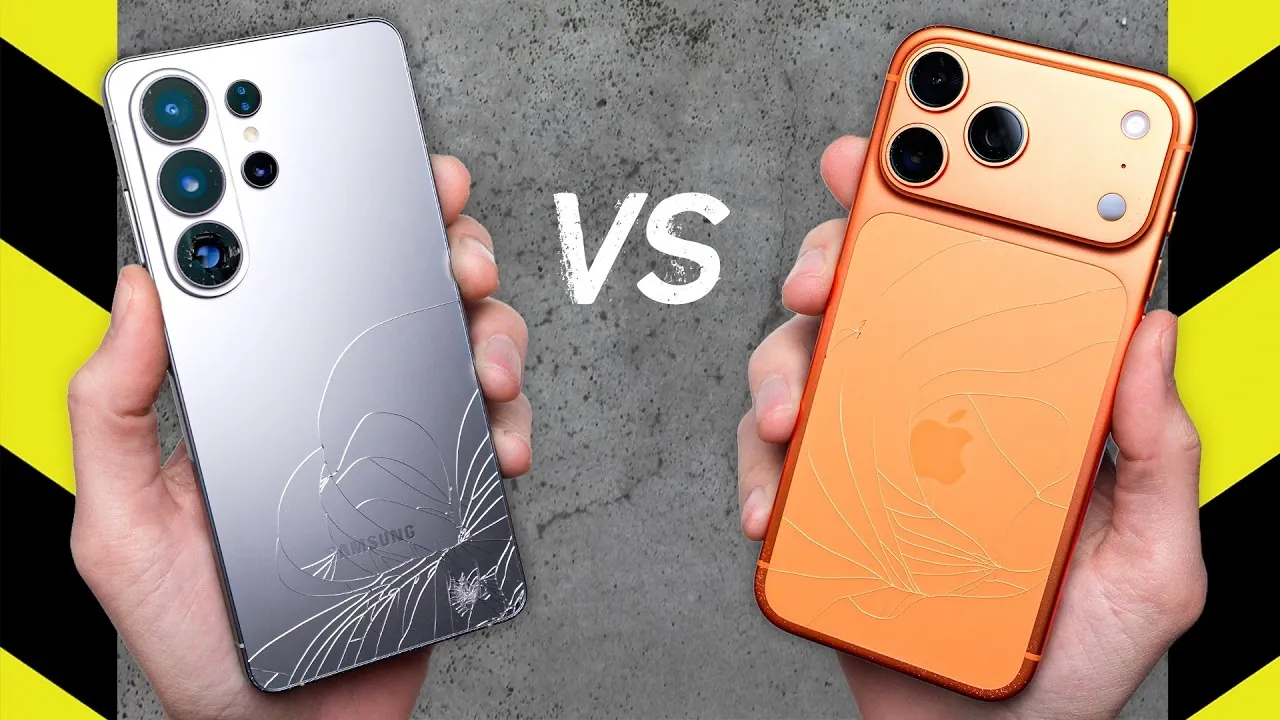
Durability remains a critical factor for smartphone users who expect their devices to endure the wear and tear of daily life. In a direct comparison, the Galaxy S26 Ultra and iPhone 17 Pro Max were subjected to rigorous drop tests to evaluate their structural integrity, material strength, and overall resilience. The results highlighted significant differences in their ability to withstand impact, ultimately positioning the iPhone 17 Pro Max as the more durable option. The video below from PhoneBuff tests the two handsets in a drop test. Which one will come out on top? Let’s find out.

Material Composition: Aluminum vs. Titanium
The materials used in a smartphone’s construction play a pivotal role in its durability. The Galaxy S26 Ultra features an all-glass design reinforced by an aluminum frame. While aluminum is lightweight and cost-effective, it lacks the robustness of titanium. On the other hand, the iPhone 17 Pro Max incorporates a semi-metal back paired with a titanium frame, offering enhanced strength and resistance to damage. This fundamental difference in material selection had a profound impact on the outcomes of the drop tests, with titanium proving to be a superior choice for durability.
How the Drop Tests Were Conducted
To ensure a fair and comprehensive evaluation, both devices underwent six rounds of drop tests on an 80-grit sandpaper surface, simulating real-world abrasive conditions. The tests involved drops from two heights, 1 meter and 1.5 meters, targeting the back, corners and face of each phone. This methodical approach provided valuable insights into how each device performs under various impact scenarios, highlighting their strengths and weaknesses.
Drop Test Results: Round by Round
1. Back Drop (1 Meter)
When dropped on their backs from a height of 1 meter, the Galaxy S26 Ultra’s camera system sustained significant damage, with cracks forming on the glass covering the lenses. This resulted in flaring issues during subsequent use. In contrast, the iPhone 17 Pro Max experienced damage limited to its rear glass, leaving its camera lenses intact and fully functional.
Winner: iPhone 17 Pro Max
2. Corner Drop (1 Meter)
The corner drop test showcased the Galaxy S26 Ultra’s aluminum frame, which exhibited only minor scuffs. Meanwhile, the iPhone 17 Pro Max’s titanium frame sustained visible dents and scratches, though these did not compromise its structural integrity.
Winner: Galaxy S26 Ultra
3. Face Drop (1 Meter)
Both devices suffered screen cracks when dropped face-first from 1 meter. However, the Galaxy S26 Ultra’s damage was more localized, while the iPhone 17 Pro Max’s cracks extended to its selfie camera, causing flaring issues during use.
Winner: Galaxy S26 Ultra
4. Back Drop (1.5 Meters)
At a height of 1.5 meters, the Galaxy S26 Ultra’s fingerprint scanner became non-functional due to extensive cracking. The iPhone 17 Pro Max, while sustaining additional rear glass damage, retained full functionality of its Face ID system, demonstrating better resilience in critical areas.
Winner: iPhone 17 Pro Max
5. Corner Drop (1.5 Meters)
In the corner drop test from 1.5 meters, both devices performed similarly, with no significant new damage observed. This round highlighted the comparable durability of their frames under higher-impact conditions.
Result: Tie
6. Face Drop (1.5 Meters)
The final test, a face drop from 1.5 meters, proved particularly challenging for the Galaxy S26 Ultra. Its telephoto camera glass shattered further, raising potential safety concerns. The iPhone 17 Pro Max, while experiencing additional screen cracks, maintained the functionality of its Face ID system, giving it a slight edge in this round.
Winner: iPhone 17 Pro Max
Key Findings
The drop tests revealed distinct differences in the durability of these flagship smartphones. Key observations include:
- iPhone 17 Pro Max: Its titanium frame and semi-metal back provided superior protection, particularly for its camera system and biometric functionality. It emerged as the overall winner in durability, excelling in critical areas where damage could impact usability.
- Galaxy S26 Ultra: While its aluminum frame performed well in corner drop tests, its all-glass design and camera durability were significant vulnerabilities, especially under higher-impact conditions.
Final Thoughts
For users prioritizing durability, the iPhone 17 Pro Max stands out as the more robust option. Its thoughtful material choices, including a titanium frame and semi-metal back, contribute to its superior resilience in critical areas such as camera protection and biometric functionality. While the Galaxy S26 Ultra demonstrated strengths in specific scenarios, such as corner drops, its vulnerabilities in material composition and structural design may pose concerns for those seeking a device capable of withstanding frequent drops. This comparison underscores the importance of engineering and material innovation in creating smartphones built to endure the challenges of everyday use.
Browse through more resources below from our in-depth content covering more areas on Galaxy S26 Ultra durability.
Source & Image Credit: PhoneBuff
Disclosure: Some of our articles include affiliate links. If you buy something through one of these links, Geeky Gadgets may earn an affiliate commission. Learn about our Disclosure Policy.
