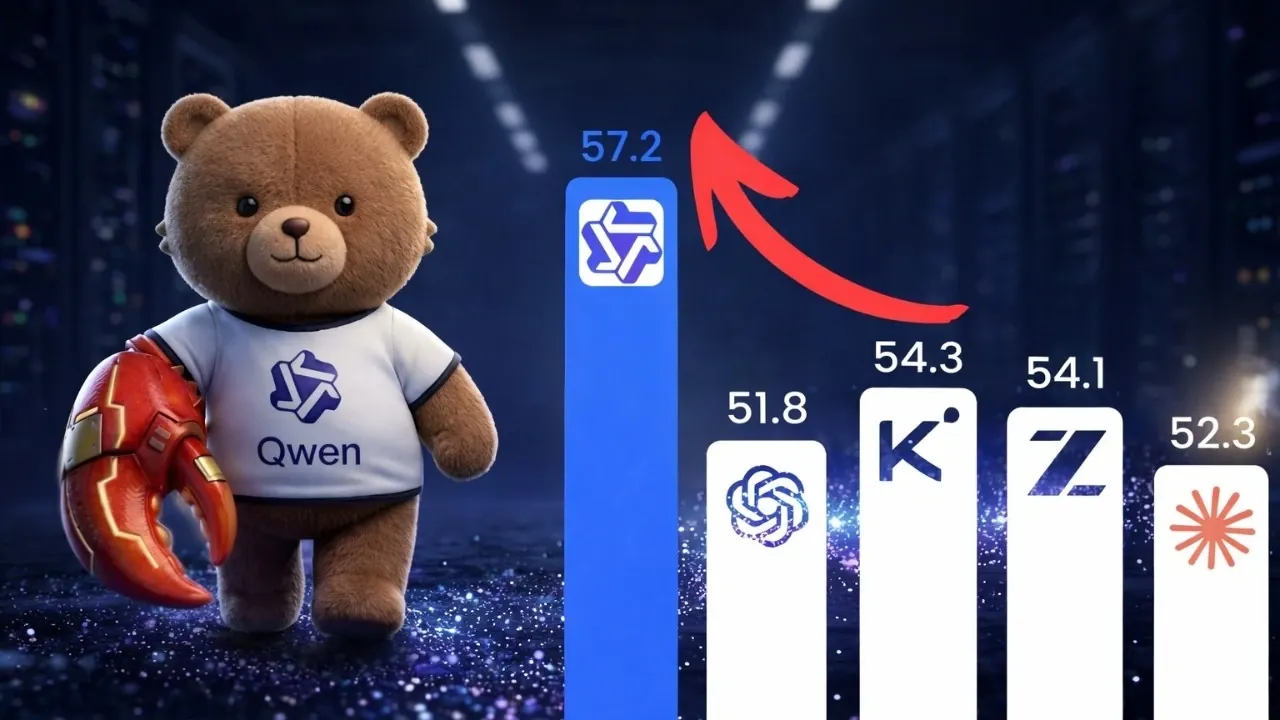
Qwen 3.6 Plus has arrived, bringing a host of updates tailored for developers and researchers tackling technical challenges. This latest iteration, as highlighted by Prompt Engineering, emphasizes structured problem-solving through features like agentic coding, which facilitates step-by-step refinement for intricate workflows. With its 1-million-token context window, the model can handle extensive datasets while maintaining coherence, making it particularly effective for tasks such as simulations and large-scale data analysis. While not designed for conversational AI, its specialized focus positions it as a reliable choice for users requiring precision and advanced reasoning.
In this feature, you’ll explore how Qwen 3.6 Plus excels in multimodal understanding, integrating text, images and videos to address diverse technical and creative challenges. Gain insight into its real-world applications, from real-time tracking of the International Space Station to generating detailed datasets for creative projects. Additionally, the discussion will touch on its limitations, such as its dependency on specific frameworks, making sure a balanced understanding of its capabilities. This breakdown offers a comprehensive look at how Qwen 3.6 Plus can support your most demanding technical endeavors.
Key Features of Qwen 3.6 Plus
TL;DR Key Takeaways :
- Qwen 3.6 Plus is a specialized AI model designed for technical problem-solving, excelling in agentic coding and multimodal tasks, but not intended for conversational AI.
- Key features include agentic coding for iterative workflows, multimodal understanding of text, images and videos, a 1-million-token context window and seamless third-party integration.
- The model demonstrates exceptional performance in structured outputs, self-correction during iterative processes and technical tasks like debugging and simulations.
- Practical applications range from real-time tracking (e.g., ISS monitoring) to creative data generation and precise structural simulations, showcasing its versatility.
- Limitations include its unsuitability for conversational AI, dependency on specific frameworks and challenges in certain reasoning tasks, highlighting areas for future improvement.
Qwen 3.6 Plus introduces a range of advanced features that enhance its utility for technical users. These innovations set it apart from previous models and expand its potential applications:
- Agentic Coding: The model is optimized for iterative planning and execution, allowing it to handle intricate workflows with remarkable precision. This makes it particularly effective for tasks requiring step-by-step refinement.
- Multimodal Understanding: By integrating information from text, images and videos, Qwen 3.6 Plus provides a comprehensive approach to problem-solving, making it suitable for diverse technical and creative challenges.
- 1-Million-Token Context Window: With an extended context capacity, the model can process and retain coherence across large-scale tasks, making sure detailed and accurate outputs even in complex scenarios.
- Third-Party Integration: Seamless compatibility with platforms like Open Code and Kilo Code enhances its versatility, allowing users to deploy it across various technical environments with ease.
These features collectively position Qwen 3.6 Plus as a robust tool for users seeking advanced reasoning, structured outputs and multimodal capabilities.
Performance Highlights
Qwen 3.6 Plus demonstrates exceptional performance across a range of technical benchmarks, particularly excelling in coding and simulation tasks. Its strengths lie in its ability to deliver precise, reliable and structured results:
- Structured Outputs: The model is adept at generating organized and coherent results, making it ideal for applications such as 3D visualizations, simulations and other tasks requiring meticulous attention to detail.
- Self-Correction: During iterative processes, Qwen 3.6 Plus refines its reasoning, enhancing accuracy and reliability. This capability is particularly valuable for workflows that demand continuous improvement and optimization.
- Technical Excellence: From debugging complex code to simulating intricate structures, the model consistently delivers high levels of precision, reinforcing its reputation as a dependable tool for demanding technical challenges.
These performance highlights underscore the model’s ability to meet the needs of developers and researchers working on sophisticated projects.

Gain further expertise in Qwen by checking out these recommendations.
- Interactive Solar System Test, Sonnet 4.5 vs Qwen 3.5 35B
- Qwen 3.5 Small vs Larger Models: Why Alibaba’s Range Matters
- Qwen3-TTS vs ElevenLabs : Voice Cloning & Real-Time Streaming
- Qwen 3.5 vs Claude Opus 4.5 vs Gemini 3 Pro: Benchmarks Compared
- Google Gemma 4, Anthropic’s Secret Al Agent, Qwen 3.6 & More
- Qwen 3 TTS Voice Cloning Guide 2026 : Free Tools & Setup Tips
- Qwen 3 vs GPT-4.1: How Alibaba’s AI is Changing the Game
- Qwen TTS Voice Cloning in 3 Seconds: Setup, Limits, and Best Uses
- Qwen 3.5 : 0.8B AI Model Runs Offline on iPhone 14 Pro
- Kimi K2.5 for Teams: Parallel Agents Cut Time and Token Costs
Applications in Action
The versatility of Qwen 3.6 Plus is evident in its wide range of practical applications. Its ability to handle iterative refinement and optimization makes it a valuable asset across various domains:
- Real-Time Tracking: The model can monitor the International Space Station (ISS) with exceptional accuracy, showcasing its capability for real-time data analysis and tracking.
- Creative Data Generation: It excels in generating detailed datasets, such as comprehensive Pokémon encyclopedias, demonstrating its potential for creative and data-intensive projects.
- Structural Simulations: Qwen 3.6 Plus can model complex structures like the Golden Gate Bridge with remarkable precision, making it an invaluable tool for engineering and architectural simulations.
These examples highlight the model’s adaptability and effectiveness in both technical and creative contexts, making it a versatile choice for a wide range of users.
Limitations to Consider
Despite its advanced capabilities, Qwen 3.6 Plus is not without its limitations. Understanding these constraints is essential for users to maximize its potential while being aware of its boundaries:
- Not for Conversations: The model is not designed for general-purpose conversational AI, which limits its applicability for broader, non-technical use cases.
- Dependency on Harnesses: Its performance is heavily reliant on the harness or framework used, requiring careful selection and configuration to achieve optimal results.
- Reasoning Challenges: Certain tasks, such as solving classic puzzles, reveal weaknesses in its attention mechanisms and problem-framing abilities, indicating areas where further refinement is needed.
These limitations highlight the model’s specialized focus while pointing to opportunities for future development and improvement.
Future Potential
The trajectory of Qwen 3.6 Plus suggests significant promise for advancing AI capabilities in technical domains. The potential release of open-weight models could provide widespread access to access, fostering innovation across industries and allowing a broader range of users to use its advanced features. Its emphasis on agentic coding and multimodal reasoning indicates a clear path toward more sophisticated AI solutions, paving the way for breakthroughs in fields such as engineering, data analysis and creative content generation.
As the AI landscape continues to evolve, Qwen 3.6 Plus stands as a testament to the potential of specialized models to address complex challenges with precision and reliability. Its focus on technical excellence and structured problem-solving ensures its relevance for developers and researchers seeking innovative tools to drive innovation.
Media Credit: Prompt Engineering
Disclosure: Some of our articles include affiliate links. If you buy something through one of these links, Geeky Gadgets may earn an affiliate commission. Learn about our Disclosure Policy.
