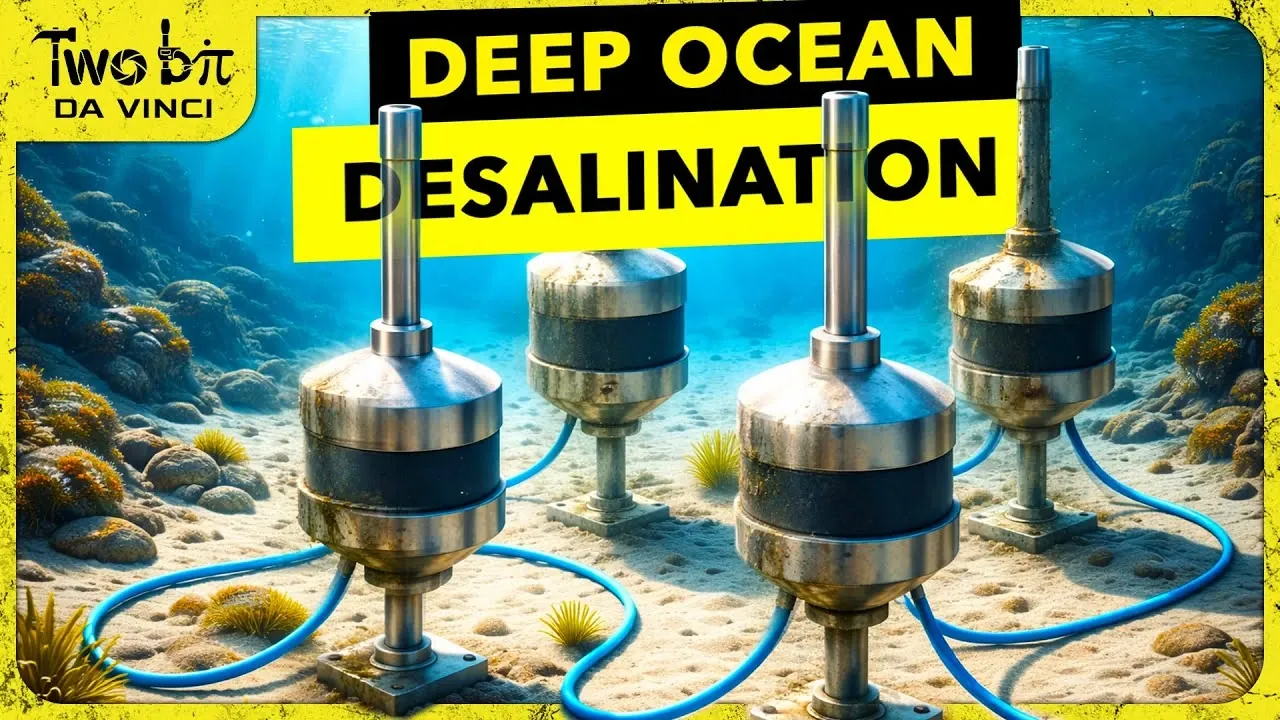
What if the key to solving the world’s growing water crisis lies not on land but deep beneath the ocean’s surface? With millions of people lacking access to clean water and traditional desalination methods facing criticism for their high energy use and environmental harm, the search for sustainable solutions has never been more urgent. Two Bit da Vinci takes a closer look at how Oceanwell’s new deep-sea desalination technology could transform the way we produce fresh water. By using the immense hydrostatic pressure found hundreds of meters below sea level, this approach promises to slash energy consumption and reduce ecological damage. But is this innovation a fantastic option, or just another overhyped idea?
In this overview, we’ll explore the science behind Oceanwell’s deep-sea desalination pods and their potential to address fresh water scarcity. You’ll discover how this method could dramatically cut energy use, minimize environmental disruption, and even unlock unexpected benefits like secondary applications for deep-sea water. At the same time, we’ll examine the challenges that stand in the way of scaling this technology, from engineering hurdles to geographic limitations. Could the ocean’s depths hold the answer to one of humanity’s most pressing problems? Let’s unpack the possibilities and weigh the promise against the reality.
Deep-Sea Desalination Innovation
TL;DR Key Takeaways :
- Traditional desalination methods, such as reverse osmosis, are energy-intensive and environmentally harmful, producing greenhouse gas emissions and disrupting marine ecosystems with chemical-laden brine discharge.
- Oceanwell’s deep-sea desalination pods use natural hydrostatic pressure at ocean depths of 400–600 meters, significantly reducing energy consumption by over 50% compared to conventional methods.
- The technology minimizes ecological disruption by operating in the aphotic zone, avoiding harm to marine life, and producing less concentrated brine that disperses harmlessly in deep-sea currents.
- Challenges include complex maintenance, material durability in high-pressure environments, and geographic limitations, making the technology most viable in regions with steep continental shelves near the coast.
- While not a universal solution, deep-sea desalination offers a sustainable and efficient approach to addressing water scarcity in suitable regions, with potential for further innovation and investment to expand its applicability.
The Problem with Traditional Desalination
Conventional desalination methods, such as reverse osmosis, have long been employed to convert seawater into drinkable water. However, these processes come with significant challenges that limit their sustainability and scalability:
- High energy consumption: Reverse osmosis requires immense pressure, typically between 600 and 900 PSI, to force seawater through specialized membranes. This pressure is generated by energy-intensive pumps, which are often powered by fossil fuels, contributing to greenhouse gas emissions and increasing operational costs.
- Environmental degradation: The process produces concentrated brine as a byproduct, which is usually discharged into coastal waters. This brine, often laden with chemicals from pre-treatment processes, disrupts marine ecosystems by altering salinity levels and introducing harmful substances.
These drawbacks underscore the need for alternative desalination technologies that are both energy-efficient and environmentally responsible.
Oceanwell’s Deep-Sea Desalination Pods
Oceanwell’s deep-sea desalination technology offers a novel approach by using the immense hydrostatic pressure found at ocean depths of 400–600 meters. At these depths, the natural pressure eliminates the need for energy-intensive pumps to push seawater through membranes. Instead, energy is only required to transport the fresh water back to the surface, significantly reducing overall energy consumption. This method has the potential to cut energy use by more than 50% compared to traditional desalination techniques.
The environmental benefits of this approach are equally noteworthy:
- Reduced chemical dependency: Unlike conventional systems, Oceanwell’s pods do not require chemical pre-treatment, preventing harmful substances from entering marine ecosystems.
- Eco-friendly brine management: The brine produced is less concentrated and disperses harmlessly in deep-sea currents, minimizing its impact on marine life and ecosystems.
By using the natural conditions of the deep ocean, Oceanwell’s technology offers a more sustainable and environmentally conscious alternative to traditional desalination.
Deep Sea Desalination Explained, Oceanwell’s Pressure-Powered Pods

Learn more about energy by reading our previous articles, guides and features :
- Onshore Wave Energy: A Sustainable Solution to Harness Ocean
- How Regenerative Tech is Reducing Energy Waste and Costs
- Solid-State Batteries Are Here, But There’s a Catch : Pros and Cons
- Graphene-Perovskite Solar Cells Reach 30.6% and Cut Costs 80
- How Regenerative Tech is Reducing Energy Waste and Costs
- Samsung SmartThings Energy launched in the UK
- Space Solar Power Satellites vs Ground Arrays : The Efficiency Gap
- Solid-State Battery or Capacitor? Donut Lab’s 100,000-cycle Claim
- How Sodium-Ion Batteries Could Replace Lithium-Ion Technology
Key Advantages of Deep-Sea Desalination
Oceanwell’s deep-sea desalination pods present several compelling advantages over conventional methods, making them a promising solution for regions facing water scarcity:
- Energy efficiency: By using the natural pressure of the ocean depths, the system significantly reduces energy requirements, lowering both operational costs and carbon emissions.
- Minimal ecological disruption: The pods operate in the aphotic zone, a region of the ocean devoid of sunlight and most marine life. This reduces the risk of harming marine organisms and ecosystems.
- Potential for secondary applications: The cold temperatures of deep-sea water could be harnessed for additional uses, such as district cooling systems in coastal cities, further enhancing energy efficiency and sustainability.
These advantages position deep-sea desalination as a forward-thinking solution for addressing water scarcity in an environmentally responsible manner.
Challenges and Limitations
Despite its promise, deep-sea desalination faces several technical and logistical challenges that must be addressed to ensure its viability:
- Complex maintenance requirements: The pods must be retrieved from the ocean depths for servicing, requiring specialized equipment and vessels. This adds to operational complexity and costs.
- Material durability: The high-pressure, corrosive saltwater environment demands advanced engineering and the use of robust materials to ensure the long-term functionality of the pods.
- Geographic limitations: This technology is most effective in regions with steep continental shelves close to the coast, such as California or Chile. In areas with shallow coastlines or distant deep-water zones, deployment may be impractical or cost-prohibitive.
These challenges highlight the need for further innovation and investment to optimize the technology and expand its applicability.
Economic and Engineering Considerations
Oceanwell’s modular design offers a degree of flexibility, allowing the pods to be deployed and retrieved more efficiently than fixed installations. The system also adapts existing offshore oil and gas technologies to withstand the harsh conditions of the deep ocean. However, the high initial investment required for deployment, combined with ongoing operational costs, limits its feasibility to specific locations with favorable geographic and economic conditions. As a result, deep-sea desalination is likely to serve as a targeted solution for water-scarce regions rather than a universal remedy.
Looking Ahead: The Future of Deep-Sea Desalination
Deep-sea desalination represents a promising frontier in the quest to address global water scarcity. For regions with suitable geography, such as parts of Africa, Chile, and coastal areas of the United States, this technology could provide a sustainable and efficient source of fresh water. However, its success will depend on overcoming technical, logistical, and economic challenges through continued innovation and investment.
As global water demand continues to rise, the development of advanced desalination technologies like Oceanwell’s deep-sea pods could play a critical role in making sure water security for future generations. By harnessing the natural forces of the ocean and minimizing environmental impact, this approach offers a glimpse into a more sustainable future for water management.
Media Credit: Two Bit da Vinci
Disclosure: Some of our articles include affiliate links. If you buy something through one of these links, Geeky Gadgets may earn an affiliate commission. Learn about our Disclosure Policy.
