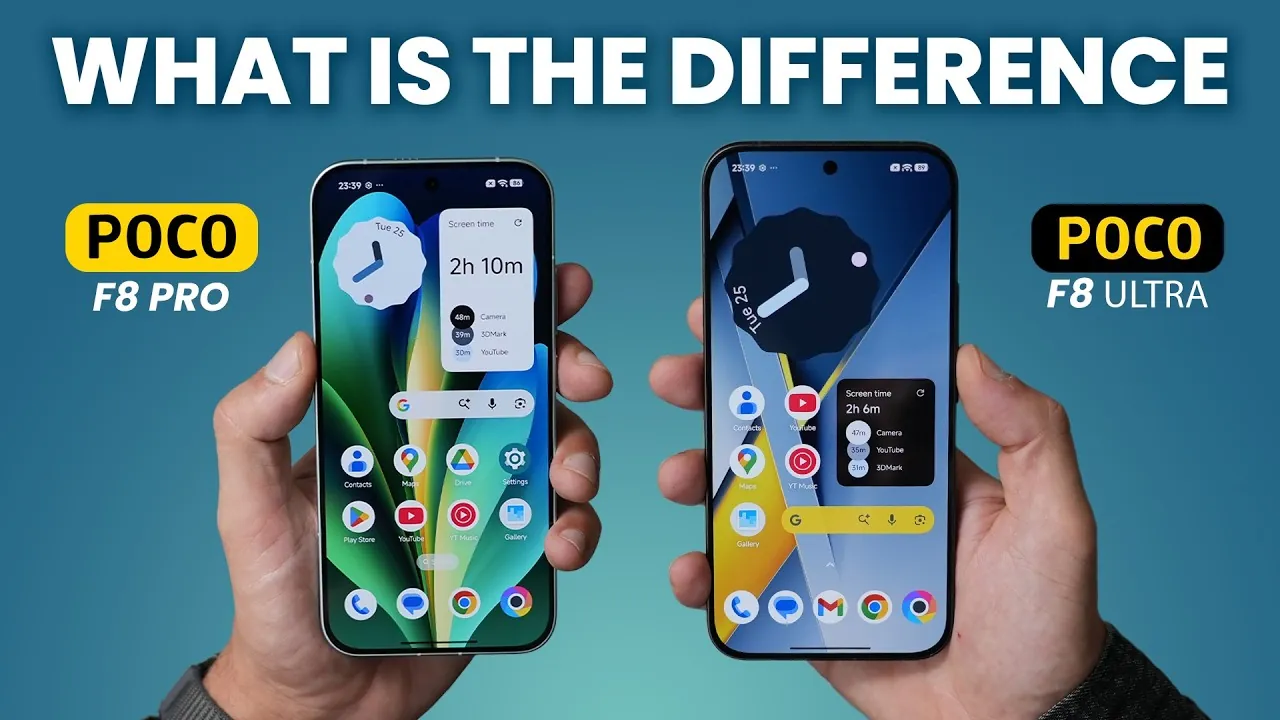
The Poco F8 Pro and Poco F8 Ultra are flagship smartphones designed to cater to high-performance users. While they share a similar design language and core features, the Ultra distinguishes itself with significant upgrades in display quality, audio performance, camera capabilities, and processing power. However, concerns about thermal performance on the Ultra may influence your decision. In the video below, WhatGear explores the critical differences to help you determine which device aligns with your needs.

Design and Build
Both the Poco F8 Pro and Ultra feature a sleek, modern design with an iPhone-inspired camera module, but the Ultra improves its aesthetic appeal with a frosted glass finish and a single-piece glass back. This design choice gives the Ultra a more premium and refined feel compared to the Pro’s glossy finish.
In terms of durability, the Ultra takes the lead with its Poco Shield Glass, offering enhanced resistance to scratches and drops. The Pro, while still durable, relies on Corning Gorilla Glass 7i, which is slightly less robust. Both devices include dual SIM trays but lack expandable memory, which could be a limitation for users requiring additional storage. For those prioritizing a premium look and feel, the Ultra stands out as the superior choice.
Display
The display is one of the most noticeable areas where the Ultra outshines the Pro. Both devices feature AMOLED panels with a 120Hz refresh rate and an impressive peak brightness of 3,500 nits, making sure vibrant colors and smooth visuals. However, the Ultra offers a sharper 2K resolution compared to the Pro’s 1.5K, resulting in crisper visuals and more detailed imagery.
Both models use Poco’s M10 luminous material, which enhances brightness while improving power efficiency. Despite this shared technology, the Ultra’s higher resolution makes it the better option for activities such as video streaming, gaming, and photo editing. If display quality is a priority, the Ultra is the clear winner.
Battery and Charging
Battery technology is another area where the Ultra takes the lead. It features a silicon-carbon battery, which provides better efficiency and a longer lifespan compared to the Pro’s traditional lithium-ion battery. Both devices support 100W wired charging, making sure rapid power replenishment.
The Ultra further enhances convenience with 50W wireless charging, a feature absent in the Pro. This addition makes the Ultra particularly appealing to users who prefer cable-free charging solutions. For those who value innovative battery technology and wireless charging, the Ultra offers a more advanced experience.
Audio
Audio performance is a standout feature of the Ultra. Equipped with a Bose 2.1 sound system, including a dedicated subwoofer, the Ultra delivers superior bass and audio clarity. This setup significantly outperforms the Pro’s standard stereo speakers and rivals premium audio systems found in flagship devices.
For users who prioritize immersive sound experiences—whether for music, movies, or gaming—the Ultra provides a clear advantage. The Pro, while adequate for everyday use, cannot match the Ultra’s audio capabilities.
Performance
Both devices are powered by Snapdragon 8 Elite processors, but the Ultra features the newer Gen 5 version. This upgrade offers higher clock speeds and improved efficiency, making it better suited for demanding tasks. Additionally, the Ultra includes a Vision Boost D8 chipset, which enhances graphics performance and enables advanced upscaling for gaming and video playback.
Both models come with LPDDR5X RAM, but the Ultra offers up to 16GB in select variants, providing more headroom for multitasking. However, stress testing revealed a critical drawback: the Ultra struggles with overheating during prolonged use, while the Pro demonstrates better thermal management. For users seeking consistent performance and stability, the Pro may be the more reliable option.
Camera
The Ultra’s camera system is designed for photography enthusiasts. It features a larger primary sensor that excels in low-light conditions and a 5x periscope optical zoom for capturing distant subjects with clarity. In comparison, the Pro offers a smaller primary sensor and a 2.5x telephoto zoom, making it less versatile for advanced photography.
The Ultra also includes a 32MP selfie camera, compared to the Pro’s 20MP, making sure sharper and more detailed self-portraits. For users who prioritize photography, the Ultra is the superior choice, offering greater versatility and higher-quality images.
Connectivity
Both devices offer robust connectivity options, but the Ultra edges ahead with Bluetooth 6.0, which provides faster data transfer speeds and improved range compared to the Pro’s Bluetooth 5.4. Both phones support Xiaomi’s offline communication feature, allowing device-to-device messaging without a cellular signal—a useful tool in emergencies or remote areas.
Which Device Should You Choose?
The Poco F8 Ultra emerges as the more advanced option, offering superior display quality, audio performance, camera capabilities, and processing power. However, its thermal performance issues during stress testing raise concerns about its reliability under heavy workloads.
On the other hand, the Poco F8 Pro, while less feature-rich, provides reliable performance and better thermal management, making it a solid choice for users seeking a balance between performance and stability.
Ultimately, your decision will depend on your priorities. If you value innovative features and are willing to overlook potential overheating issues, the Ultra is the way to go. However, if consistent reliability and thermal stability are more important, the Pro is the smarter choice.
Stay informed about the latest in Poco F8 Ultra Features by exploring our other resources and articles.
Source & Image Credit: WhatGear
Disclosure: Some of our articles include affiliate links. If you buy something through one of these links, Geeky Gadgets may earn an affiliate commission. Learn about our Disclosure Policy.
