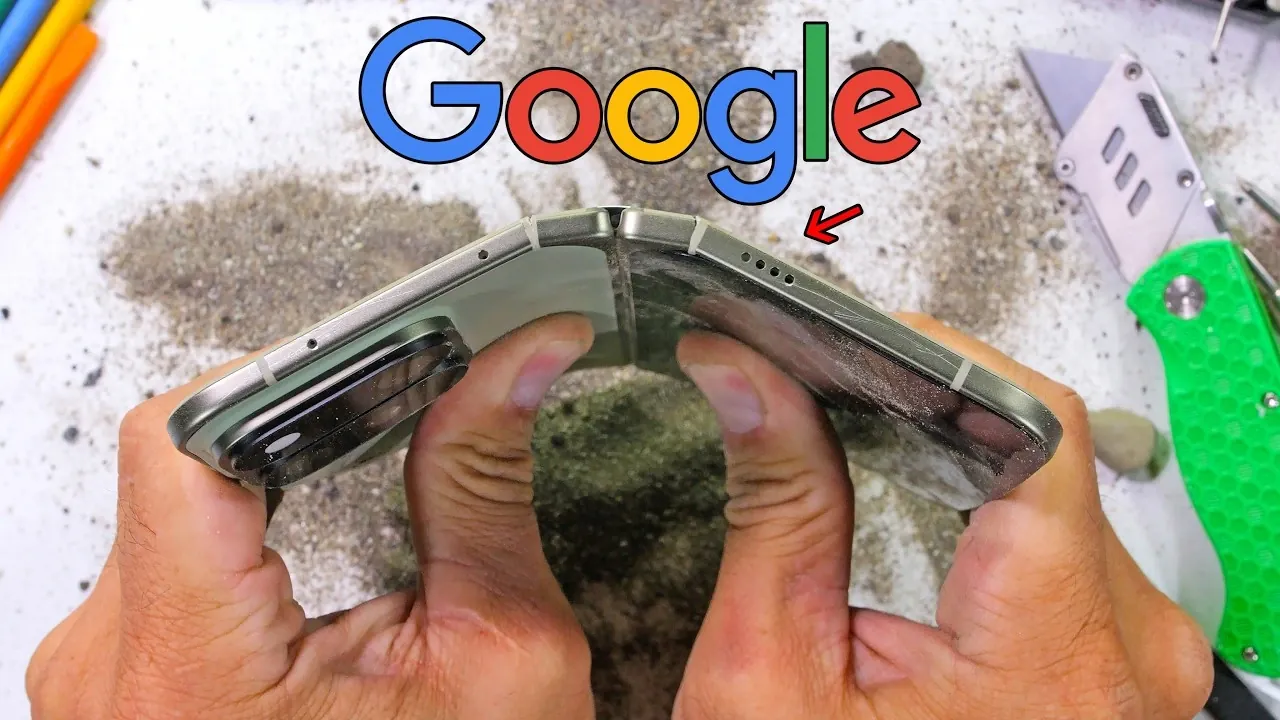
Google’s Pixel 11 Pro Fold, the latest addition to its lineup of folding smartphones, showcases a blend of advanced features and a commitment to sustainability. However, the device continues to struggle with recurring structural issues that have plagued the series for years. Despite its innovative technology and premium specifications, the Pixel 11 Pro Fold faces significant challenges, particularly with its hinge design and antenna placement. These flaws raise questions about Google’s ability to compete effectively in the increasingly competitive folding phone market. The video below from JerryRigEverything puts the handset through a range of durability tests.

Structural Weakness: A Recurring Challenge
The most glaring issue with the Pixel 11 Pro Fold lies in its structural design, specifically the placement of the antenna line near the hinge. This design flaw, which has persisted across four generations of Google’s folding phones, creates a vulnerability under stress. Users have reported cracks forming in this area and in severe cases, the front screen detaches entirely, rendering the device unusable. While folding phones inherently face durability challenges due to their mechanical complexity, Google’s inability to address this specific issue undermines the device’s reliability. For a product positioned as a premium offering, such recurring flaws are a significant drawback.
Durability: Laboratory Claims vs Real-World Use
Google claims that the Pixel 11 Pro Fold’s hinge can withstand up to 83 million folds in laboratory conditions. However, real-world usage tells a different story. Everyday wear and tear expose weaknesses in the hinge mechanism and the exterior materials. The phone’s scratch resistance is also underwhelming, with the exterior display scratching at level 6 on the Mohs scale and deeper grooves forming at level 7. These results suggest that the device may not hold up well to daily use, especially when compared to competitors that have made significant strides in durability.
Material Choices: Balancing Sustainability and Durability
Google has emphasized sustainability in the Pixel 11 Pro Fold’s design, using recycled aluminum for the frame. While this is a commendable effort, the back panel is constructed from composite glass fiber, a material that is predominantly plastic. Although marketed as shatterproof, it lacks the premium feel and durability of traditional glass. Furthermore, Google’s hinge design deviates from the modular approach adopted by competitors like Samsung, which allows for easier repairs and potentially greater durability. This design choice may contribute to the Pixel 11 Pro Fold’s ongoing structural issues, raising concerns about its long-term viability.
Camera Performance: A Standout Feature
One area where the Pixel 11 Pro Fold excels is photography. The device features a 48 MP main sensor, a 10.8 MP telephoto lens, and a 10.5 MP ultrawide lens, delivering high-quality images that uphold Google’s reputation for computational photography. Additionally, the inclusion of hole-punch selfie cameras on both the front and cover displays adds versatility, catering to users who prioritize photography. However, while the camera system is impressive, it is not enough to offset the device’s broader shortcomings, particularly in durability and design.
Water Resistance: Strengths and Limitations
The Pixel 11 Pro Fold features an IP68 rating, allowing it to survive submersion in up to 1.5 meters of water for 30 minutes. While this level of water resistance is commendable, the device’s dust resistance is less robust. Fine particles can infiltrate the hinge mechanism, potentially causing long-term damage. For a device that relies on precise mechanical components, this limitation is a significant concern. Competitors have made strides in addressing similar issues, leaving Google at a disadvantage in this critical area.
Charging and Connectivity: Adequate but Uninspiring
The Pixel 11 Pro Fold supports modern charging and connectivity standards, including a 45W USB-C 3.2 port and 25W wireless charging. While these features meet industry norms, they fail to distinguish the device from its competitors. The sealed SIM card tray enhances water resistance, but it does little to address the broader durability concerns that overshadow the device’s technical specifications.
Advanced Cooling System: Effective but Overshadowed
To manage the heat generated by its Tensor G6 chip, the Pixel 11 Pro Fold incorporates a copper vapor chamber. This advanced cooling system ensures stable performance during demanding tasks such as gaming or video editing. However, the benefits of this feature are overshadowed by the device’s recurring structural flaws and lack of innovation in other areas. While the cooling system is a noteworthy addition, it is unlikely to be a deciding factor for most consumers.
Design Stagnation: Falling Behind the Competition
Over the past four years, Google’s folding phone designs have seen minimal evolution. The Pixel 11 Pro Fold retains many of the same design elements as its predecessors, including flaws that remain unaddressed. This lack of innovation is particularly striking when compared to competitors like Samsung, which has made significant advancements in folding phone durability and functionality. Google’s apparent reluctance to innovate in design and materials risks alienating consumers who expect more from a premium device.
Competitive Landscape: Struggling to Keep Up
In the folding phone market, Samsung continues to set the standard with its modular hinge design and robust materials. Durability tests consistently show that Samsung’s devices outperform Google’s offerings, providing greater reliability and longevity. The Pixel 11 Pro Fold struggles to match these benchmarks, leaving it at a disadvantage in a rapidly evolving market. As competitors continue to innovate, Google risks falling further behind, making it increasingly difficult to justify the Pixel 11 Pro Fold as a viable alternative.
Unrealized Potential in a Competitive Market
The Pixel 11 Pro Fold highlights Google’s ongoing challenges in hardware development. While the device offers notable features such as an advanced camera system, a copper vapor chamber, and IP68 water resistance, these strengths are overshadowed by persistent design flaws. The placement of the antenna line near the hinge remains a critical weak point, and the overall durability of the device falls short of expectations. As competitors continue to push the boundaries of folding phone technology, Google’s lack of innovation and attention to detail may leave the Pixel 11 Pro Fold struggling to find its place in the market.
Become an expert in the Pixel 11 Pro Fold with the help of our in-depth articles and helpful guides.
- The Pixel 11 Pro Fold Out of the Box: Slimmer, Lighter, and Much Better Built
- Google Pixel 11 Pro Fold Leak Reveals the Thinnest Pixel Fold Yet
- Google Pixel 11 Pro Fold: Can It Finally Beat Traditional Flagships?
- Pixel 11 Pro Fold Video Teaser Proves Leaks Right About Google’s Next Flagship
- Google Pixel 11 Pro Fold Launch Date and Price Reportedly Set
- Why the Google Pixel 11 Could Be the Ultimate Smartphone Comeback
Source & Image Credit: JerryRigEverything
Disclosure: Some of our articles include affiliate links. If you buy something through one of these links, Geeky Gadgets may earn an affiliate commission. Learn about our Disclosure Policy.
